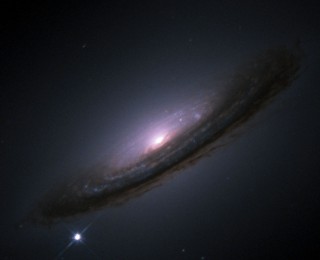
by Jessica Donaldson | Mar 17, 2013 | Daily Paper Summaries
Type Ia Supernovae are extensively used in astronomy research, but the progenitors of these massive explosions are still not well understood. This paper discusses new evidence that there are two distinct populations of type Ia supernovae, and that they originate from different stellar populations.
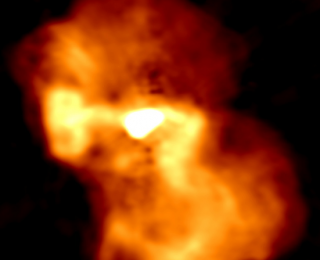
by Betsy Mills | Mar 16, 2013 | Daily Paper Summaries
Check out these cool new results from LOFAR which is boldly going to some of the longest wavelengths astronomers have ever observed! An active galaxy has a less active past than we might expect, pulsating neutron stars are behaving strangely, and even at wavelengths as long as meters, there are still spectral lines from extremely low-energy atomic transitions.
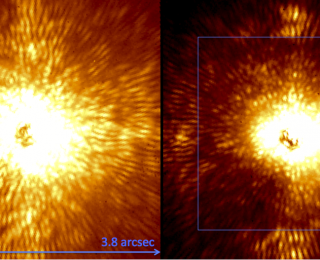
by Caroline Morley | Mar 15, 2013 | Daily Paper Summaries
Two years ago this month, I wrote my very first astrobite about the puzzlingly cloudy atmosphere of the outermost planet, HR 8799b; today I’m revisiting the system and looking at a recent paper which measured spectra of not just one planet, but the entire planetary system. This is the first comparative spectroscopic study of any multi-planet system (other than our own Solar System of course).
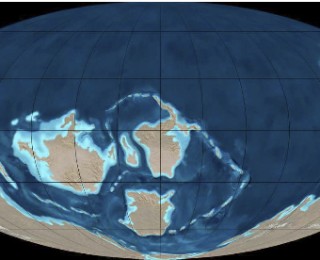
by Sukrit Ranjan | Mar 13, 2013 | Daily Paper Summaries
As we discover exoplanets in droves and the first hints of habitable worlds emerge, astronomers are starting to look to the next step: the search for life on those worlds.
by Shannon Hall | Mar 10, 2013 | Daily Paper Summaries
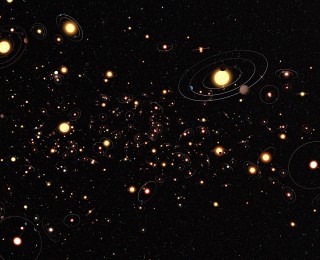
It is likely that all exoplanet systems have 4 or more planets orbiting a single star. If we look at the number of specific orbital period ratios for both high multiplicity systems (4 or more transiting planets) and low multiplicity systems (2 transiting planets) we may verify this. We may also make statements about the formation and evolution of planetary systems as well as search for any additional planets.
by Ben Montet | Mar 8, 2013 | Daily Paper Summaries
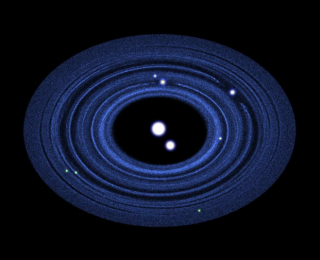
The number of known moons of Pluto has now reached five. What are they like, and how did they get there? Kenyon and Bromley use numerical simulations to answer these questions and determine what else New Horizons may find in 2015.
