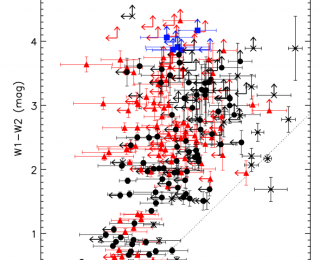
Finding T Dwarfs with WISE
With the addition of these 87 new T dwarfs, WISE has now tripled the number of known T dwarfs with spectral type later than T5.

With the addition of these 87 new T dwarfs, WISE has now tripled the number of known T dwarfs with spectral type later than T5.
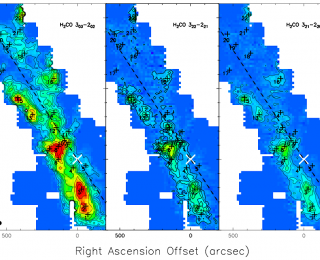
Unlike its candy bar namesake, the center of our Milky Way Galaxy is not actually a very pleasant place to be. There’s a supermassive central black hole to deal with, intense radiation from a population of massive stars, and hot clouds of molecular gas. In this paper, the authors use observations of three molecular spectral lines to measure the temperatures of these gas clouds in the center of the Galaxy, and find that the processes heating the clouds may not be what you expect!
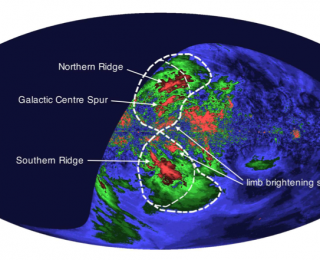
Carretti and collaborators have found new evidence that the gigantic bubbles of emission emanating from the center of our Milky Way are the result of winds from supernova explosions, not jets from our supermassive black hole.
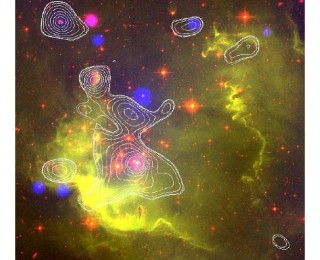
For the first time, diffuse X-ray emission from young stars is identified in the Small Magellanic Cloud (SMC), using data from Chandra.
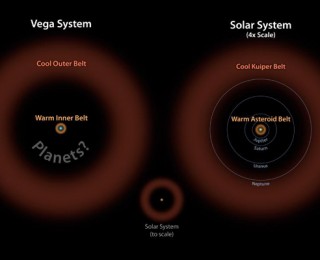
A new asteroid belt discovered around Vega makes this system look more similar to the Solar System than we had previous thought. The gap between the two belts around Vega may indicate the presence of multiple planets.
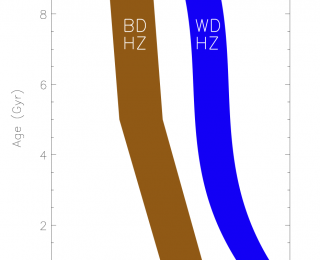
The holy grail for exoplanet science would be to find an inhabited planet. Not just habitable, but actually inhabited. But where are we most likely to find those planets? Only around Sun-like stars, or could life thrive around other types of stars? Could evolved stars like white dwarfs or neutron stars harbor life? Could brown dwarfs, the so-called failed stars, have inhabited planets?