by Sukrit Ranjan | Jan 17, 2013 | Daily Paper Summaries
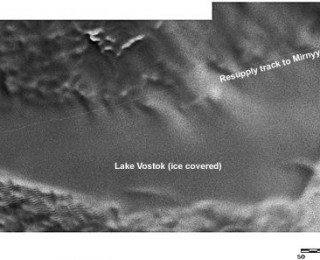
Paper Title: On the Abundances of Noble and Biologically Relevant Gases in Antarctica Authors: O. Mousis et al First Author’s Affiliation: Universite de Franche-Comte, Bensancon-Cedex, France Journal: Astrobiology (Accepted) BackgroundLake Vostok is an underground (well – underice) lake in Antarctica. It’s been buried under 4 kilometers of ice for 1-15 million years, and is the closest thing we have to a real-life “Lost World”. Life in this lake, if any, has evolved in isolation for millions of years, deprived of access to sunlight and direct contact with the atmosphere. What new cellular mechanisms might have evolved here? How does isolation affect ecosystems? Questions like these are why biologists are excited about Lake Vostok – and why care is being taken to avoid contamination when drilling down to study it.Astrobiologists are particularly excited about this lake because conditions in Vostok are similar to what we might expect to find on Jupiters’ moon Europa, which is thought to similarly host an oxidizing liquid water ocean protected by a layer of ice. The pressure at a depth of 30 km on Europa is equivalent to the pressure in lake Vostok. Understanding life in lake Vostok will give clues as to what kind of life might persist in Europa’s oceans.This paperThe lake is not completely isolated from its environment. The ice above the lake is filled with bubbles of trapped air, and ice layers move down over time transporting this air. Melting at the lake/ice interface can supply dissolved gas to the lake. However, this picture is complicated by the existence of clathrates. Clathrates are crystalline structures that can trap other molecules. Depending...
by Erika Nesvold | Jan 4, 2013 | Daily Paper Summaries
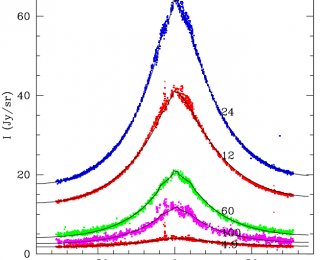
The Solar System’s interplanetary dust (called zodiacal dust) can be a source of noise in infrared and optical observations, but it also holds information about the recent history of the Solar System. This new and improved model of the zodiacal dust reveals the relative contributions to the dust by asteroids, comets, and interstellar dust.
by Betsy Mills | Jan 1, 2013 | Daily Paper Summaries
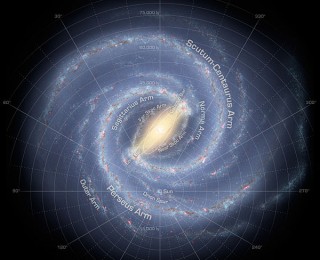
Everything in our galaxy is moving– you, the earth underneath you, the sun, other stars– everything. However, it turns out that figuring out how fast some of these things are moving is surprisingly difficult, and can have Galactic-sized implications!
by Alice Olmstead | Dec 30, 2012 | Daily Paper Summaries
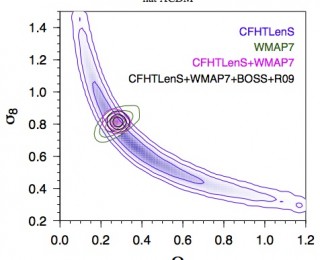
The Canada-France Hawaii Telescope weak gravitational lensing survey (CFHTLens), recently released new results to help constrain our cosmological models. While still in its early stages, weak lensing will ultimately be a powerful tool to discover the nature of the mysterious dark energy.
by Elisa Chisari | Dec 29, 2012 | Daily Paper Summaries
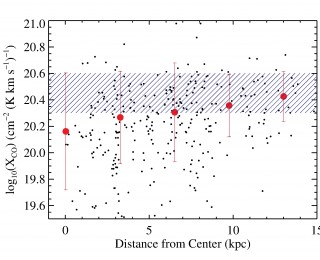
There is a long standing debate on whether the X-factor, the conversion factor between molecular hydrogen and carbon monoxide in molecular clouds, is constant in our Galaxy. This is a very important assumption we usually make when studying star formation! In this post, we explore state-of-the-art simulations by Narayanan & Hopkins that attempt to settle this debate.
by Nick Ballering | Dec 24, 2012 | Daily Paper Summaries
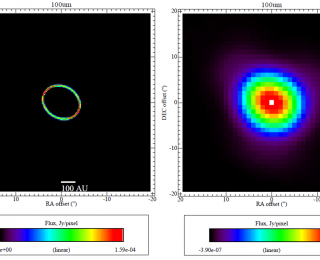
Resolved images of debris disks with Herschel reveal their true sizes, and test the assumptions used in unresolved observations.
