by Nick Hand | Oct 27, 2012 | Daily Paper Summaries
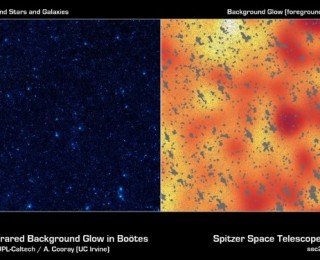
New observations at infrared background find a mysterious background glow on the sky, which is inconsistent with the previously proposed models for its origin. The authors suggest that the infrared glow could be coming from rogue stars that have been expelled from host galaxies out into the dark matter halos that surround galaxies.
by Courtney Dressing | Oct 26, 2012 | Daily Paper Summaries
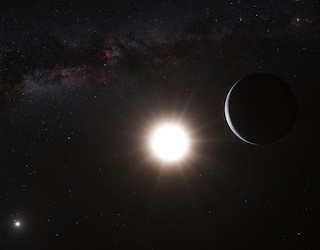
Astronomers recently announced the discovery of a short period Earth-mass planet in the Alpha Centauri system. Could Earth-mass planets exist in the habitable zones of binary stars?
by Elizabeth Lovegrove | Oct 23, 2012 | Daily Paper Summaries
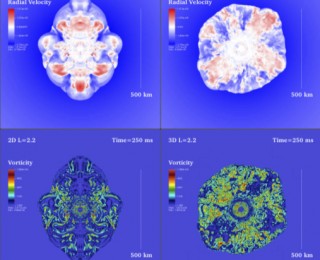
The neutrino reheating mechanism works out in theory to trigger core-collapse supernovae, but we’ve had a lot of trouble getting it to work in 3-dimensional simulations. Because of the prohibitive computational expense, really accurate neutrino physics have thus far only been implemented in 2D. This paper seeks to investigate whether there are systematic differences in fluid behavior between 2D and 3D models in order to figure out whether a 2D model can really stand in for a 3D one.
by Alice Olmstead | Oct 22, 2012 | Daily Paper Summaries
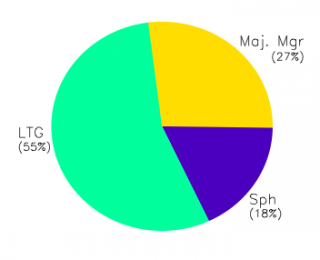
In this study, Kaviraj et al. find that major mergers only contribute a small percentage (17-27%) of the total star formation at a redshift of 2, when the Universe was 3.3 billion years old and vigorously creating new stars. This goes against what we once thought, and leaves the door open for other mechanisms to drive the global star formation rate in the early Universe.
by Lauren Weiss | Oct 21, 2012 | Daily Paper Summaries
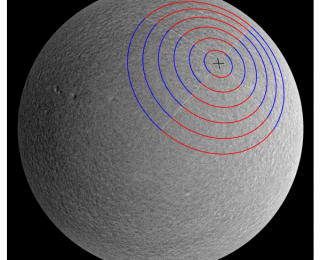
In the sun, subsurface flows are 20-100 times slower than what is predicted in widely used theoretical models.
by Caroline Morley | Oct 19, 2012 | Daily Paper Summaries
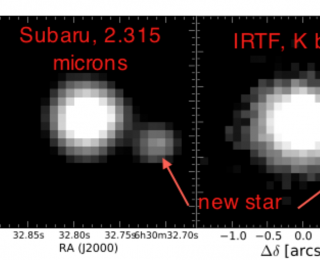
Astronomers don’t stop after discovering planets in systems near and far from our own solar system. The next big step is to characterize the planets. We want to understand what they’re made of, what their atmospheres look like, whether they have clouds, how massive they are, how old they are, etc. As it turns out characterizing exoplanets is really, really challenging for both observers and modelers. The challenges encountered are well illustrated by the saga of WASP-12b.
