by Nathan Goldbaum | Oct 26, 2011 | Daily Paper Summaries
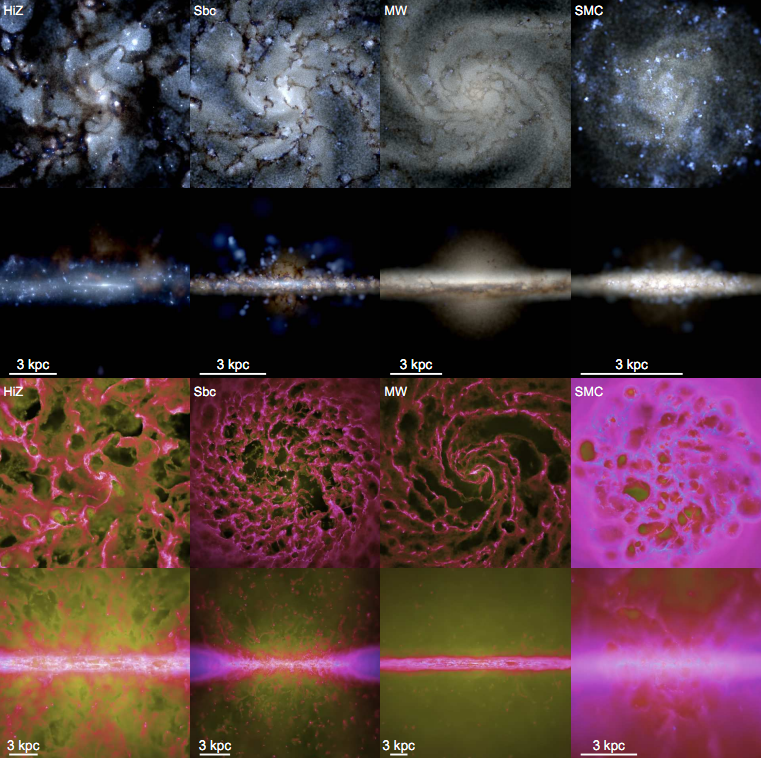
For today’s astrobite, we will be discussing some of the highest-resolution simulations of isolated galaxies performed to date. Not only are these simulations high resolution, but they also include prescriptions to model several physical effects that previous galaxy evolution simulations have mostly ignored.
by Caroline Morley | Oct 26, 2011 | Daily Paper Summaries
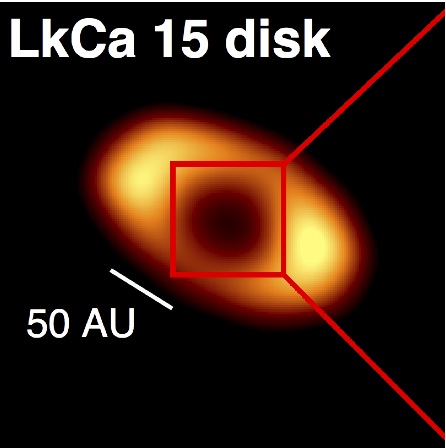
The authors present results that show a feature in the final reconstructed image of this transition disk in both K band and L band (2 bands in the near-infrared). The L band source is somewhat elongated and appears to include two separate regions. The K band image falls between these two L band regions and is more like a point source. The authors interpret this as a protoplanet in the process of forming with an extended heated region around it.
by Elizabeth Lovegrove | Oct 24, 2011 | Daily Paper Summaries
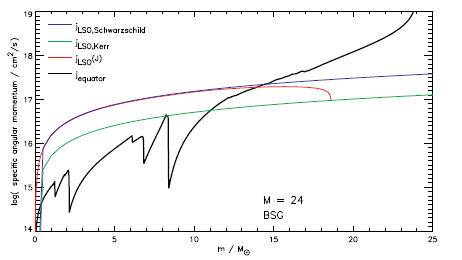
The collapsar model of gamma ray burst production posits that a black hole forms at the center of the star and sucks in the rest of the star’s mass, but that the inner regions have sufficient angular momentum to form an accretion disk which then radiates some fraction of its power in the form of a relativistic jet of matter beaming out of the star. But what if it were the outer, not the inner, layers of the star that had most of the angular momentum? The answer is a very different sort of gamma-ray transient.
by Kim Phifer | Oct 23, 2011 | Daily Paper Summaries
Astronomers study light, but as it turns out, not all objects that we are interested in are observable in any part of the electromagnetic spectrum. In cases such as these, we have to turn to indirect detection methods.
by Susanna Kohler | Oct 23, 2011 | Daily Paper Summaries
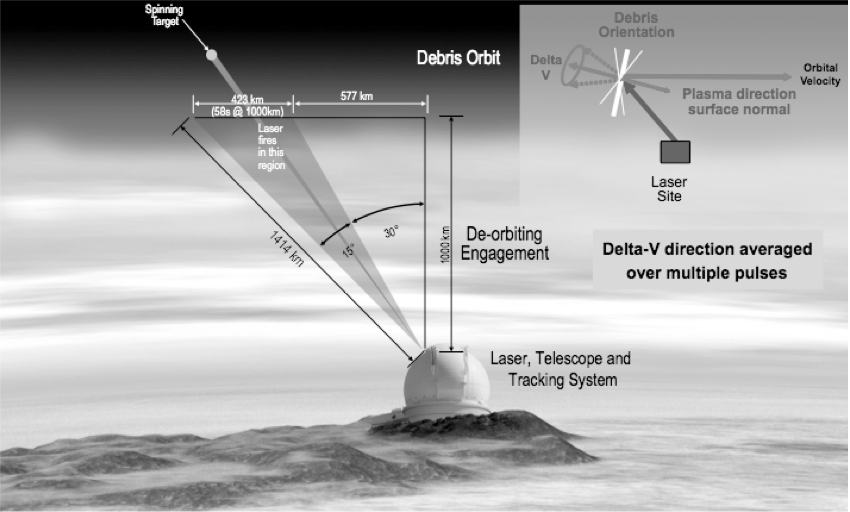
The authors of this paper figure out the most effective way to shoot lasers at space junk. I am clearly in the wrong field of research.
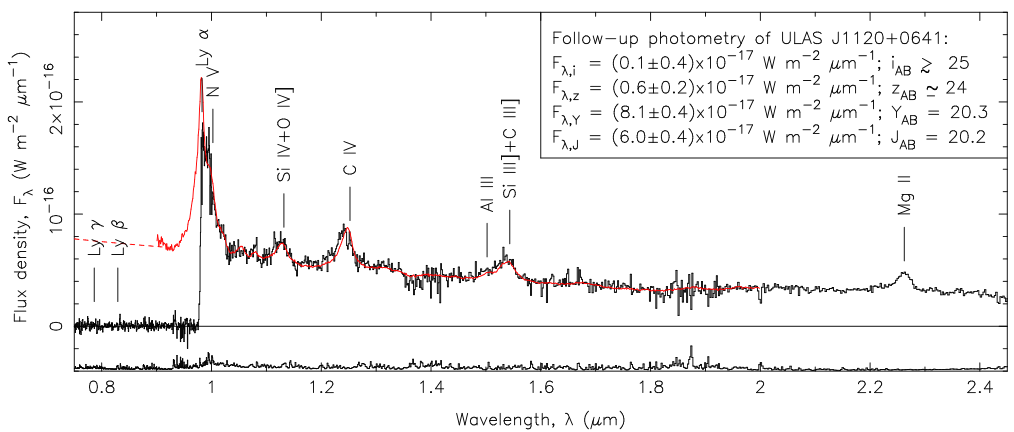
by Ian Czekala | Oct 20, 2011 | Daily Paper Summaries
While high-redshift quasars are very interesting objects in their own right, their incredible luminosities allow them to act as background light sources that illuminate the intervening universe on our line of sight. One could think of quasars as giant flashlights that the universe uses to make really interesting spectroscopic shadow puppets back here on Earth.
