
Meet the Keynote Speakers: Chris Impey
Black holes, space travel and Hawaii. Meet Chris Impey before his out of this world keynote at #AAS230

Black holes, space travel and Hawaii. Meet Chris Impey before his out of this world keynote at #AAS230
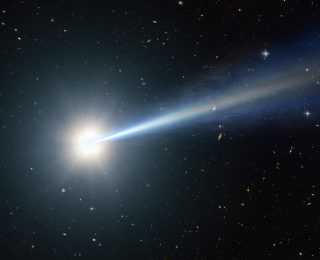
When it comes to habitability for Earth-like life, we’ve got more than just liquid water to worry about. Today’s astrobite looks at how planets could lose portions of their atmospheres to quasar radiation.
Planetary scientist Konstantin Batygin discusses the elusive Planet Nine and how he fell into astrophysics whilst waiting for his rock band to become the next Metallica.

Last Saturday many scientists and science enthusiasts went to the streets joining the March for Science. What are the reasons behind this movement?
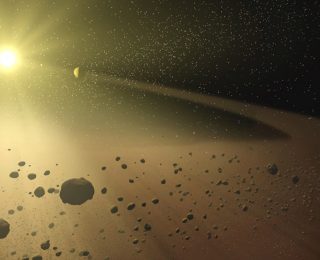
Interstellar space should be littered with debris ejected during the formation of planetary systems—but how much? Engelhardt et al. use solar system surveys and simulations to place an upper limit on the number density of asteroids and comets roaming the Milky Way without a parent star.
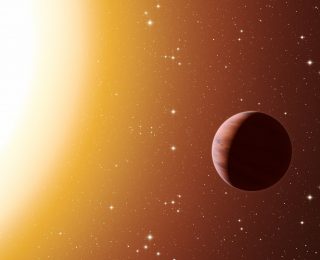
Techniques in astrostatistics help astronomers characterize large amounts of data. The authors of today’s astrobite use data-driven astrostatistics to distinguish between populations of hot Jupiters in a sample. It’s a technique that can definitely be put to good use over the next few decades, as oodles of observations pour in from the new telescopes of the 21st century.