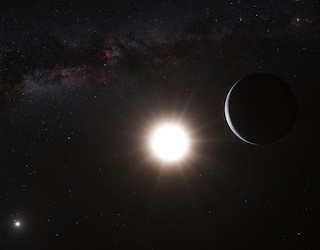
Can Binary Star Systems Harbor Habitable Planets?
Astronomers recently announced the discovery of a short period Earth-mass planet in the Alpha Centauri system. Could Earth-mass planets exist in the habitable zones of binary stars?

Astronomers recently announced the discovery of a short period Earth-mass planet in the Alpha Centauri system. Could Earth-mass planets exist in the habitable zones of binary stars?
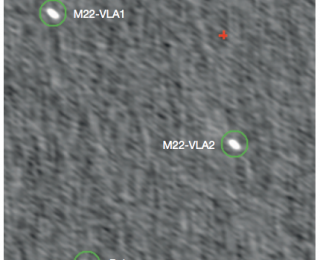
In this article, the authors report their serendipitous discovery of two stellar mass-black holes in the globular cluster M22, however theoretical work predicts that there should only be one stellar-mass black hole!
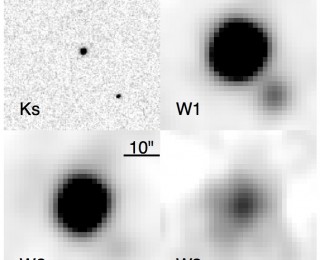
Astronomers like to find cool things. The first Earth-sized planet. The most distant galaxy yet. Two stars that merged while we watched. The coolness factor is certainly one reason why we keep at it – who wouldn’t want to be the first to find an Earth-sized planet, or the first human to see light from a galaxy that’s existed for billions of years? But there’s also a compelling scientific reason to search for these oddballs. This paper reports on the likely discovery of dust around a pair of binary stars.
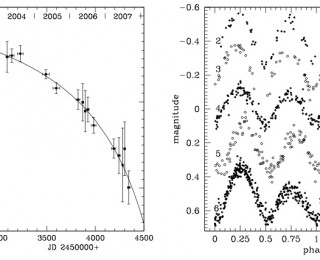
V1309 Sco first caught astronomers attention in 2008, when it displayed an outburst, suddenly getting a hundred times brighter. Due its location near the Galactic center, V1309 Sco has been monitored by the OGLE, which is looking for microlensing events, since 2001. The authors of this paper were able to look back into this archive of data and see what V1309 Sco was doing before it erupted.
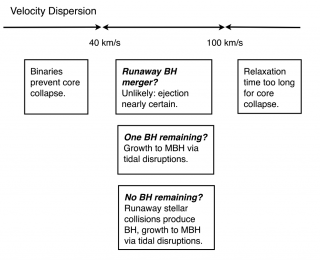
Miller & Davies investigate whether central black holes should exist in low mass stellar systems such as globular clusters.
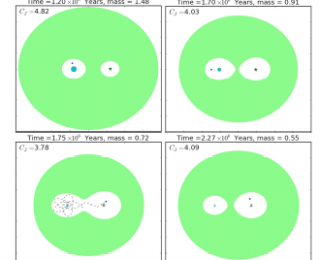
What happens to planets in binary star systems when the primary star evolves off the main sequence? Can the planet survive?