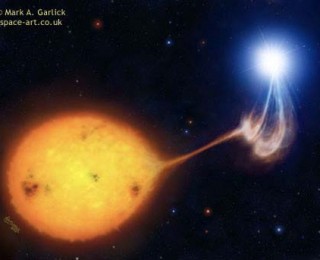
It takes two: the energy budget of common envelope evolution
Rebassa-Mansergas et al. investigate two long period post common envelope systems in order to place constraints on the energy budget for common envelope evolution.

Rebassa-Mansergas et al. investigate two long period post common envelope systems in order to place constraints on the energy budget for common envelope evolution.
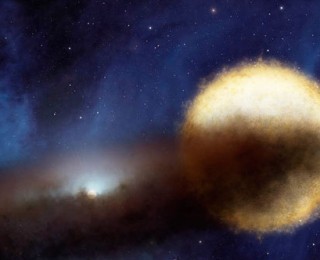
Every 27.1 years, the ε Aurigae system gets dimmer and stays dim for two years. What is causing the dip in brightness? Have Hoard et al. uncovered the invisible monster?
This paper delves into some of the physical properties of early M dwarfs (M0-M4.5), focusing on chromospheric/magnetic activity and rotation. The authors present a catalog of activity and rotation for 334 early M dwarfs.
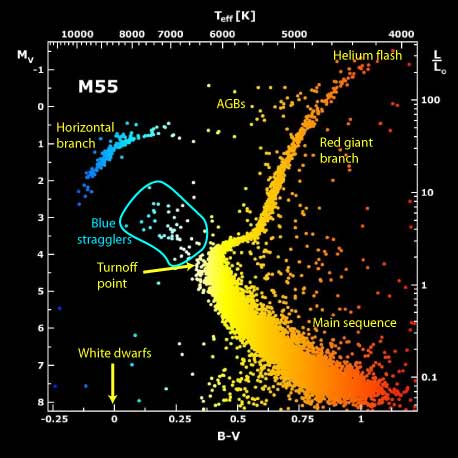
Blue stragglers are stars that, given their mass, should have already evolved beyond the main sequence, and their existence has been a mystery to astronomers for decades. These stars must somehow have gained mass during their main sequence lifetimes; stellar collisions and mass transfer were proposed as the most likely mechanisms that could cause this to happen. A unique combination of observations, simulations, and statistical analysis was recently used to constrain their formation process.
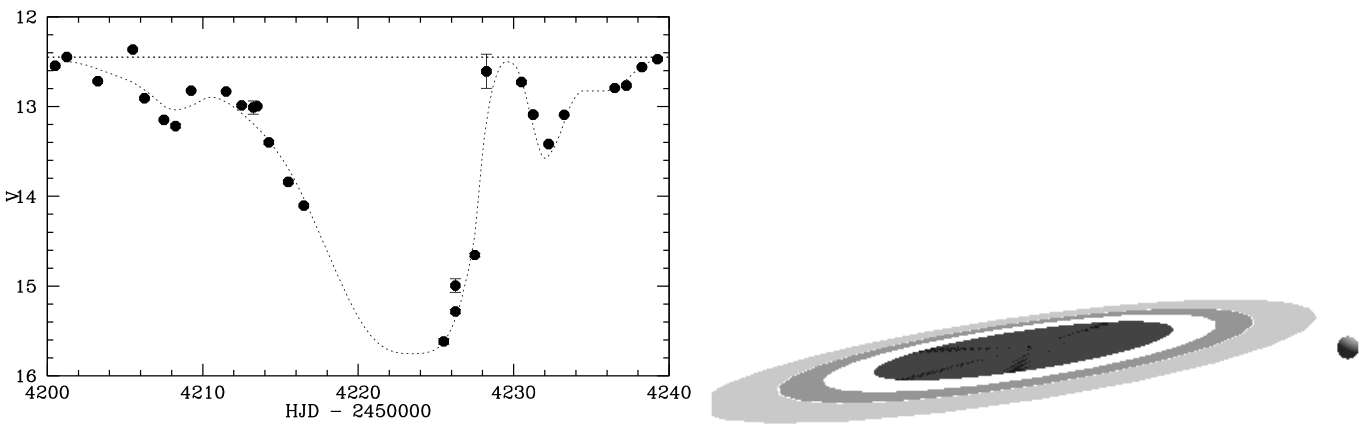
We know other stars have planets. We know that certain stars have circumstellar disks. We know that before there are planets, there must be a protoplanetary disk; we also know that these two states must be connected through a evolutionary path which includes planet formation.
What if–if we were just so lucky–we found a protoplanetary system that had a disk, that was aligned so perfectly, and that was bright enough, and ….
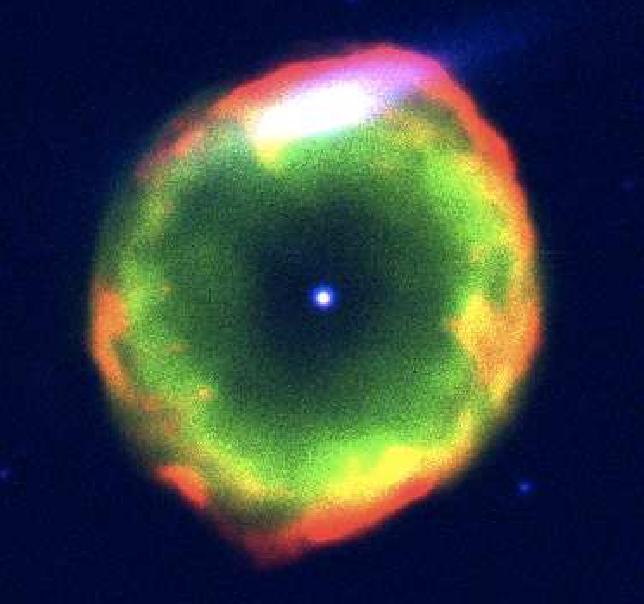
Miszalski et al. show that the well-known planetary nebula Abell 70 has a white dwarf companion at its center with a messy past.