by Katherine Rosenfeld | Jun 29, 2011 | Daily Paper Summaries
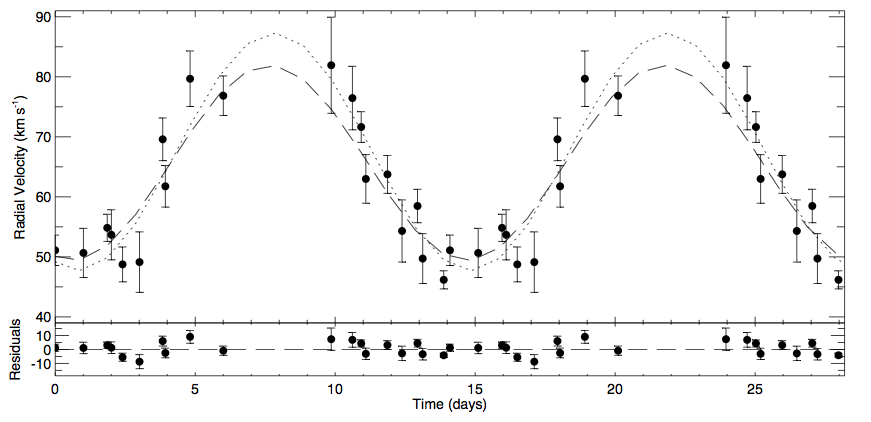
Corroboration and confirmation is the name of this game. Making the same measurement twice — using a different technique — is a powerful way not only to confirm the initial result, but also the method used. This paper confirms a recent detection of a binary system using light-travel time techniques.
by Elisabeth Newton | Jun 9, 2011 | Daily Paper Summaries
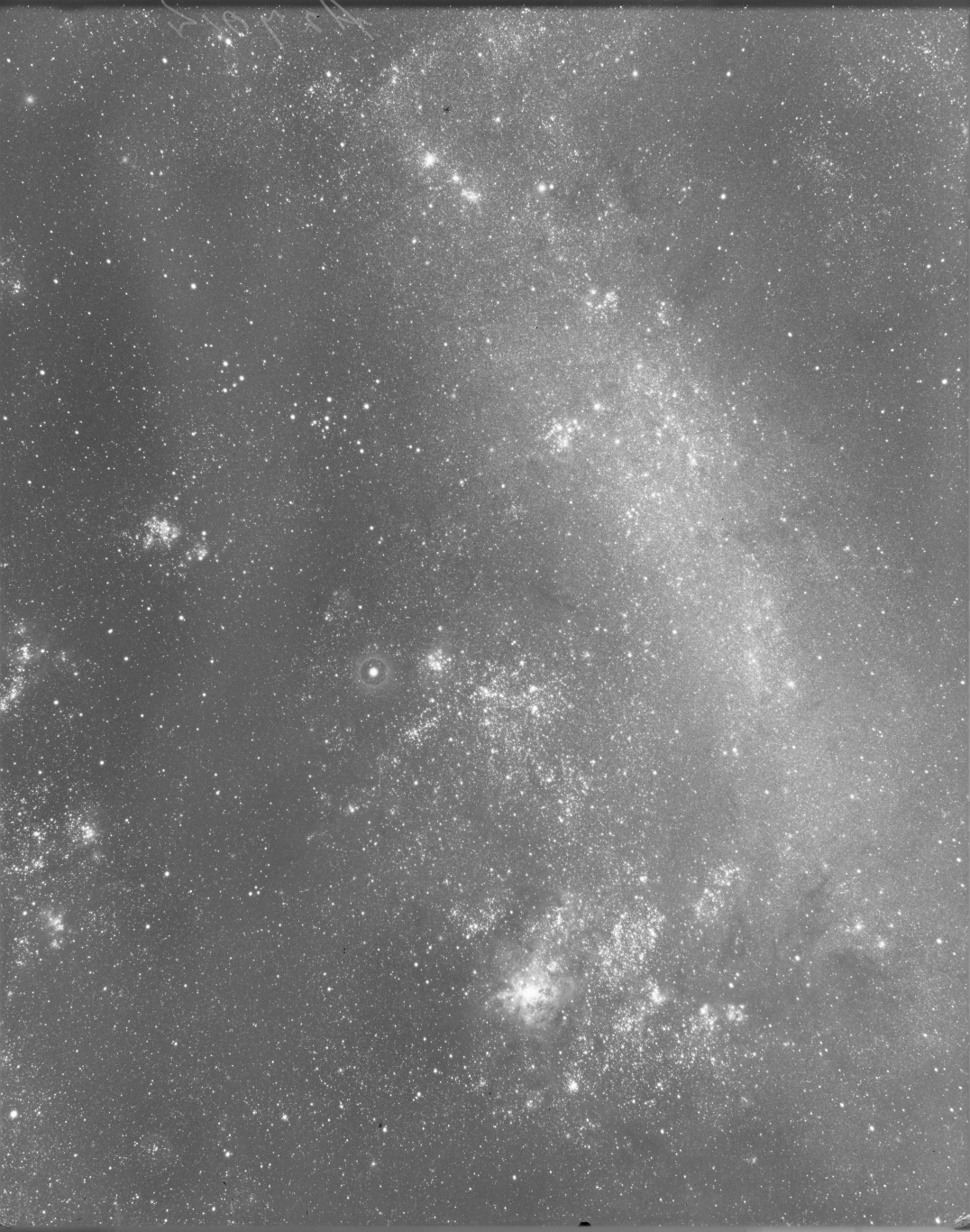
How do stars vary on a hundred year time scale? The DASCH (Digital Access to a Sky Century @ Harvard) Team has been looking back at data taken over the last century in order to answer this question. This paper reports the most recent DASCH discovery, which concerns the star KU Cyg. This is an eclipsing binary system in which a more massive F star is gaining mass from a red giant. The authors noticed a 0.5 magnitude drop in the brightness of the star around 1900 that lasts for five years.
by Nathan Sanders | May 30, 2011 | Daily Paper Summaries
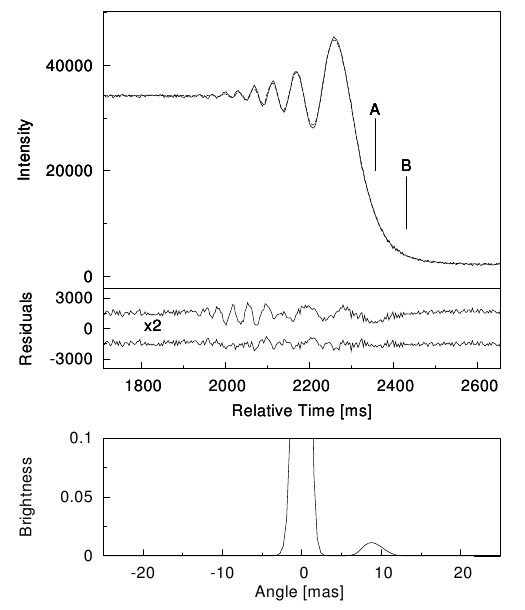
These authors use the surface of the Moon to distinguish between binary star systems separated by just thousandths of an arcsecond – far smaller than can be resolved by traditional imaging.
by Courtney Dressing | Mar 30, 2011 | Daily Paper Summaries
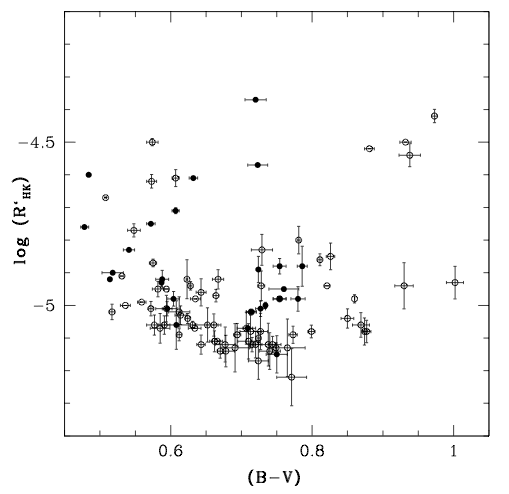
Do close-in planets cause their host stars to become more magnetically active? Canto Martins et al. compare stars with and without planets to address this question.
by Ian Czekala | Mar 11, 2011 | Daily Paper Summaries
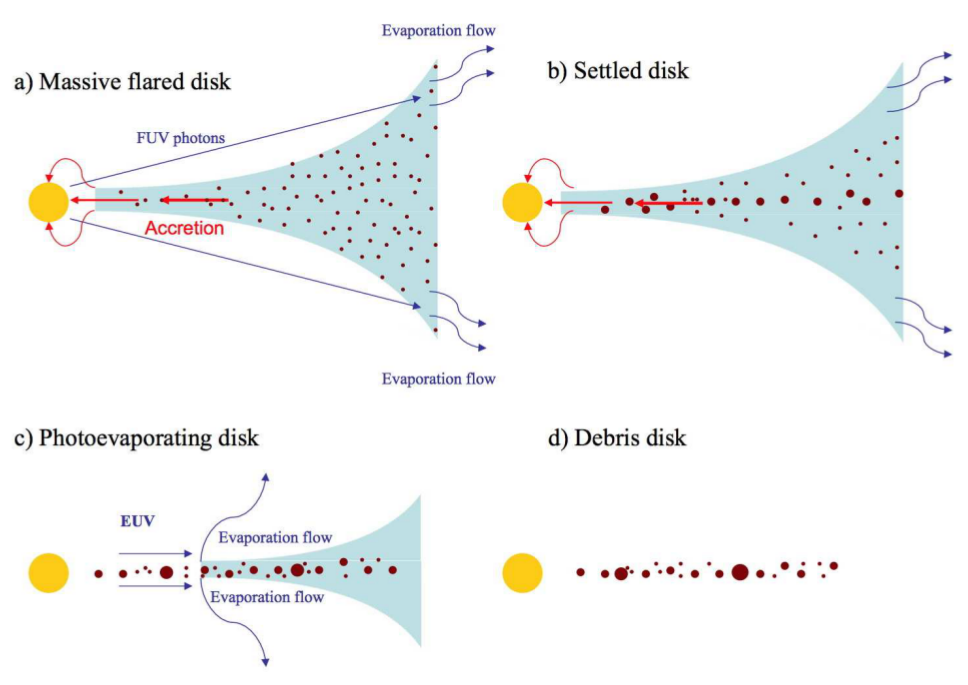
In a new review article, Jonathan Williams and Lucas Cieza at the Institute for Astronomy (IfA) describe the life-story of protoplanetary disks from formation from collapsing molecular clouds to the end-state of a planetary system. Infrared telescopes like Spitzer and sub-millimeter radio telescopes like the the James Clerk Maxwell Telescope, the Submillimeter Array (SMA), and the Combined Array for Research in Millimeter Astronomy (CARMA) have greatly revolutionized the study of protoplanetary disks because they can probe the emission at the longer wavelengths where the disk emission is strongest.
by Katherine Rosenfeld | Jan 19, 2011 | Daily Paper Summaries
With the advent of large photometric surveys, Astronomers must often work through massive amounts of data. One solution to deal with these large numbers is to train computers to do the job. This paper discusses such a computer algorithm to select candidate quasi-stellar objects (QSOs), the bright nuclei of galaxies that each house a supermassive black hole.
