• RSS
  • Submit a Guest Post
  • Undergraduates: Submit your Research!
  • Suggest a Paper Topic!
astrobites
  • About
    • About Astrobites
    • Meet the Authors
    • Statement of Inclusivity
    • Copyright & Permissions
  • Latest Research
    • Daily Paper Summaries
    • Classics
    • Undergrad Research
    • Physical Review Coverage
  • Beyond astro-ph
    • Beyond astro-ph Library
    • Interviews
    • Career Navigation
    • Personal Experiences
    • Current Events
    • Teaching with Astrobites
  • Guides
    • EM Spectrum
    • Galaxies & AGNs
    • Spectroscopy and Spectral Lines
    • Adaptive Optics
    • Gravitational Waves
    • Transient Astronomy
    • Astrophysical Software
    • Graduate School
    • Writing a personal statement for grad apps
    • First Observing Run
    • …More Guides!
Select Page
A Very Long Distance Relationship

A Very Long Distance Relationship

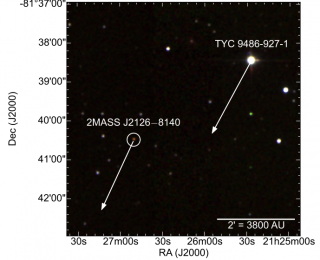
by Mara Johnson-Groh | Feb 22, 2016 | Daily Paper Summaries

Researchers find a brown dwarf at the largest orbit yet discovered. Details on the star and it’s companion in today’s Astrobite.

Serendipitous Discoveries in our Solar System

Serendipitous Discoveries in our Solar System

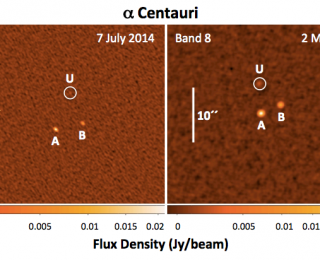
by Michael Zevin | Dec 15, 2015 | Daily Paper Summaries

ALMA may have serendipitously discovered two new members of our Solar System. Read on to discover how, and what these previously unidentified objects may be.
Cold Brown Dwarfs

Cold Brown Dwarfs

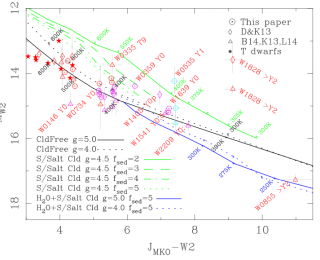
by Korey Haynes | Oct 10, 2014 | Daily Paper Summaries

Y dwarfs are the coolest end of the stellar classification scheme, and studying these often cloudy objects comes with plenty of challenges.
Cloudy with a chance of Carbon Monoxide

Cloudy with a chance of Carbon Monoxide

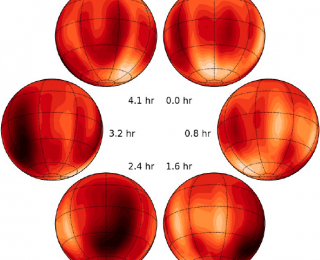
by Chris Faesi | Feb 15, 2014 | Daily Paper Summaries

Tune in now for the first extrasolar weather map of a nearby brown dwarf, made using Doppler imaging.
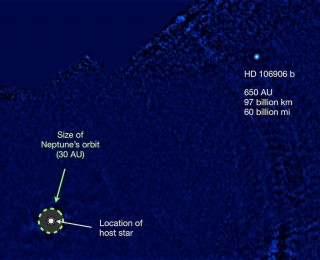
Far Out, Dude: A Planetary-Mass Companion at 650 AU

Far Out, Dude: A Planetary-Mass Companion at 650 AU

by Erika Nesvold | Dec 13, 2013 | Daily Paper Summaries

The Magellan telescope has directly imaged a planetary-mass companion at a projected distance of 650 AU from its star! Read on to find out how the authors detected and characterized this companion, and how they think it got there.
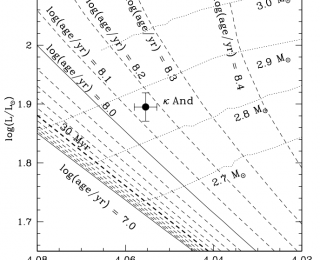
How Massive is Kappa Andromedae B?

How Massive is Kappa Andromedae B?

by Ben Montet | Sep 20, 2013 | Daily Paper Summaries

A “Super-Jupiter” recently discovered by direct imaging techniques may not be as it initially seemed. Hinkley et al. find the system to be older than expected and the Super-Jupiter to really be a brown dwarf.

« Older Entries
Next Entries »

Loading

Follow our socials

  • Bluesky
  • Facebook
  • Instagram
  • RSS Feed

More Posts About

AAS AGN astronomy astrophysics binary stars black holes cosmology dark matter dwarf galaxies exoplanets galaxies galaxy evolution gravitational waves habitability JWST Kepler Milky Way observations planetary science planet formation protoplanetary disks radio astronomy simulations solar system spectroscopy star formation stars stellar evolution supernovae theory

Posts by Category

  • Accessibility
  • Applications
  • Beyond
  • Book Reviews
  • Career Navigation
  • Classics
  • Climate Change
  • Course Assignments
  • Crossposts
  • Current Events
  • Daily Paper Summaries
  • Game Reviews
  • Guides
  • Historical Astronomy
  • Instrumentation
  • Interviews
  • Outreach
  • Personal Experiences
  • PRJ
  • Quick Notes
  • Satellites
  • Teaching
  • Undergraduate Research

More Astronomy

  • AAS
  • AAS Nova
  • astro-ph
  • AstroBetter
  • APOD

Read Astrobites in Other Languages

  • Astrobitos (Spanish)
  • Astropontos (Portuguese)
  • staryab (Farsi)

Listen to Astrobites

  • astro[sound]bites

Discover More Incredible Science

  • ScienceBites Network
  • RSS

© 2026 Astrobites | All Rights Reserved | Supported by AAS | Designed by Elegant Themes | Powered by WordPress