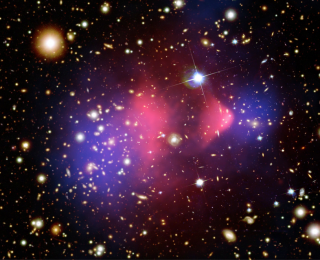
Galaxy Clusters, Cosmology, and Beethoven’s No. 6
This article explores the utility of galaxy clusters as a probe for precision cosmology, by reviewing some of the seminal literature in the field. Somewhere along the way, a symphony is heard.

This article explores the utility of galaxy clusters as a probe for precision cosmology, by reviewing some of the seminal literature in the field. Somewhere along the way, a symphony is heard.
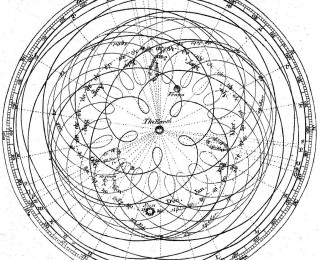
By building a simulation that goes from the scale of galaxies down to individual rocky planets we come to the realization that the earth is unremarkable, but far from typical, challenging our Copernican world view.
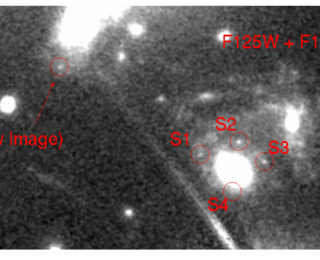
In today’s astrobite, a group of astronomers experiences déjà vu while studying gravitational lensing.
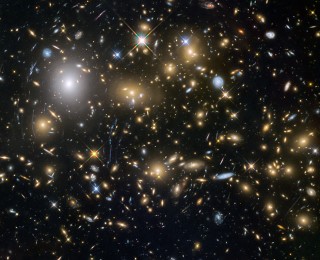
Our current understanding of the Universe suggests that its largest structures, such as clusters and groups of galaxies, would have formed only within the second half of the Universe’s current age. However, today’s paper explores the proposed observational evidence that such structures may actually have began forming a lot earlier than we expected. This poses intriguing questions about the way we model the cosmos, how we interpret our observations, and whether we might need to rethink cosmology.
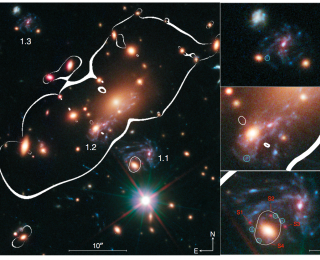
More than 50 years ago, a Norwegian astronomer named Sjur Refsdal outlined an interesting new method for calculating the Hubble constant. Last November, astronomers found the perfect test case.
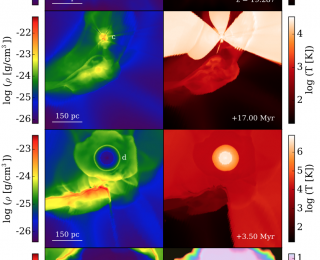
Stars formed in the early Universe were extremely massive and extremely low in elements heavier than helium. The transition from the first to the second generation of stars is still hidden in the shadows of the past. However, simulations of the most massive supernovae can help us to decipher the way of how the life cycle of stars came into being.