by Chris Faesi | Dec 24, 2012 | Daily Paper Summaries
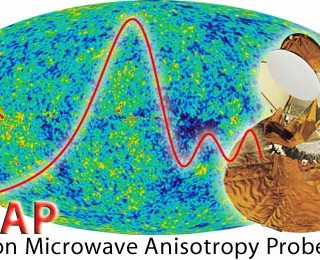
The final results from the WMAP satellite show agreement with the standard model of cosmology to unprecedented precision.

by Kirit Karkare | Dec 12, 2012 | Personal Experiences
I’m spending the next month working on a telescope at the South Pole. In this first installment, I check out New Zealand and get my Extreme Cold Weather gear!
by Alice Olmstead | Nov 25, 2012 | Guides, Personal Experiences
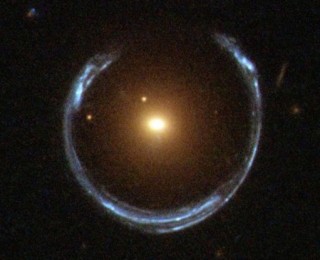
I recently attended a two-week crash course in the “Astrophysical Applications of Gravitational Lensing”. In this post, I overview a few of the ways astronomers employ lensing to study the Universe, from extrasolar planets to distant quasars and large-scale structure.
by Ryan Foltz | Nov 5, 2012 | Daily Paper Summaries
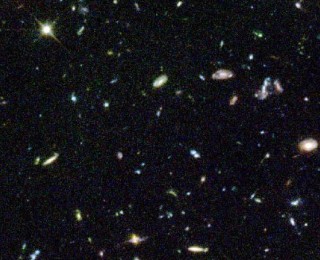
To accurately model the universe, we need large surveys of its content and behavior. But how can we be sure that our surveys are a representative snapshot of the universe as a whole? In this post we tackle the problem of cosmic variance.
by Dan Gifford | Oct 2, 2012 | Daily Paper Summaries
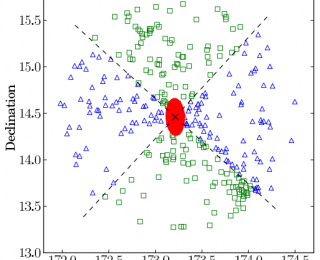
Title: Spatial Anisotropy of Galaxy Kinematics in Sloan Digital Sky Survey Galaxy ClustersFirst Author: Skielboe, A.Galaxy clusters are beautifully simple, but also fantastically complicated structures. For many years, astronomers have treated these systems as spherical cows, but simulations and observations have repeatedly shown that clusters exhibit triaxial rather than spherical shapes with nice relaxed dynamics (are virialized). Many cluster mass estimators assume spherically symmetric velocity fields (i.e. you measure the same velocities of cluster galaxies regardless of which side you observe from), but if the shape is anisotropic it’s probable the velocities are as well. This makes it crucial to measure the degree of triaxiality of clusters in observations to constrain its impact on mass estimates.The authors sought to show that velocity anisotropy exists by testing for an azimuthal (angle on the sky) dependence of the projected velocity dispersion. To do this, they used a stacked sample of galaxy clusters from the Sloan Digital Sky Survey (SDSS). Stacking is a common technique of taking many clusters with a similar property (in this case galaxy richness or number which is a proxy for mass) and adding them together to make a composite system with many hundreds more galaxies than any one system alone. This gives much better statistics and makes a result more robust.Because the authors are looking for azimuthal variations, they fit each cluster with an ellipse and stack them with their major axes aligned. They then estimate the projected velocity dispersion for galaxies closer to the stacked minor axis, and a separate velocity dispersion for galaxies closer to the major axis. Because they have a stacked sample with...
by Kirit Karkare | Aug 14, 2012 | Daily Paper Summaries
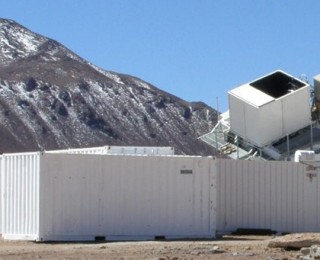
The QUIET telescope has been observing the CMB, looking for the gravitational wave background. Will it find the “smoking gun” for the theory of inflation?
