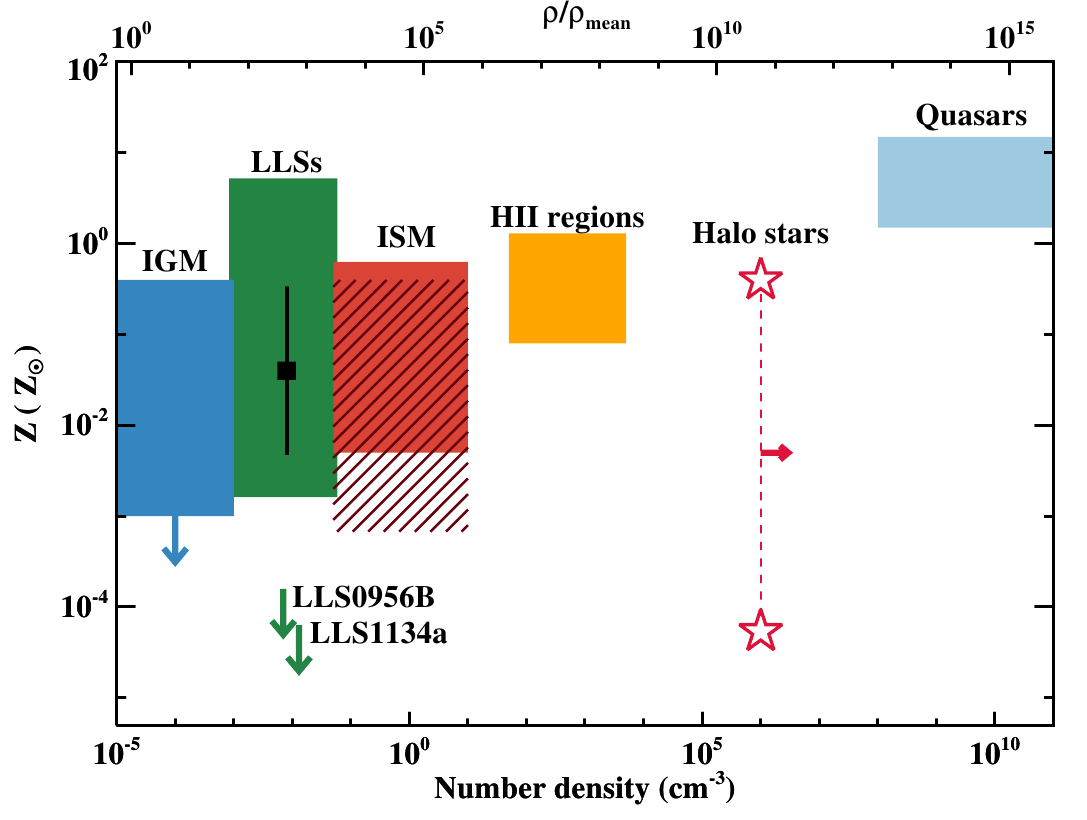
Untouched gas in the early universe
Fumagalli et al. may have observed the first example of metal-free gas untouched after the Big Bang.

Fumagalli et al. may have observed the first example of metal-free gas untouched after the Big Bang.
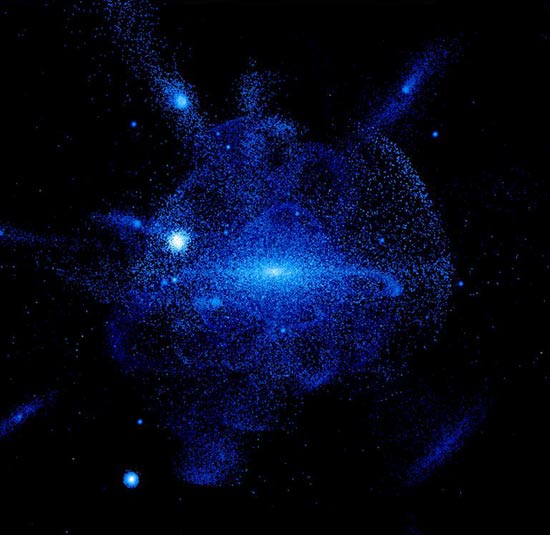
The Milky Way’s stellar halo – a roughly spherical distribution of stars surrounding our spiral galaxy – is a valuable tool for probing the early evolution of our galaxy. The stellar halo contains some of the oldest stars in our galaxy, whose properties reflect that of the environment in which they formed. This paper focuses on using cosmological simulations of galaxy formation to match the observed structure and kinematics (how the stars move) of stars in Milky Way’s halo.
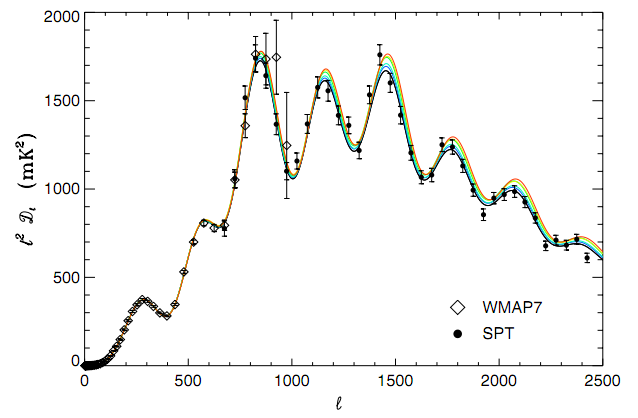
Dark energy is causing the expansion of the universe to accelerate. The most common model for dark energy has a negligible dark energy density in the early universe. The authors use measurements of the CMB power spectrum to constrain the density of dark energy in the early universe.
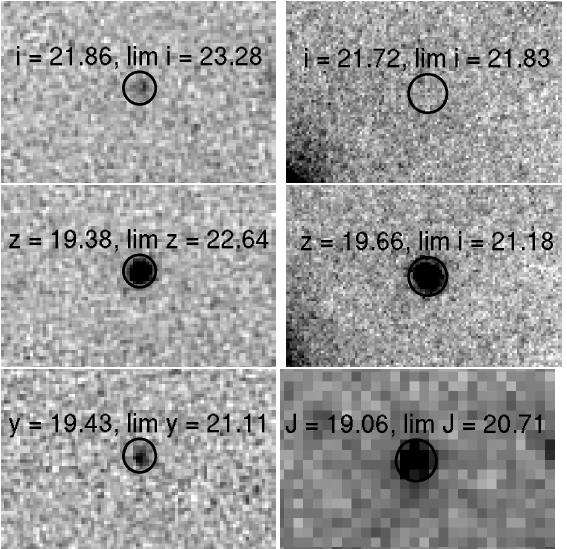
Morganson et al. announce the discovery of the first quasar discovered by Pan-STARRS. The newly detected quasar is a Broad Absorption Line quasar at a redshift of 5.73 +/- 0.02 with a z band magnitude of 19.4, a luminosity of 3.8×1047 erg/s, and an estimated black hole mass of 6.9×10⁹ solar masses.
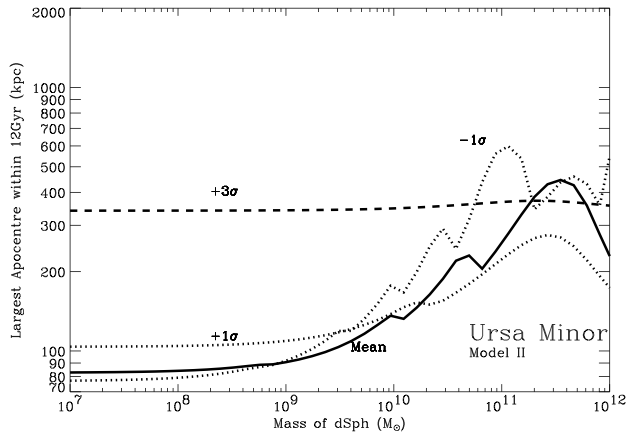
Turning back the clock to study our host galaxy’s companions. Where did they come from?
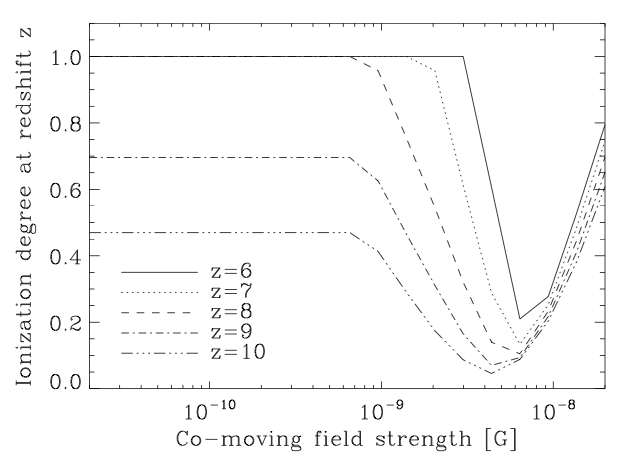
The authors of this paper use modern constraints on reionization to estimate the strength of primordial magnetic fields at high redshift.