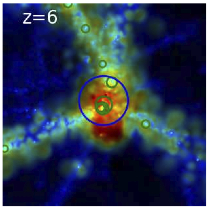
Cold Flows and the First Quasars
Using a new simulation called MassiveBlack, the authors of today’s astrobite manage to grow black holes massive enough (and quickly enough) to be consistent with the recently discovered z ~ 7 quasar.

Using a new simulation called MassiveBlack, the authors of today’s astrobite manage to grow black holes massive enough (and quickly enough) to be consistent with the recently discovered z ~ 7 quasar.
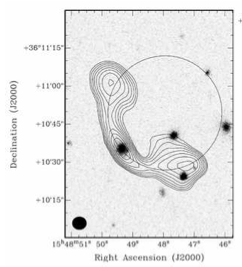
Freeland & Wilcots (2011) present observations of seven “double bent” radio galaxies which they use to measure the density of the intergalactic medium in galaxy groups. They use these observations to draw conclusions about the disruption of dwarf galaxies and the baryon content of these groups.
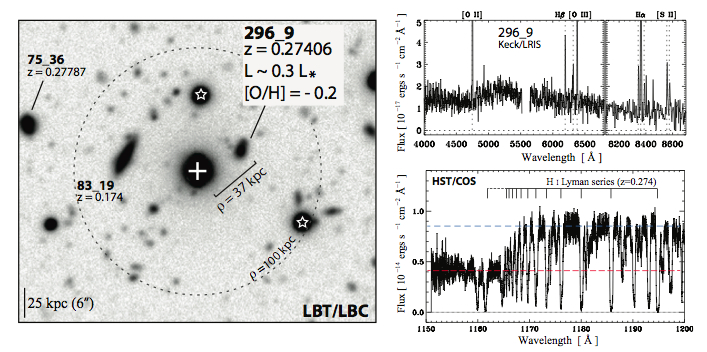
Ribaudo et al. present observations of a low-metallicity gas system and associated galaxy that they argue provide evidence for what is known as “cold mode accretion”, whereby baryons fall to the center of a dark matter halo without being shock heated.
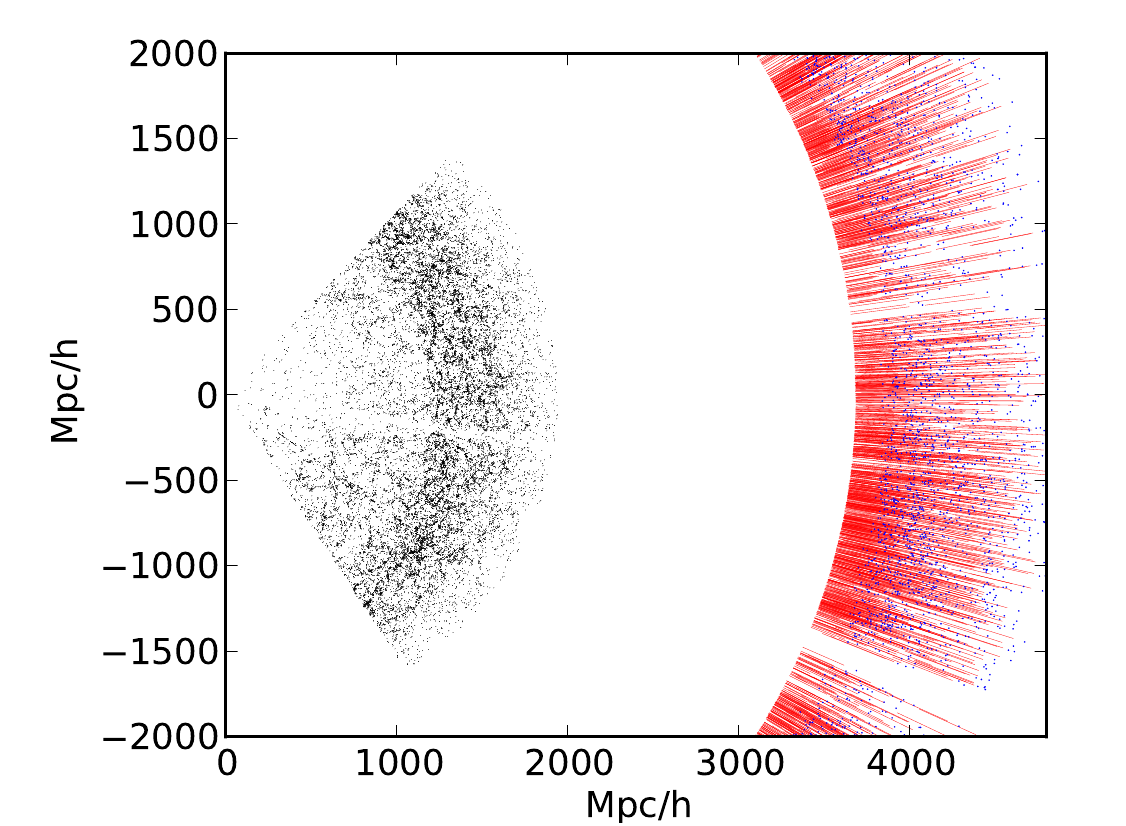
The BOSS project of the Sloan Digital Sky Survey is exploiting the Lyman-α forest in distant quasars to make a 3D map of neutral hydrogen in the early universe.
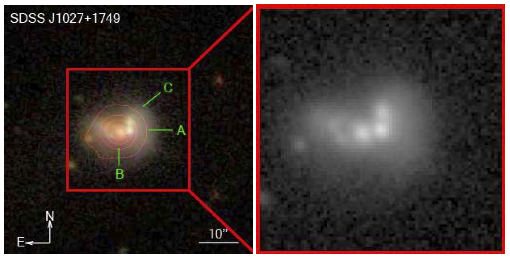
In this paper, the authors describe a system of three supermassive black holes interacting on kpc scales, and use their result to estimate the frequency of such interactions.
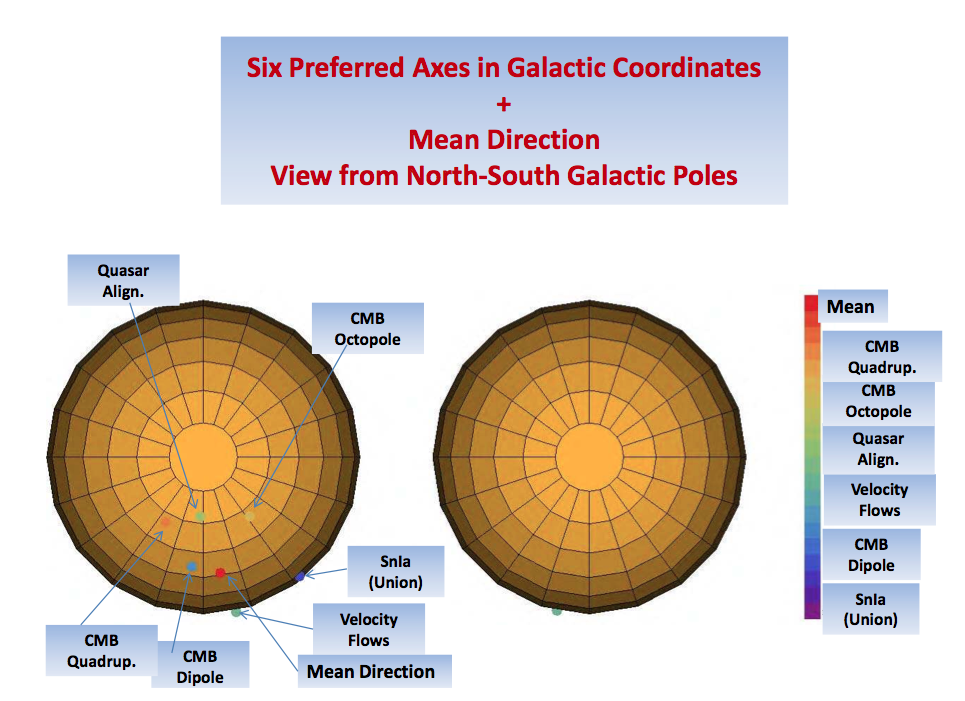
The standard model of cosmology is simple, elegant, and very successful. How do we tell that whether our model is doing well? And what phenomena does it still have trouble explaining?