by Dan Gifford | Feb 18, 2011 | Daily Paper Summaries
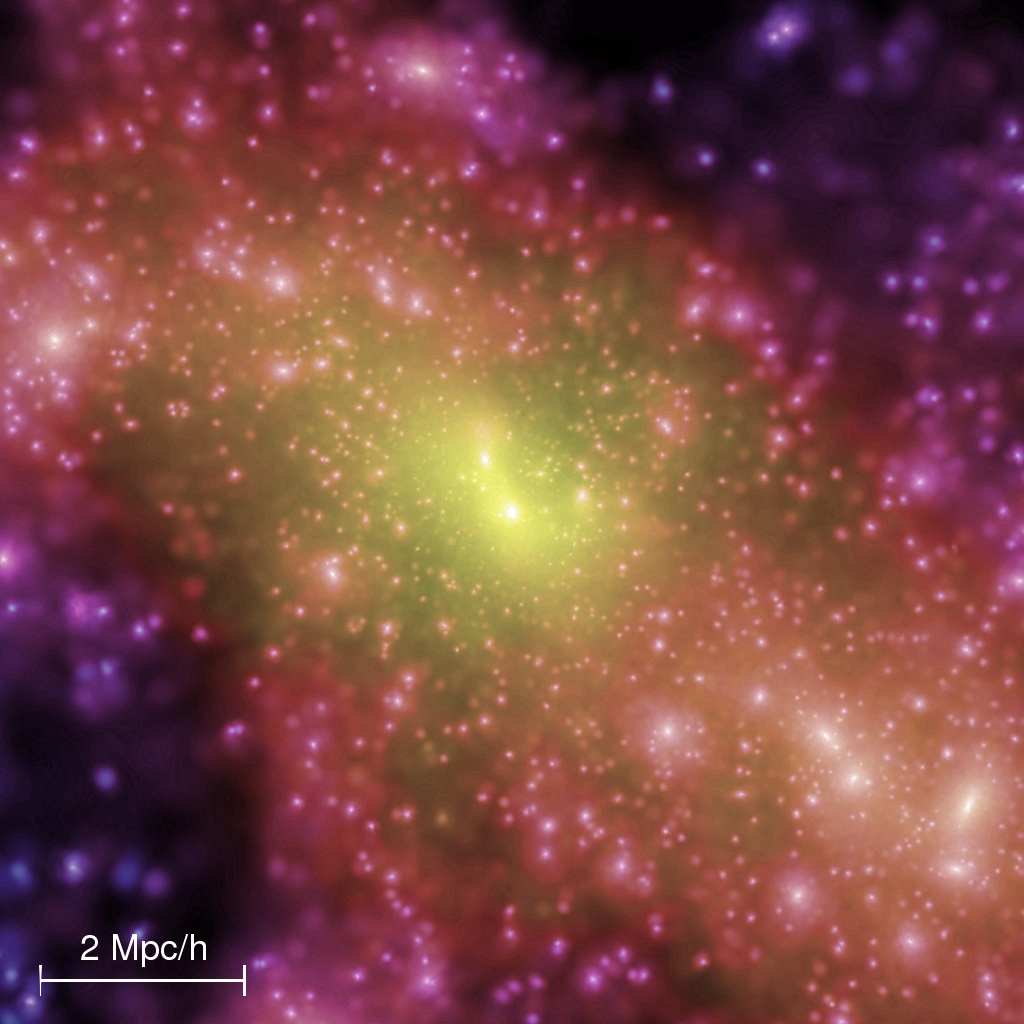
Many simulations of our universe result in a similar discrepancy with current observations. The simulations predict an abundance of subhalos around galaxies the size of our Milky Way which are an order of magnitude higher than observations suggest. This paper tackles the issue of detecting these presumably faint subhalos by analyzing the effects they might have on streams from globular clusters and other satellite galaxies we know to exist.
by Nathan Sanders | Feb 16, 2011 | Daily Paper Summaries
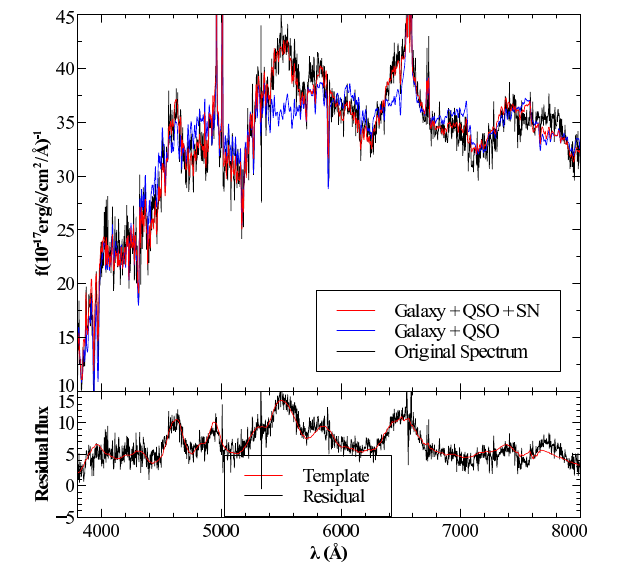
Each galaxy in the sky will probably produce just one or two supernovae in our lifetimes, so you have to be lucky to spot one. But if you happen to be observing hundreds of thousands of galaxies anyway, you’re bound to catch a few.
by jsureshcfa | Feb 15, 2011 | Daily Paper Summaries
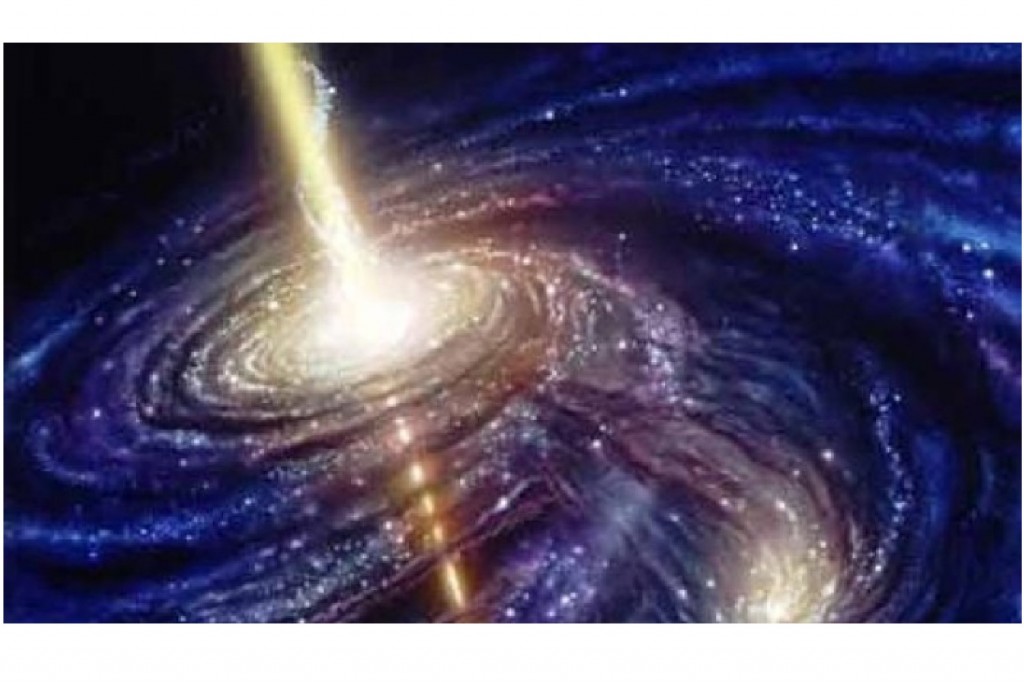
Today’s authors propose that, in addition to the first stars, the first stellar black holes might have contributed significantly to the period of cosmic reionization.
by Dan Gifford | Feb 9, 2011 | Daily Paper Summaries
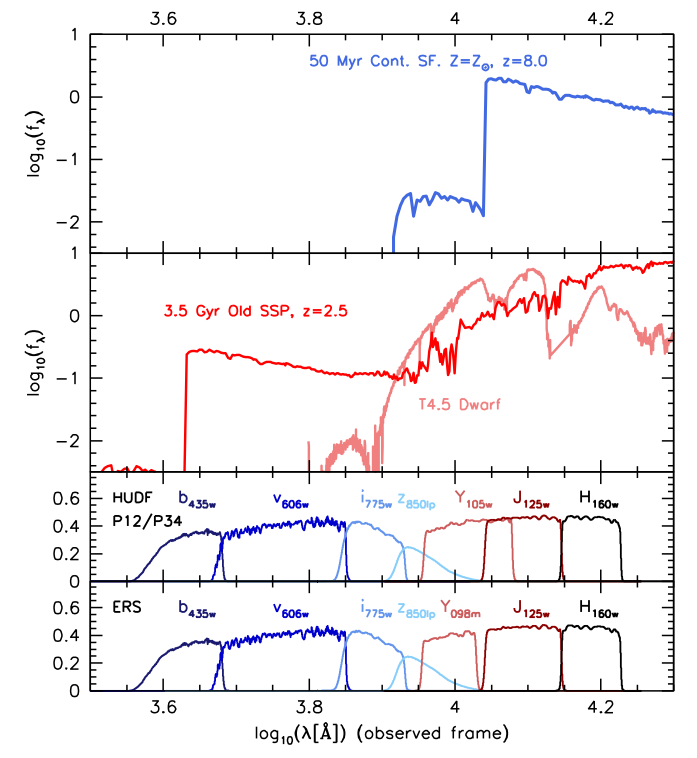
Neutral hydrogen is very effective at absorbing radiation with wavelengths shorter than 91.2nm. This has become known as the Lyman limit. In this study, the authors use the Lyman-break technique to search for galaxies with z ~ 8 – 9. They use the latest Hubble WFC3 near-infrared data to look for large (Y-J) colors or, “Y-drops”, in a larger field than previous studies due to the camera’s larger field and better infrared sensitivity.
by jsureshcfa | Feb 5, 2011 | Daily Paper Summaries
Using the anthropic principle to explain the cosmological constant requires some way to determine probabilities over the multiverse. But strangely enough, this predicts that the probability of finding yourself in a Universe with a positive cosmological constant (like ours) is exactly 0. The authors of this work argue that this is not a fatal blow to anthropic reasoning or the multiverse hypothesis.
by Nathan Sanders | Feb 2, 2011 | Daily Paper Summaries, Quick Notes
Update: you can read Avi Loeb and Freeman Dyson’s discussion of this issue in our latest post.Imagine a civilization in our galaxy a trillion years in the future. Astronomers in this society may not know of a universe beyond their own galaxy. At approximately the year 100 billion, all galaxies outside the Local Group of gravitationally bound galaxies will have sped out beyond the event horizon of the observable universe and the Local Group will have long since conglomerated into a single galaxy (“Milkomeda”). The Sun will have died out long ago, but the lowest mass stars in the present-day Milky way (0.1~1 solar masses) may still be living.What’s more, the accelerating expansion of the universe predicted by the standard ΛCDM cosmology has redshifted the photons of the cosmic microwave background beyond the event horizon of the entire future universe, so future BOOMERANG or WMAP experiments will not work. Clearly, these future observers could not use the same tools we have to understand the origins of the universe. Fortunately, Harvard Professor Avi Loeb has a very interesting short paper on the arXiv today that speculates on the tools astronomers living a trillion years in the future could use to infer the standard model of cosmology we have derived from present-day observations of the universe.Loeb suggests that these future observers look for the precious few stars that have had a velocity sufficient to escape from Milkomeda (hypervelocity stars, HVSs). HVSs can be ejected from a galaxy by gravitational interactions with the supermassive black hole at the galaxy’s nucleus. After about two billion years of travel, Loeb estimates, the acceleration of...
