• RSS
  • Submit a Guest Post
  • Undergraduates: Submit your Research!
  • Suggest a Paper Topic!
astrobites
  • About
    • About Astrobites
    • Meet the Authors
    • Statement of Inclusivity
    • Copyright & Permissions
  • Latest Research
    • Daily Paper Summaries
    • Classics
    • Undergrad Research
    • Physical Review Coverage
  • Beyond astro-ph
    • Beyond astro-ph Library
    • Interviews
    • Career Navigation
    • Personal Experiences
    • Current Events
    • Teaching with Astrobites
  • Guides
    • EM Spectrum
    • Galaxies & AGNs
    • Spectroscopy and Spectral Lines
    • Adaptive Optics
    • Gravitational Waves
    • Transient Astronomy
    • Astrophysical Software
    • Graduate School
    • Writing a personal statement for grad apps
    • First Observing Run
    • …More Guides!
Select Page
Highly excited and concentrated: an academic stereotype or the gas in a galaxy?

Highly excited and concentrated: an academic stereotype or the gas in a galaxy?

by Olivia Cooper | Oct 18, 2022 | Daily Paper Summaries

Much like some astronomers, this distant galaxy keeps the lights on by maintaining high excitement and a central concentration (of hot gas)

Quench your inner star formation

Quench your inner star formation

by Olivia Cooper | Sep 10, 2022 | Daily Paper Summaries

Does one galaxy’s star formation quench another’s? Find out in today’s astrobite.

Bright galaxies blowing bubbles

Bright galaxies blowing bubbles

by Olivia Cooper | Aug 6, 2022 | Daily Paper Summaries

Today’s paper takes a clear view of bubbles blown by bright galaxies in the Epoch of Reionization
Big, bright, bursty, AND early: what are the odds?

Big, bright, bursty, AND early: what are the odds?

by Olivia Cooper | Jun 7, 2022 | Daily Paper Summaries

Just how rare is this hyperluminous heavily obscured active galactic nucleus in a dusty starburst in the early Universe?
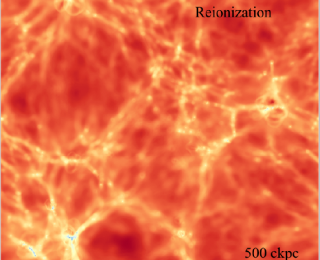
Explaining Ancient Stellar Populations

Explaining Ancient Stellar Populations

by Caitlin Doughty | Aug 30, 2019 | Daily Paper Summaries

Why do some dwarf galaxies exhibit such old stellar populations? Perhaps simulations of reionization including radiative transfer can help to explain this peculiar trait.
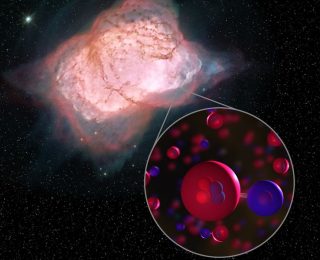
The First Molecule in the Universe

The First Molecule in the Universe

by Charles Law | Jul 30, 2019 | Daily Paper Summaries

SOFIA observations have detected HeH+ in the planetary nebula NGC 7027, shedding new light on the dawn of chemistry in the universe.

« Older Entries
Next Entries »

Loading

Follow our socials

  • Bluesky
  • Facebook
  • Instagram
  • RSS Feed

More Posts About

AAS AGN astronomy astrophysics binary stars black holes cosmology dark matter dwarf galaxies exoplanets galaxies galaxy evolution gravitational waves habitability JWST Kepler Milky Way observations planetary science planet formation protoplanetary disks radio astronomy simulations solar system spectroscopy star formation stars stellar evolution supernovae theory

Posts by Category

  • Accessibility
  • Applications
  • Beyond
  • Book Reviews
  • Career Navigation
  • Classics
  • Climate Change
  • Course Assignments
  • Crossposts
  • Current Events
  • Daily Paper Summaries
  • Game Reviews
  • Guides
  • Historical Astronomy
  • Instrumentation
  • Interviews
  • Outreach
  • Personal Experiences
  • PRJ
  • Quick Notes
  • Satellites
  • Teaching
  • Undergraduate Research

More Astronomy

  • AAS
  • AAS Nova
  • astro-ph
  • AstroBetter
  • APOD

Read Astrobites in Other Languages

  • Astrobitos (Spanish)
  • Astropontos (Portuguese)
  • staryab (Farsi)

Listen to Astrobites

  • astro[sound]bites

Discover More Incredible Science

  • ScienceBites Network
  • RSS

© 2026 Astrobites | All Rights Reserved | Supported by AAS | Designed by Elegant Themes | Powered by WordPress