by Joanna Ramasawmy | Feb 1, 2018 | Daily Paper Summaries
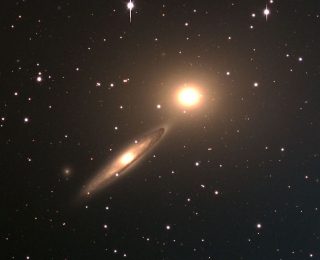
How do galaxies transform from blue, star-forming discs into the massive red-and-dead ellipticals that we observe so frequently? Post-starburst galaxies, caught in this transition phase, might hold the answers to this puzzle in galaxy evolution.
by Mia de los Reyes | Jan 26, 2018 | Classics, Daily Paper Summaries
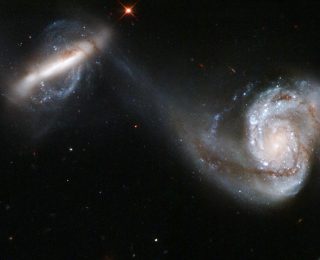
The year is 1978. Some people are wondering how star formation works in weird-looking galaxies.
by Matthew Green | Jan 16, 2018 | Daily Paper Summaries
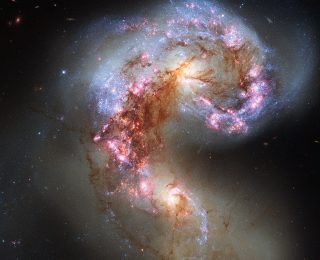
How does habitability vary on a galactic scale?

by Ashley Villar | Jan 10, 2018 | Career Navigation, Current Events
Prof. Charlie Conroy’s research spans from nearby stars to galaxies far, far away. Read more about his exciting research and career before his keynote at #AAS231!
by Gourav Khullar | Nov 22, 2017 | Daily Paper Summaries
In the study of structure formation in the universe, the ‘missing satellite galaxies’ problem is said to be almost solved. Is today’s paper the final nail in the coffin?

by Zephyr Penoyre | Oct 24, 2017 | Daily Paper Summaries
We understand cosmology by building models that we can trace back through time, but nothing about these models limits them to the past. As the universe expands, faster and faster pushed by dark energy, when does that acceleration outstrip gravity? And when do the last stars form?
