by Jamila Pegues | Aug 16, 2017 | Daily Paper Summaries
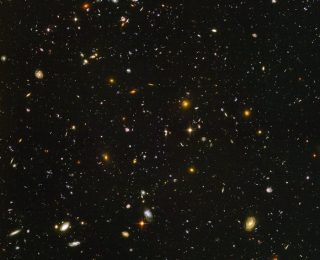
There are nearly 10,000 galaxies in this image, with a staggering variety of shapes, colors, sizes, and ages. But buried beneath that variety, we can find patterns in how galaxies morph and evolve over time. Today’s astrobite explores one such set of links in the giant chains of galaxy evolution.
by Mia de los Reyes | Aug 2, 2017 | Daily Paper Summaries
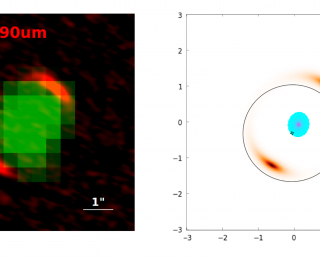
Today’s paper uses gravitational lensing to find a dusty starburst galaxy so far away that it existed when the universe was less than a billion years old.

by Gourav Khullar | May 31, 2017 | Current Events, Personal Experiences
Learn more about AAS plenary speakers and their research!
by Zephyr Penoyre | May 25, 2017 | Classics, Daily Paper Summaries
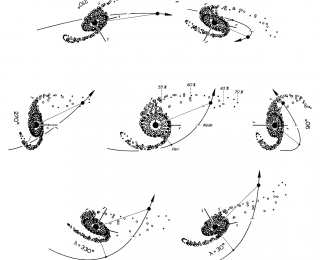
In 1972 astronomers witnessed the first full galaxy collision, not by looking up at the sky but by peering at a small screen in a very large box. The methods and implications are enshrined in modern astrophysics, but it is the results themselves that still truly amaze, stunning simple images of galaxies, playfully strewn and joyfully picked apart. A full exploration of a galaxy of a scale not matched before or since.
by Mia de los Reyes | May 17, 2017 | Daily Paper Summaries
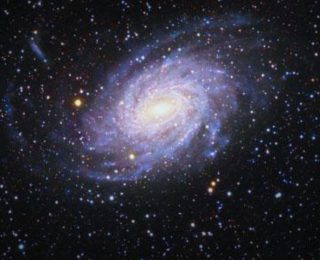
Today’s paper discusses a new way to measure physical properties of galaxies—including, for the first time, “star formation acceleration.”
by Paddy Alton | Apr 21, 2017 | Daily Paper Summaries
Massive elliptical galaxies come in two types, the fast and the furious (or, more formally, fast rotators and slow rotators). But what’s the difference? And why is there a difference? In today’s article we’ll look at the work of two independent teams working on the same problem.
