• RSS
  • Submit a Guest Post
  • Undergraduates: Submit your Research!
  • Suggest a Paper Topic!
astrobites
  • About
    • About Astrobites
    • Meet the Authors
    • Statement of Inclusivity
    • Copyright & Permissions
  • Latest Research
    • Daily Paper Summaries
    • Classics
    • Undergrad Research
    • Physical Review Coverage
  • Beyond astro-ph
    • Beyond astro-ph Library
    • Interviews
    • Career Navigation
    • Personal Experiences
    • Current Events
    • Teaching with Astrobites
  • Guides
    • EM Spectrum
    • Galaxies & AGNs
    • Spectroscopy and Spectral Lines
    • Adaptive Optics
    • Gravitational Waves
    • Transient Astronomy
    • Astrophysical Software
    • Graduate School
    • Writing a personal statement for grad apps
    • First Observing Run
    • …More Guides!
Select Page
Our halo is getting younger, spatially speaking

Our halo is getting younger, spatially speaking

by Ingrid Pelisoli | Sep 14, 2016 | Daily Paper Summaries

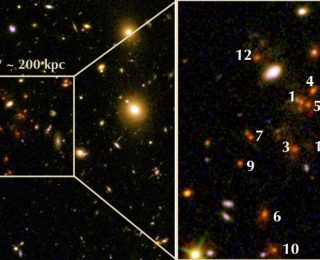
The halo of the Milky Way is old. You’ve probably heard that a million times. But can we know more about its age than simply “it’s old”? Yes, we can — and that leads to interesting results!
Image credits: NASA/CXC/M.Weiss/Ohio State/A Gupta et al.
Like a Rolling Coin: How Stars Trace Out The Dark Matter Surrounding Us

Like a Rolling Coin: How Stars Trace Out The Dark Matter Surrounding Us

by Zephyr Penoyre | Sep 12, 2016 | Daily Paper Summaries

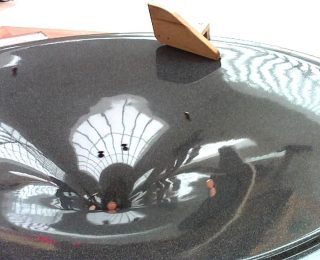
As smaller galaxies collide with our own they’re slowly torn apart. By watching how they spread across the night’s sky we can infer an incredible amount about the shape of the galaxy and the nature of dark matter.

Now You See Them, Now You Don’t – How to Find Distant Galaxies

Now You See Them, Now You Don’t – How to Find Distant Galaxies

by Steph Greis | Sep 8, 2016 | Classics

A look at a classic paper exploring a novel technique to select distant galaxies by waiting for them to drop out of the spectra…

Cosmic reionization: Who is to blame?

Cosmic reionization: Who is to blame?

by Joanna Bridge | Sep 2, 2016 | Daily Paper Summaries

What caused the universe to shift from neutral to ionized as it expanded and cooled? Today, we examine clues that indicate it could have been the result of rapid star formation from the earliest galaxies.

The Darkest Galaxies

The Darkest Galaxies

by Caroline Huang | Aug 29, 2016 | Daily Paper Summaries

Astronomers have recently discovered a number of galaxies made almost entirely of dark matter. Today’s astrobite takes a closer look at one of them.

New Recipe for Making Nuclear Star Clusters

New Recipe for Making Nuclear Star Clusters

by Benny Tsang | Jul 28, 2016 | Daily Paper Summaries

Dense star clusters gather around the centers of most galaxies. Where do they come from?

« Older Entries
Next Entries »

Loading

Follow our socials

  • Bluesky
  • Facebook
  • Instagram
  • RSS Feed

More Posts About

AAS AGN astronomy astrophysics binary stars black holes cosmology dark matter dwarf galaxies exoplanets galaxies galaxy evolution gravitational waves habitability JWST Kepler Milky Way observations planetary science planet formation protoplanetary disks radio astronomy simulations solar system spectroscopy star formation stars stellar evolution supernovae theory

Posts by Category

  • Accessibility
  • Applications
  • Beyond
  • Book Reviews
  • Career Navigation
  • Classics
  • Climate Change
  • Course Assignments
  • Crossposts
  • Current Events
  • Daily Paper Summaries
  • Game Reviews
  • Guides
  • Historical Astronomy
  • Instrumentation
  • Interviews
  • Outreach
  • Personal Experiences
  • PRJ
  • Quick Notes
  • Satellites
  • Teaching
  • Undergraduate Research

More Astronomy

  • AAS
  • AAS Nova
  • astro-ph
  • AstroBetter
  • APOD

Read Astrobites in Other Languages

  • Astrobitos (Spanish)
  • Astropontos (Portuguese)
  • staryab (Farsi)

Listen to Astrobites

  • astro[sound]bites

Discover More Incredible Science

  • ScienceBites Network
  • RSS

© 2026 Astrobites | All Rights Reserved | Supported by AAS | Designed by Elegant Themes | Powered by WordPress