by Andrew Emerick | Jun 16, 2015 | Daily Paper Summaries
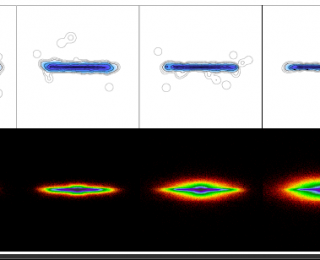
Star formation and supernova explosions play an important role in galaxy formation and evolution, in a process known as feedback. Today’s astrobite discusses how modifying the amount of feedback from supernova explosions affects the properties of the disc of a Milky Way galaxy, and how it affects the hot, gaseous halo surrounding massive galaxies.
by Michael Zevin | May 5, 2015 | Daily Paper Summaries
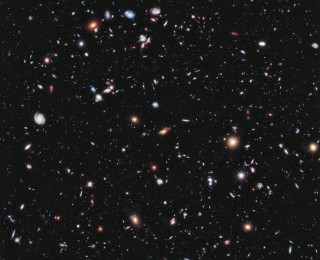
What were the first galaxies in the Universe like? Current observations can only access a handful of these ancients. However, a new simulation has synthesized millions to better understand the galaxies of 13 billion years ago.
by Andrew Emerick | Jan 27, 2015 | Daily Paper Summaries
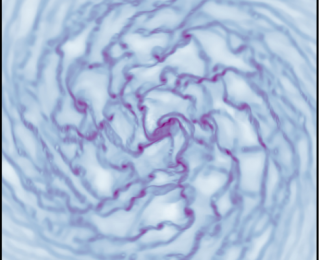
Feedback processes, like supernova and AGN, are essential for accurately simulation galaxy formation and evolution. Today’s astrobite examines the role of radiation feedback in galaxy formation in new “radiation hydrodynamics” simulations of galaxies.
by Ryan Foltz | Apr 5, 2014 | Daily Paper Summaries
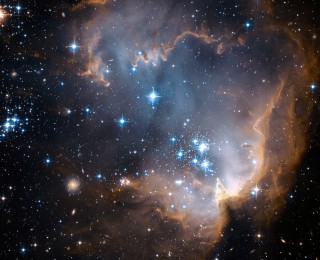
The authors use a cosmological simulation to characterize the rates at which galaxies form new stars.
by Nick Hand | Oct 29, 2013 | Daily Paper Summaries
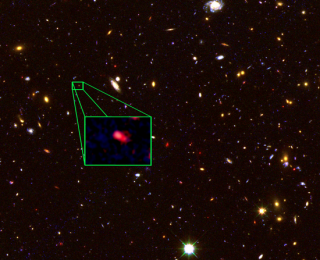
The authors of this work report the discovery of the most distant, spectroscopically-confirmed galaxy found to date, which presently lies about 30 billion light years from Earth. The galaxy is being observed as it was at a time just 700 million years after the Big Bang, which is a mere 5% of the universe’s current age of 13.8 billion years.
by Lucia Morganti | Apr 12, 2013 | Daily Paper Summaries
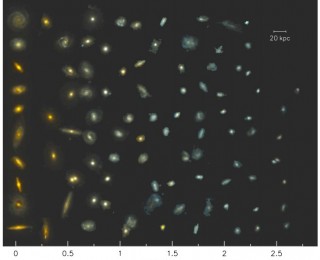
The central question of this Letter is how and when the Milky Way assembled its stellar mass. This issue is addressed by tracing the formation history of spiral galaxies which closely resemble the Milky Way.
