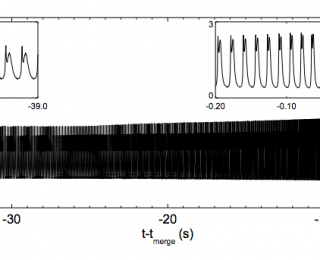
Things that go “chirp” in the night
Today’s paper talks about the not-yet-observed electromagnetic counterparts to gravitational waves

Today’s paper talks about the not-yet-observed electromagnetic counterparts to gravitational waves
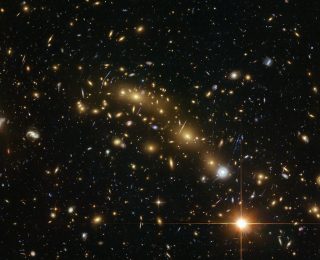
Gravitational lensing allows us to look out to cosmological distances. This time we see super star clusters!
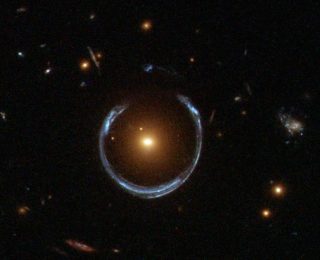
Gravitational lenses provide an opportunity to study distant galaxies in detail. In today’s article we explore an example of how these phenomena are contributing to our understanding of galaxy evolution.
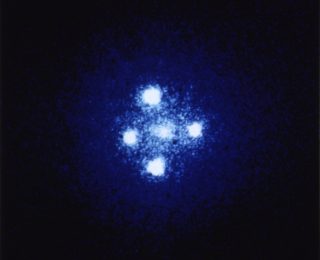
Many dark galaxies may be hiding unseen in the universe—but we still might be able to detect them. Here’s how.
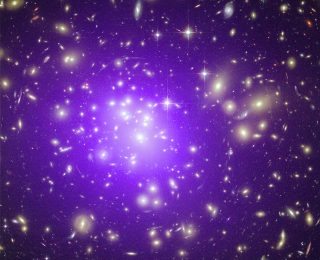
A recently proposed theory of gravity that got the astrophysical community’s attention is put to tests by observations. Does it succeed? Let’s find out!
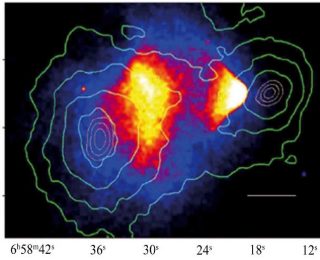
A classic paper on dark matter is brought to ‘light’ in this bite, discussing a discovery that provides one of the best evidences we have for non-baryonic matter in the universe.