• RSS
  • Submit a Guest Post
  • Undergraduates: Submit your Research!
  • Suggest a Paper Topic!
astrobites
  • About
    • About Astrobites
    • Meet the Authors
    • Statement of Inclusivity
    • Copyright & Permissions
  • Latest Research
    • Daily Paper Summaries
    • Classics
    • Undergrad Research
    • Physical Review Coverage
  • Beyond astro-ph
    • Beyond astro-ph Library
    • Interviews
    • Career Navigation
    • Personal Experiences
    • Current Events
    • Teaching with Astrobites
  • Guides
    • EM Spectrum
    • Galaxies & AGNs
    • Spectroscopy and Spectral Lines
    • Adaptive Optics
    • Gravitational Waves
    • Transient Astronomy
    • Astrophysical Software
    • Graduate School
    • Writing a personal statement for grad apps
    • First Observing Run
    • …More Guides!
Select Page
UR: Designing a Smaller and More Sensitive Gravitational Wave Detector

UR: Designing a Smaller and More Sensitive Gravitational Wave Detector

by Guest | May 23, 2021 | Undergraduate Research

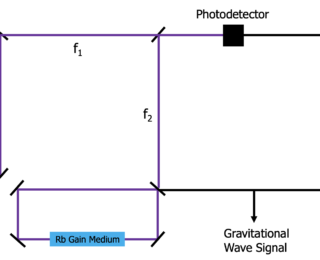
In today’s #UndergradResearch post, find out how superluminal lasers could soon make gravitational wave detectors tiny fractions of their current size.
UR: Measuring the Hubble Constant With Dynamical Tides In Inspiraling Neutron Star Binaries

UR: Measuring the Hubble Constant With Dynamical Tides In Inspiraling Neutron Star Binaries

by Guest | May 16, 2021 | Undergraduate Research

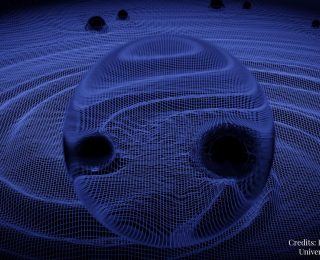
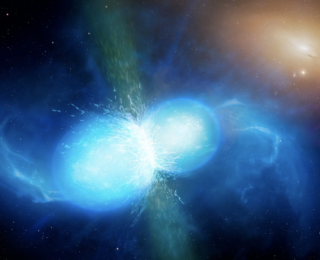
In this #UndergradResearch post, James Sunseri explores the possibility of using gravitational waves from colliding neutron stars to measure the Hubble Constant without observing the electromagnetic spectrum.

UR: Finding the Chirp

UR: Finding the Chirp

by Guest | Apr 11, 2021 | Undergraduate Research

Today’s #UndergradResearch post features Shashwat Singh’s work using deep learning as an asset for gravitational wave astronomy!
A Long Drive to Outer Space? Put Gravitational Waves on the Radio!

A Long Drive to Outer Space? Put Gravitational Waves on the Radio!

by Sumeet Kulkarni | Feb 24, 2021 | Daily Paper Summaries

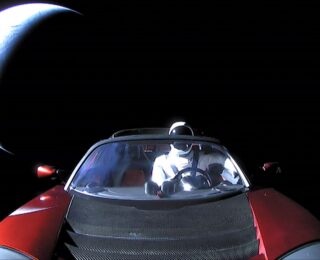
Space probes to the outer solar system take more than a decade to get there. But that doesn’t mean we have to sit and wait – we can use them to try and detect gravitational waves!
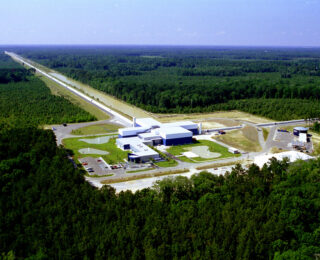
Constraining a cacophony of coalescences

Constraining a cacophony of coalescences

by Alex Pizzuto | Feb 19, 2021 | Daily Paper Summaries

Earth based gravitational wave detectors combine their data to search for a discordant hum from distant gravitational wave sources.

Did we just see two black holes merge?

Did we just see two black holes merge?

by Viraj Karambelkar | Feb 12, 2021 | Daily Paper Summaries

Today’s paper describes how we may have seen light from two black holes colliding with each other.

« Older Entries
Next Entries »

Loading

Follow our socials

  • Bluesky
  • Facebook
  • Instagram
  • RSS Feed

More Posts About

AAS AGN astronomy astrophysics binary stars black holes cosmology dark matter dwarf galaxies exoplanets galaxies galaxy evolution gravitational waves habitability JWST Kepler Milky Way observations planetary science planet formation protoplanetary disks radio astronomy simulations solar system spectroscopy star formation stars stellar evolution supernovae theory

Posts by Category

  • Accessibility
  • Applications
  • Beyond
  • Book Reviews
  • Career Navigation
  • Classics
  • Climate Change
  • Course Assignments
  • Crossposts
  • Current Events
  • Daily Paper Summaries
  • Game Reviews
  • Guides
  • Historical Astronomy
  • Instrumentation
  • Interviews
  • Outreach
  • Personal Experiences
  • PRJ
  • Quick Notes
  • Satellites
  • Teaching
  • Undergraduate Research

More Astronomy

  • AAS
  • AAS Nova
  • astro-ph
  • AstroBetter
  • APOD

Read Astrobites in Other Languages

  • Astrobitos (Spanish)
  • Astropontos (Portuguese)
  • staryab (Farsi)

Listen to Astrobites

  • astro[sound]bites

Discover More Incredible Science

  • ScienceBites Network
  • RSS

© 2026 Astrobites | All Rights Reserved | Supported by AAS | Designed by Elegant Themes | Powered by WordPress