• RSS
  • Submit a Guest Post
  • Undergraduates: Submit your Research!
  • Suggest a Paper Topic!
astrobites
  • About
    • About Astrobites
    • Meet the Authors
    • Statement of Inclusivity
    • Copyright & Permissions
  • Latest Research
    • Daily Paper Summaries
    • Classics
    • Undergrad Research
    • Physical Review Coverage
  • Beyond astro-ph
    • Beyond astro-ph Library
    • Interviews
    • Career Navigation
    • Personal Experiences
    • Current Events
    • Teaching with Astrobites
  • Guides
    • EM Spectrum
    • Galaxies & AGNs
    • Spectroscopy and Spectral Lines
    • Adaptive Optics
    • Gravitational Waves
    • Transient Astronomy
    • Astrophysical Software
    • Graduate School
    • Writing a personal statement for grad apps
    • First Observing Run
    • …More Guides!
Select Page
Viability of Inhabiting the Galilean Moons

Viability of Inhabiting the Galilean Moons

by Guest | May 11, 2020 | Course Assignments

When the day comes for humans to develop permanent places to live on other worlds, we’ll probably start with the Moon or Mars. How feasible would it be to live on the moons of Jupiter too?

Cloudy with a chance of wind

Cloudy with a chance of wind

by Stephanie (Hamilton) Deppe | Sep 4, 2019 | Daily Paper Summaries

How does gravity tell us about the winds in a planet’s atmosphere? Read on to find out!
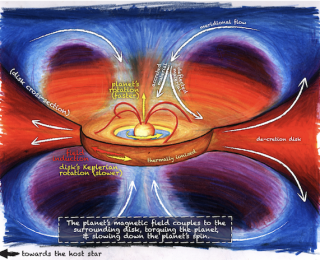
Why are Jupiter and Saturn Spinning so Slowly??

Why are Jupiter and Saturn Spinning so Slowly??

by Jenny Calahan | Aug 21, 2019 | Daily Paper Summaries

Our gas giants spin slower than one might expect. Turns out gas giants outside of our solar system are also slower than originally what we might have thought! Today’s astrobite answers the question: What’s up with dat?
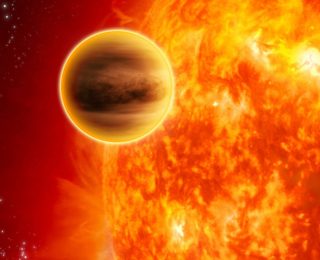
Heating up the guts of gas giants

Heating up the guts of gas giants

by Vatsal Panwar | Jul 22, 2019 | Daily Paper Summaries

Hot Jupiters are eponymously hot from outside. How does this heat affect their atmospheres and deep interiors?
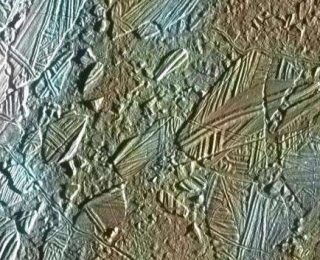
Astrophysical Classics: Evidence for Europa’s Subsurface Ocean

Astrophysical Classics: Evidence for Europa’s Subsurface Ocean

by Kerrin Hensley | Sep 28, 2018 | Classics

Let’s take a trip back to 1979 to check out the first signs of an ocean hidden deep beneath Europa’s icy shell.
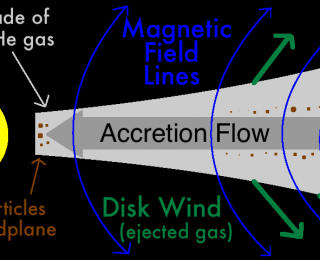
Giant Planets, don’t let a windy day ruin your childhood

Giant Planets, don’t let a windy day ruin your childhood

by Michael Hammer | Aug 22, 2018 | Daily Paper Summaries

Recently, it has been proposed that pebbles play a crucial in the formation of rocky cores that are large enough to accrue a large atmosphere and become gas giants like Jupiter. Do strong magnetic winds make things more difficult?

« Older Entries
Next Entries »

Loading

Follow our socials

  • Bluesky
  • Facebook
  • Instagram
  • RSS Feed

More Posts About

AAS AGN astronomy astrophysics binary stars black holes cosmology dark matter dwarf galaxies exoplanets galaxies galaxy evolution gravitational waves habitability JWST Kepler Milky Way observations planetary science planet formation protoplanetary disks radio astronomy simulations solar system spectroscopy star formation stars stellar evolution supernovae theory

Posts by Category

  • Accessibility
  • Applications
  • Beyond
  • Book Reviews
  • Career Navigation
  • Classics
  • Climate Change
  • Course Assignments
  • Crossposts
  • Current Events
  • Daily Paper Summaries
  • Game Reviews
  • Guides
  • Historical Astronomy
  • Instrumentation
  • Interviews
  • Outreach
  • Personal Experiences
  • PRJ
  • Quick Notes
  • Satellites
  • Teaching
  • Undergraduate Research

More Astronomy

  • AAS
  • AAS Nova
  • astro-ph
  • AstroBetter
  • APOD

Read Astrobites in Other Languages

  • Astrobitos (Spanish)
  • Astropontos (Portuguese)
  • staryab (Farsi)

Listen to Astrobites

  • astro[sound]bites

Discover More Incredible Science

  • ScienceBites Network
  • RSS

© 2026 Astrobites | All Rights Reserved | Supported by AAS | Designed by Elegant Themes | Powered by WordPress