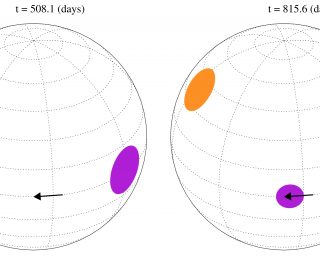
Starspots to Measure Small Differential Rotation Rates
On using photometric data from Kepler to study starspots, and to measure differential rotation rates.

On using photometric data from Kepler to study starspots, and to measure differential rotation rates.

Finding extraterrestrial intelligence would be one of the most enlightening and profound discoveries in history. Today’s post looks at two potential means of finding extraterrestrials by seeing their advanced technology elsewhere in the Milky Way and the Universe.
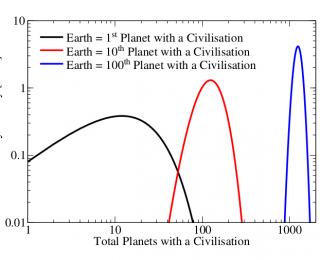
By combining galaxy formation histories and planet formation models, we can estimate the number of potential civilizations in our Universe.
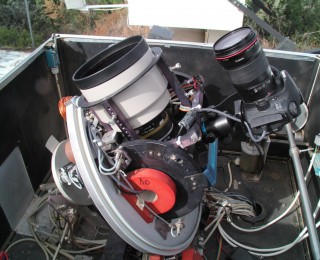
Do you own a digital single-lens reflex (DSLR) camera? The authors of today’s paper do. They used it for astronomy. They used it for science.
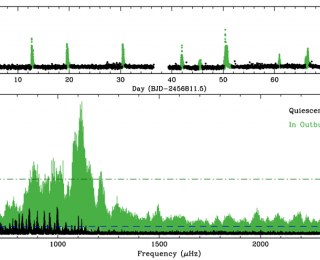
This variable white dwarf pulsates as expected, but it also experiences very bright outbursts. Today’s paper takes us through the discovery and verification of the second pulsating white dwarf with outbursts, and speculates how the pulsations and outbursts may be linked.
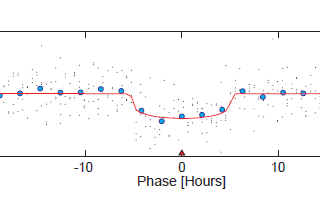
Last month Nasa announced, in what seems like a roughly annual event, the discovery of “Earth 2.0”. Described as a “Bigger, Older Cousin to Earth”, Kepler 452b is the first small planet (defined here as less than twice the radius of the Earth) to be in a roughly one year orbit around a Sun-like star.
But is it otherwise that similar to the Earth? Is it potentially habitable? To try and answer that, let’s look at the discovery paper.