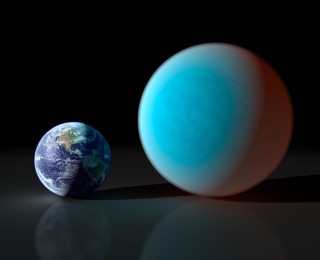
The Rocky Road to Gas Planet-hood
Why do some planets slightly more massive than Earth have gas envelopes, while others don’t?

Why do some planets slightly more massive than Earth have gas envelopes, while others don’t?
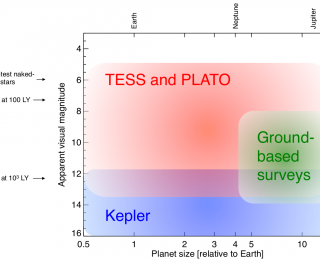
The exoplanet hunt is on. The stakes are high. What will our next-generation telescopes find?

The Hyades underpins our understanding of stellar ages. If its age is wrong then a lot of other ages are wrong too…
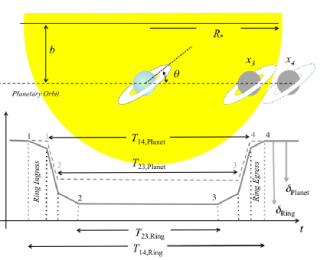
Planetary rings such as those around Saturn are fascinating features. Recent observations also reveal evidence for rings around exoplanets, but it’s a difficult task to distinguish these planets from ringless planets. This Astrobite presents a technique, which simplifies the search for candidates. Even better, the developed code is publicly available and allows you going out to look for candidates for exoplanetary rings.
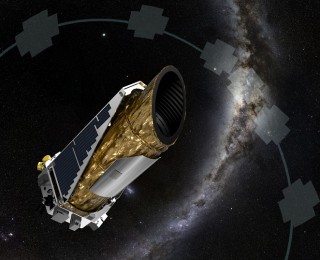
A new analysis technique, that fits simultaneously for light-curve systematics and transit signals, finds 36 planet candidates in the K2 dataset — Kepler is still in the game!
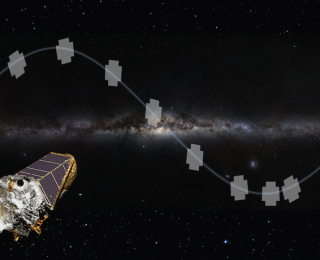
The Kepler Space Telescope was the workhorse of exoplanet discovery until its second reaction wheel failed, rendering it incapable of continuing its original mission. Now, Kepler is back in the game of planet hunting.