by Natasha Batalha | Dec 18, 2014 | Daily Paper Summaries
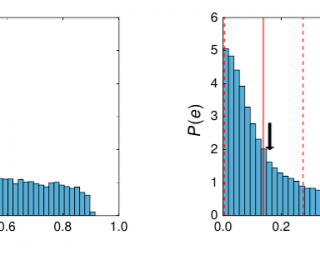
The Kepler Mission has measured planet radii and orbital periods for 3,000+ light curves. So what is next? Either we convince the continental USA to become amateur astronomers… Or we figure out ways to retrieve more planetary parameters from the Kepler data set. I’ll stick with the later. And so will the authors or this paper.
by Ruth Angus | Dec 4, 2014 | Daily Paper Summaries
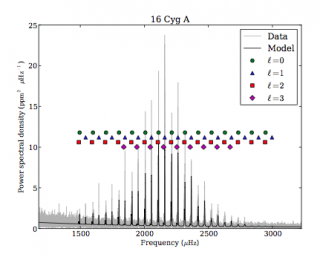
If you didn’t know already, asteroseismology is awesome. Read on to hear why…
by Ashley Villar | Dec 2, 2014 | Daily Paper Summaries
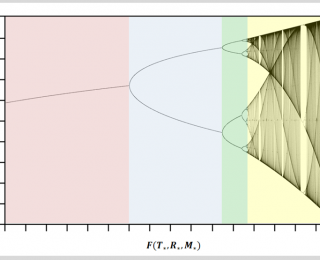
On Earth, the chaotic nature of weather leads to the famous “butterfly effect”, in which the flapping of a butterfly’s wings can theoretically create a hurricane. Chaos is a fundamental element of nature which can arise in many environments–including stars.
by Ruth Angus | Oct 22, 2014 | Daily Paper Summaries
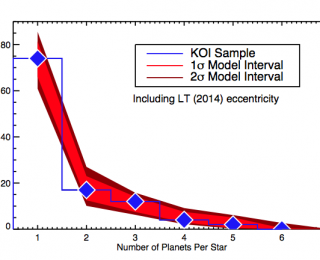
Many exoplanets in our galaxy are all alone. They have no one to cuddle up to on those cold, lonely nights in space…
by Meredith Rawls | Sep 26, 2014 | Daily Paper Summaries
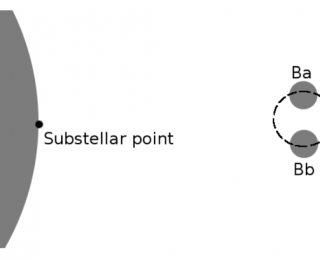
Stars: steady-burning nuclear flames that pierce the darkness of space. Except when they’re not. The star known as HD 181068 is bright, but it’s no standard candle. On closer inspection, this well-studied system is actually home to three stars locked in a complex cosmic dance.
by Korey Haynes | Sep 12, 2014 | Daily Paper Summaries
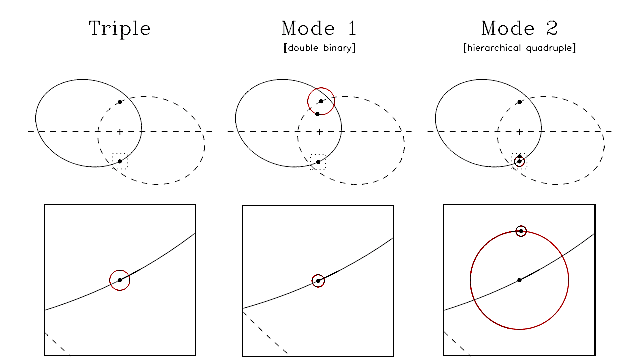
KIC 2856960 appeared to be an interesting but straightforward triple star system in the Kepler catalog. But attempts to model this system prove that appearances can be deceiving.
