by Astrobites | Nov 25, 2015 | Current Events, Daily Paper Summaries
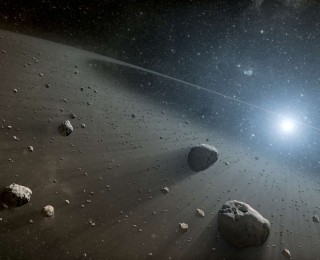
You’ve probably heard of the star in today’s paper. The “WTF star” (WTF stands for “Where’s the flux?” of course) has been in the media since its discovery and two follow-up papers hit astro-ph. Today, a group of astrobiters pool our expertise to bring you a comprehensive look at KIC 8462852 and what new observations may reveal.
by Michael Küffmeier | Nov 4, 2015 | Daily Paper Summaries
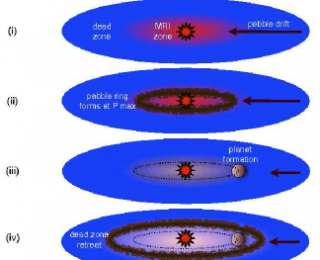
Planets with radii between Earth and Neptune and small radii are the most common in planetary systems. These planets are challenging to explain with classical models of planets. Do planets form instead in-situ in an inside-out manner?
by David Wilson | Oct 26, 2015 | Daily Paper Summaries
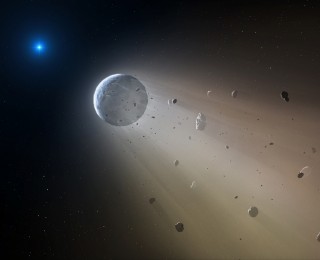
In around five billion years, the hydrogen fuel in the core of the Sun will run out, and our star will begin to die. After swelling up into a red giant, many times bigger than its current size, the Sun will blow away its outer layers to leave a tiny, ultra-dense core, around the size of the Earth. White dwarfs, as these dead, slowly cooling star cores are known, are the ultimate fate for the vast majority of stars in the Universe.
by Michael Zevin | Oct 20, 2015 | Daily Paper Summaries
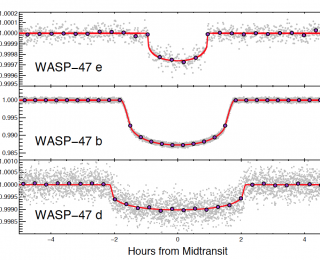
What might be the strangest architecture yet of an exoplanetary system was discovered, and it raises big questions as to how planetary systems form and evolve.
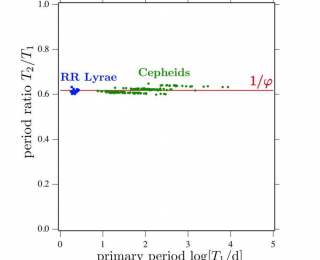
by Caroline Huang | Oct 19, 2015 | Daily Paper Summaries
Some variable stars seem to be “golden”, but is this property fundamental or just chance?

by Stacy Kim | Sep 23, 2015 | Daily Paper Summaries
When the stars align, you just might catch a planet, a black hole, or a binary star—but it’s hard to measure its mass! What does it take to do so?
