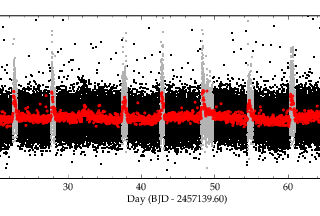
by David Wilson | Jul 8, 2016 | Daily Paper Summaries
Nearly a year ago, Astrobites reported on an unexpected finding from the Kepler spacecraft: A pair of white dwarfs that were “outbursting”, becoming as much as 20 percent brighter every few days before quieting down again. Today’s paper adds another two outbursting white dwarfs, and begins to explore the reason for this hitherto unobserved behavior.
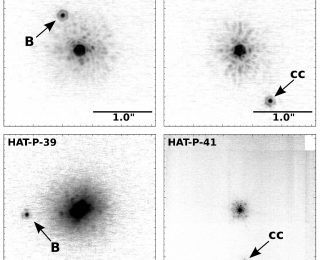
by Leonardo dos Santos | Jul 5, 2016 | Daily Paper Summaries
How can we explain hot Jupiters? The answer is not completely clear yet, but we are closing in on it: it seems that binaries may play an important role on the formation of these oddball planets.
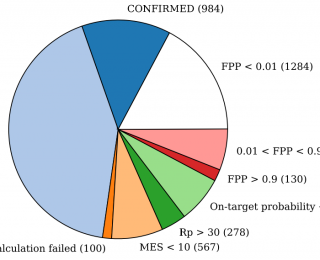
by Leonardo dos Santos | May 18, 2016 | Daily Paper Summaries
The first Kepler mission observed hundreds of thousands of stars, and approximately 7500 of them are of potential interest. In this astrobite, we learn how astronomers are sifting through all these data in search for exoplanets.
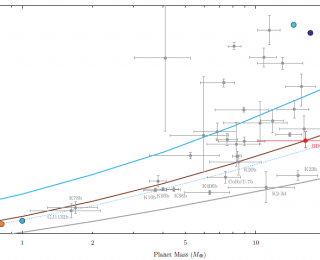
by David Wilson | Feb 1, 2016 | Daily Paper Summaries
It seems that whenever we have a fact about exoplanets nailed down, an exception will quickly crop up. The authors of today’s paper claim to have spotted a planet over twice the diameter of the Earth, made from solid rock.
by Ingrid Pelisoli | Jan 26, 2016 | Daily Paper Summaries
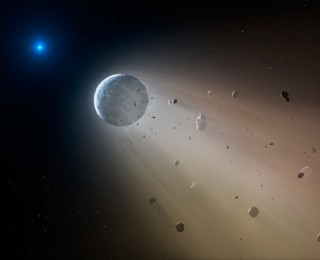
Astronomers may have finally observed the event that explains polluted white dwarfs and their debris disks.
by Matthew Green | Jan 19, 2016 | Daily Paper Summaries
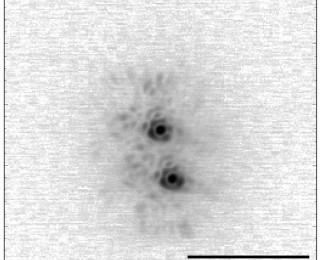
For several years now, there has been considerable interest in circumbinary planets – that is to say, planets that orbit both stars in a binary system. They pose many interesting questions, such as, “How does their formation differ from planets in single-star systems?”, “What will happen to them when the stars evolve?”, and of course, “Could humans live there?” It was because of questions like these that the authors of today’s paper turned their telescopes on KIC 7177553.
