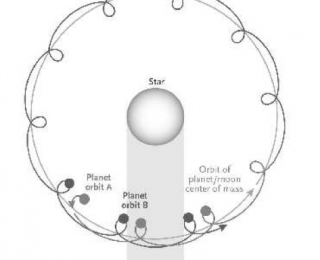
Detecting Moons Around Exoplanets
Moons in other solar systems are common in science fiction. Are they common in the universe as well? Kipping et al. are using Kepler data to find out.

Moons in other solar systems are common in science fiction. Are they common in the universe as well? Kipping et al. are using Kepler data to find out.
The First Kepler Science Conference is occurring this week at NASA Ames. Check out this summary of the conference to learn about the exciting results from the Kepler mission.
Yesterday, NASA confirmed another new exoplanet from the Kepler mission, Kepler-22b. From some of the headlines, you’d think it was time to pack your bags. The discovery of Kepler-22b is undeniably exciting, but there’s a lot we don’t know about this planet.
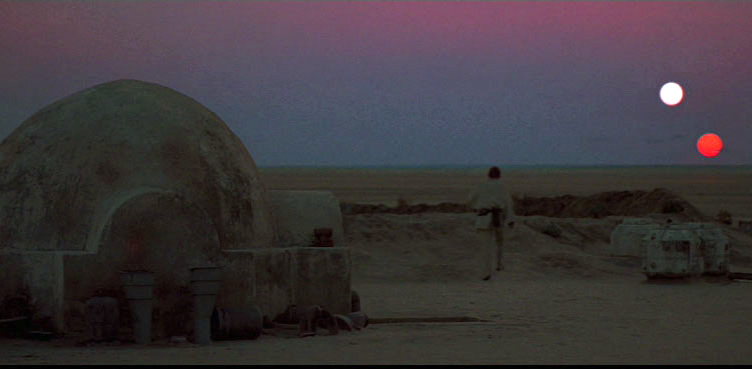
George Lucas dreamed of a planet with two suns. Now that Kepler scientists have found such a planet, the question arises: can it support life?

I’m a fourth year undergraduate from the University of Southampton, UK, studying for my masters at the Harvard-Smithsonian Centre for Astrophysics. With my summer reading completed, and a new exoplanet waiting to be discovered, I stepped off the plane into Boston Logan Int. this September and eagerly exchanged a drizzly English summer for a beautiful New English Autumn.
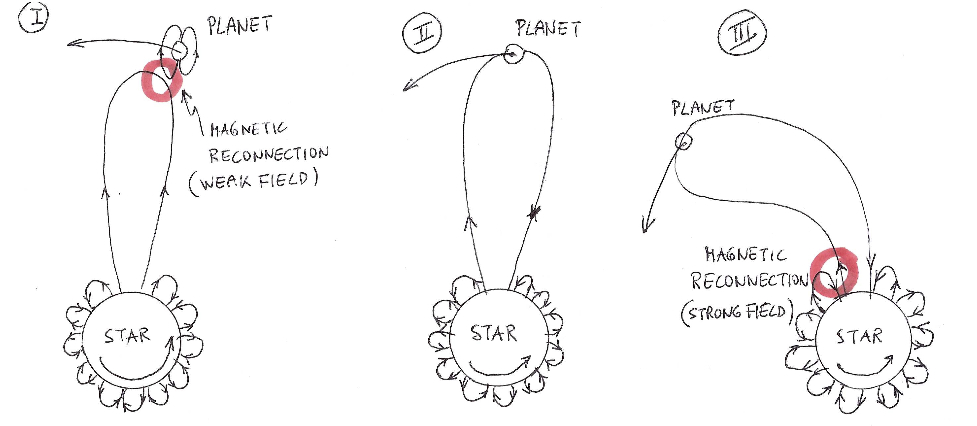
This paper investigates the interaction between close-in (semimajor axis a<0.15AU) massive planets (a.k.a. “hot Jupiters'') and their host (late-type) stars. Two possible mechanisms for interaction are tidal and magnetic, with the focus of this paper being the latter. The pioneering work on the topic of stellar activity enhancement (such as dark spots, faculae, etc) due to planet interaction is by Cuntz et al. (2000). You can see related contributions about stellar activity on previous astrobites posts.