by Elisabeth Newton | Feb 3, 2011 | Daily Paper Summaries
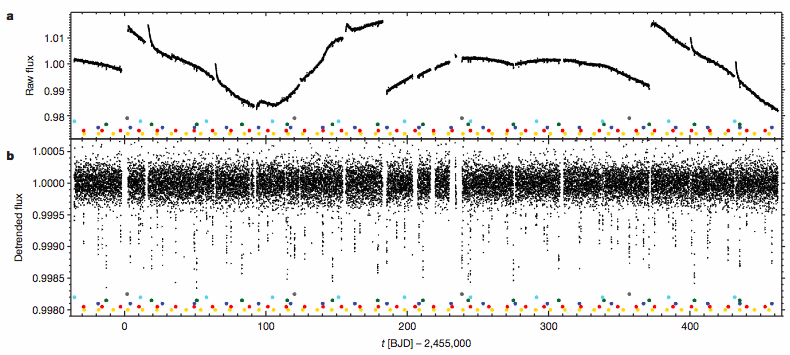
Following the data release, a slew of Kepler papers went up on astro-ph this evening. In my previous post, I went straight to the numbers, but here I’ll discuss the Kepler mission and data in some depth, which I think will generally be useful for understanding current and future Kepler results.

by Elisabeth Newton | Feb 2, 2011 | Quick Notes
Yesterday, Kepler released data on the 400 most promising and interesting candidate planets and today announced their discoveries. Kepler has now found 1,235 planet candidates, ranging in size from about Earth-sized to larger than Jupiter.
by Elisabeth Newton | Jan 14, 2011 | Personal Experiences
My first AAS is at a close. On Tuesday, I attended still more talks on exoplanets, some of which I will discuss below, while on Wednesday I manned my poster.
by Nathan Sanders | Jan 14, 2011 | Daily Paper Summaries
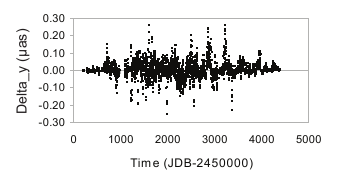
Understanding the uncertainties involved in the techniques used to detect exoplanets is an important aspect of the search for life beyond the Earth. What role could phenomenon like sunspots play in planet detection?
by Elisabeth Newton | Jan 11, 2011 | Personal Experiences
I’m here for the winter meeting of the American Astronomical Society (AAS), which started last night with a kick-off event. In my posts on AAS, I will report on some of the talks I’ve attended. Most of them will be on exoplanets, since this is the field I am beginning research in.
by Elisabeth Newton | Jan 10, 2011 | Quick Notes
Today the discovery of the first definitely rocky exoplanet — as well as the smallest planet discovered to date — was announced. The Kepler 10b press release was made this morning by Dr. Natalie Batalha at the American Astronomical Society (AAS) meeting in Seattle.
