
by Elisabeth Newton | May 26, 2011 | Career Navigation, Personal Experiences
Over the past three and a half days, I joined astronomers from all over the world for the 218th meeting of the American Astronomical Society. The AAS holds two major meetings every year, one in the winter and one in the summer. This year’s summer conference in Boston just wrapped up and in this astrobite I’ll report on two of the talks I attended.
by Courtney Dressing | May 11, 2011 | Daily Paper Summaries
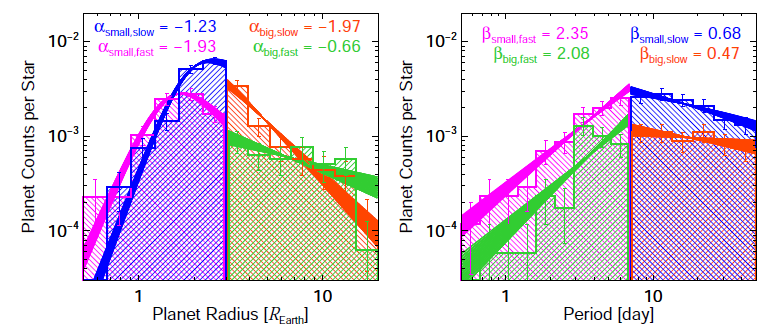
What does the Kepler data tell us about the number of planets per star and the distribution of planets in radius and orbital period? Andrew Youdin addresses that question by considering the selection effects in the Kepler sample and fitting a joint powerlaw in radius and orbital period.
by tonypan | Apr 2, 2011 | Daily Paper Summaries
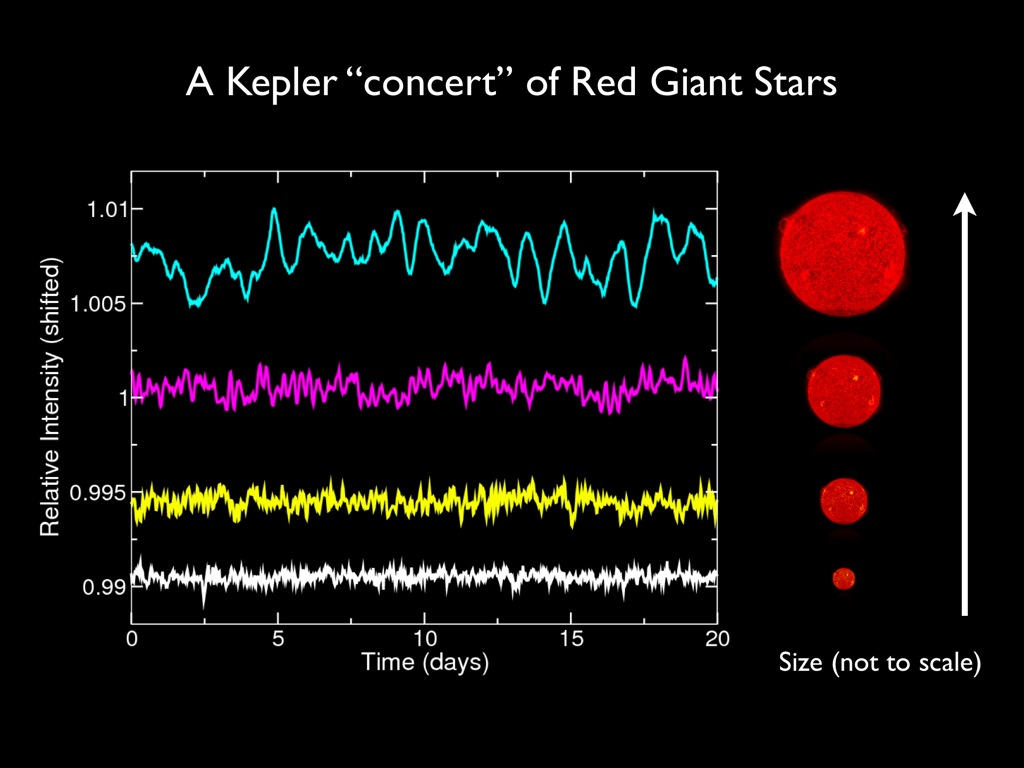
Previously, it was impossible to find out the inner source behind a red giant’s light – hydrogen fusion in a shell, or helium fusion in the core? Using Kepler, the authors of this paper show how to do this observationally using asteroseismology.
by Caroline Morley | Mar 15, 2011 | Daily Paper Summaries
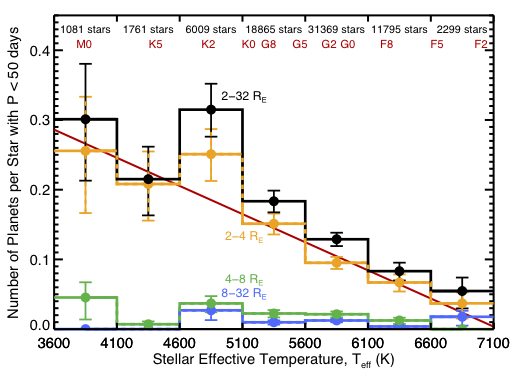
The Kepler mission is hot right now, having just released it’s largest data set ever last month. One of the main aims of Kepler is to get statistics on exoplanets. How rare are they? Which stars have the most planets? What sized planets are most common? How far away are they from their host star? In the latest paper to be published by the Kepler Science Team, Howard et al. attempt to begin to answer some of these questions by analyzing the trends in the published data.
by Courtney Dressing | Feb 21, 2011 | Daily Paper Summaries
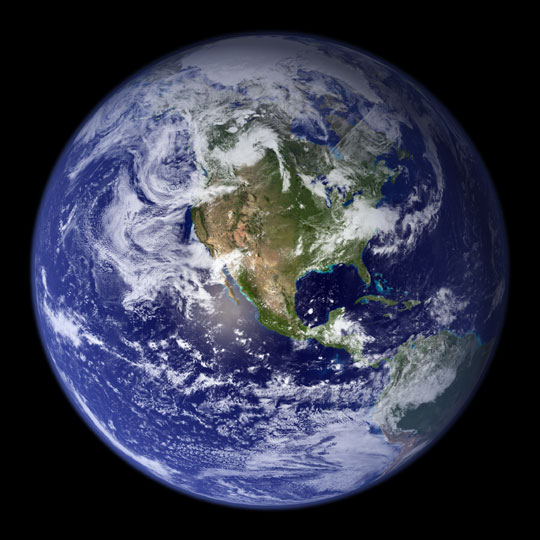
Assuming that we have acquired the spectrum of a distant terrestrial planet, what would it look like? Would we able to resolve surface features? More excitingly, would we be able to detect biomarkers in the atmospheres of alien Earths?
by Dan Gifford | Feb 3, 2011 | Career Navigation, Personal Experiences
People are fascinated by space, and it’s easy to see why. Evidence, see: the space race, black holes, the big bang, dark matter/energy, extrasolar planets, etc. So why should you volunteer your time? Besides, there are lots of people who already do these things, and you need to focus on your career as a professional astronomer. I have several great reasons for you.
