• RSS
  • Submit a Guest Post
  • Undergraduates: Submit your Research!
  • Suggest a Paper Topic!
astrobites
  • About
    • About Astrobites
    • Meet the Authors
    • Statement of Inclusivity
    • Copyright & Permissions
  • Latest Research
    • Daily Paper Summaries
    • Classics
    • Undergrad Research
    • Physical Review Coverage
  • Beyond astro-ph
    • Beyond astro-ph Library
    • Interviews
    • Career Navigation
    • Personal Experiences
    • Current Events
    • Teaching with Astrobites
  • Guides
    • EM Spectrum
    • Galaxies & AGNs
    • Spectroscopy and Spectral Lines
    • Adaptive Optics
    • Gravitational Waves
    • Transient Astronomy
    • Astrophysical Software
    • Graduate School
    • Writing a personal statement for grad apps
    • First Observing Run
    • …More Guides!
Select Page
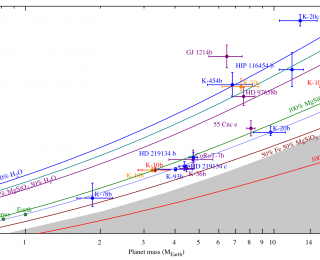
The mass of Kepler-10c revisited: upping the radial velocities game

The mass of Kepler-10c revisited: upping the radial velocities game

by Leonardo dos Santos | Aug 7, 2017 | Daily Paper Summaries

In today’s paper, after years spent on an impasse, we finally arrive at a consensus on the mass of the rocky exoplanet Kepler-10c. The discussion yields many important lessons on how to properly analyze radial velocities.
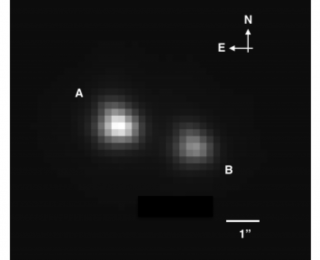
And now, the smallest star ever.

And now, the smallest star ever.

by Bhawna Motwani | Jul 26, 2017 | Daily Paper Summaries

Read on to learn more about the discovery of the smallest star ever seen.
Strength in numbers: a smarter way to find habitable worlds

Strength in numbers: a smarter way to find habitable worlds

by Leonardo dos Santos | May 23, 2017 | Daily Paper Summaries

In today’s paper, we will see how Kepler-like large scale surveys on planet habitability is the smartest way to answer The Big Question.
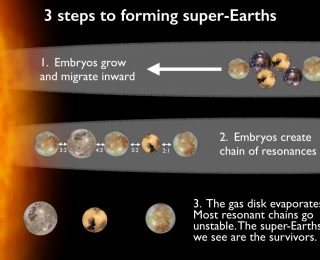
Breaking Planet Chains and Cracking the Kepler Dichotomy

Breaking Planet Chains and Cracking the Kepler Dichotomy

by Michael Hammer | Apr 24, 2017 | Daily Paper Summaries

Why can’t more exoplanet systems be like TRAPPIST-1? Why do so many Kepler systems have only one transiting planet? Today’s paper tries to answer both questions.
Sardines in Space: The Intensely Densely-Packed Planets Orbiting Kepler-11

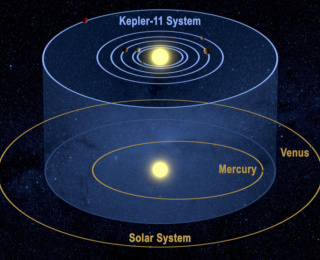
Sardines in Space: The Intensely Densely-Packed Planets Orbiting Kepler-11

by Mara Zimmerman | Mar 20, 2017 | Daily Paper Summaries

The Kepler-11 system features 5 planets packed within the orbit of Mercury. Read on to hear about their discovery, analysis, and what this system says about planetary migration.
And along came a Neptune-sized planet

And along came a Neptune-sized planet

by Amber Hornsby | Jan 9, 2017 | Daily Paper Summaries

Kepler has uncovered thousands of exoplanets, but have failed to discover many Hot-Neptunes. Today we’ll be discussing K2-105 b and its potential in unlocking the secrets of our own Solar system.

« Older Entries
Next Entries »

Loading

Follow our socials

  • Bluesky
  • Facebook
  • Instagram
  • RSS Feed

More Posts About

AAS AGN astronomy astrophysics binary stars black holes cosmology dark matter dwarf galaxies exoplanets galaxies galaxy evolution gravitational waves habitability JWST Kepler Milky Way observations planetary science planet formation protoplanetary disks radio astronomy simulations solar system spectroscopy star formation stars stellar evolution supernovae theory

Posts by Category

  • Accessibility
  • Applications
  • Beyond
  • Book Reviews
  • Career Navigation
  • Classics
  • Climate Change
  • Course Assignments
  • Crossposts
  • Current Events
  • Daily Paper Summaries
  • Game Reviews
  • Guides
  • Historical Astronomy
  • Instrumentation
  • Interviews
  • Outreach
  • Personal Experiences
  • PRJ
  • Quick Notes
  • Satellites
  • Teaching
  • Undergraduate Research

More Astronomy

  • AAS
  • AAS Nova
  • astro-ph
  • AstroBetter
  • APOD

Read Astrobites in Other Languages

  • Astrobitos (Spanish)
  • Astropontos (Portuguese)
  • staryab (Farsi)

Listen to Astrobites

  • astro[sound]bites

Discover More Incredible Science

  • ScienceBites Network
  • RSS

© 2026 Astrobites | All Rights Reserved | Supported by AAS | Designed by Elegant Themes | Powered by WordPress