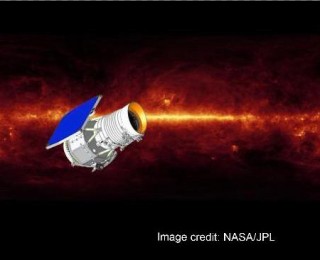
The WISE way to deal with 2.7 million images: a public data release
The Wide-field Infrared Survey Explorer (WISE) data release promises many new and exciting discoveries!

The Wide-field Infrared Survey Explorer (WISE) data release promises many new and exciting discoveries!
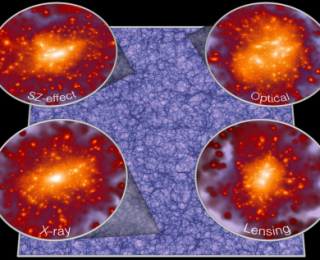
The authors of this analysis use the largest, high-resolution cosmological N-body simulation to date, the Millennium-XXL, to investigate sources of scatter in cluster scaling relations. They find that a wide range of biases can affect the most commonly used scaling relations.
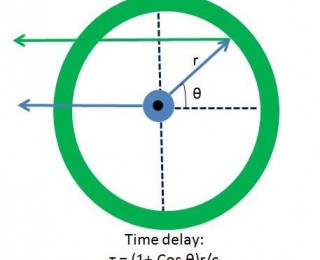
Doroshenko et al. use extensive monitoring of the continuum and broad line region luminosities of Markarian 6 to measure the central black hole mass.
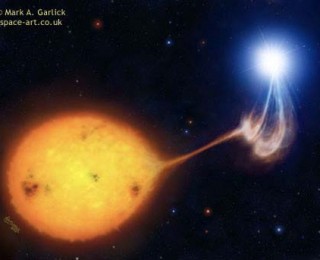
Rebassa-Mansergas et al. investigate two long period post common envelope systems in order to place constraints on the energy budget for common envelope evolution.
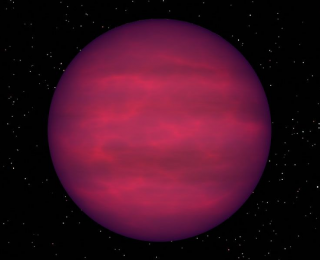
This paper describes an incredibly variable brown dwarf. To fit this variability with models, a combination of thick clouds and clearer areas are needed. This means that there are big dusty storms that cover large fractions of 2M2139’s surface!
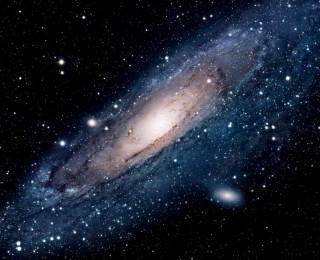
A specific class of elliptical galaxies called compact ellipticals, or cEs, are unusually compressed. Some speculate that these galaxies are petite because their outer layers have been stripped away by a neighboring galaxy; however, an alternative theory claims that these are regular elliptical galaxies that simply formed small and never contained stars in their outer regions. In order to differentiate between these two models, Howley et al. 2012 measured the dynamics of individual stars in one of our nearest neighbors, the compact elliptical M32.