• RSS
  • Submit a Guest Post
  • Undergraduates: Submit your Research!
  • Suggest a Paper Topic!
astrobites
  • About
    • About Astrobites
    • Meet the Authors
    • Statement of Inclusivity
    • Copyright & Permissions
  • Latest Research
    • Daily Paper Summaries
    • Classics
    • Undergrad Research
    • Physical Review Coverage
  • Beyond astro-ph
    • Beyond astro-ph Library
    • Interviews
    • Career Navigation
    • Personal Experiences
    • Current Events
    • Teaching with Astrobites
  • Guides
    • EM Spectrum
    • Galaxies & AGNs
    • Spectroscopy and Spectral Lines
    • Adaptive Optics
    • Gravitational Waves
    • Transient Astronomy
    • Astrophysical Software
    • Graduate School
    • Writing a personal statement for grad apps
    • First Observing Run
    • …More Guides!
Select Page
Feeling gassy?

Feeling gassy?

by Stephanie (Hamilton) Deppe | May 9, 2019 | Daily Paper Summaries

When does a planet form like a Neptune or like a Jupiter? Today’s bite explores this question!

Planets May Form Faster Than Expected

by Lauren Sgro | May 7, 2019 | Daily Paper Summaries

We think we know how planets form, but what about planets that seem to have formed very fast? ‘Oumuamua-like objects may be the missing link.

Evaporating Disks With Massive Stars

by Spencer Wallace | Apr 19, 2019 | Daily Paper Summaries

Radiation from massive stars can melt away protoplanetary disks. What can the leftover disks tell us about the environment from which they formed?
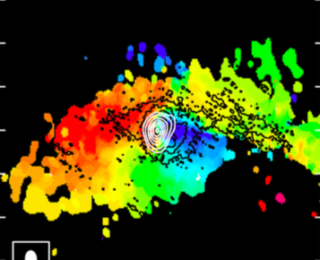
A Protoplanetary Disk with a Tail

A Protoplanetary Disk with a Tail

by Charles Law | Apr 16, 2019 | Daily Paper Summaries

The sites of planet formation seem to be anything but orderly and a recent discovery may help explain the observed wide variety of exoplanet configurations.

New Horizons Images Show Fewer Small Kuiper Belt Objects than Expected

New Horizons Images Show Fewer Small Kuiper Belt Objects than Expected

by Will Saunders | Mar 15, 2019 | Daily Paper Summaries

High resolution images from New Horizons of the surfaces of Pluto and Charon show ancient craters, but fewer than astronomers expected.

A Fresh Take on Our Moon’s Origin

by Jenny Calahan | Mar 1, 2019 | Daily Paper Summaries

Today’s post has been inspired by the following quote: “have yall seen this new theory of how the moon formed??  …honestly im shook”

« Older Entries
Next Entries »

Loading

Follow our socials

  • Bluesky
  • Facebook
  • Instagram
  • RSS Feed

More Posts About

AAS AGN astronomy astrophysics binary stars black holes cosmology dark matter dwarf galaxies exoplanets galaxies galaxy evolution gravitational waves habitability JWST Kepler Milky Way observations planetary science planet formation protoplanetary disks radio astronomy simulations solar system spectroscopy star formation stars stellar evolution supernovae theory

Posts by Category

  • Accessibility
  • Applications
  • Beyond
  • Book Reviews
  • Career Navigation
  • Classics
  • Climate Change
  • Course Assignments
  • Crossposts
  • Current Events
  • Daily Paper Summaries
  • Game Reviews
  • Guides
  • Historical Astronomy
  • Instrumentation
  • Interviews
  • Outreach
  • Personal Experiences
  • PRJ
  • Quick Notes
  • Satellites
  • Teaching
  • Undergraduate Research

More Astronomy

  • AAS
  • AAS Nova
  • astro-ph
  • AstroBetter
  • APOD

Read Astrobites in Other Languages

  • Astrobitos (Spanish)
  • Astropontos (Portuguese)
  • staryab (Farsi)

Listen to Astrobites

  • astro[sound]bites

Discover More Incredible Science

  • ScienceBites Network
  • RSS

© 2026 Astrobites | All Rights Reserved | Supported by AAS | Designed by Elegant Themes | Powered by WordPress