• RSS
  • Submit a Guest Post
  • Undergraduates: Submit your Research!
  • Suggest a Paper Topic!
astrobites
  • About
    • About Astrobites
    • Meet the Authors
    • Statement of Inclusivity
    • Copyright & Permissions
  • Latest Research
    • Daily Paper Summaries
    • Classics
    • Undergrad Research
    • Physical Review Coverage
  • Beyond astro-ph
    • Beyond astro-ph Library
    • Interviews
    • Career Navigation
    • Personal Experiences
    • Current Events
    • Teaching with Astrobites
  • Guides
    • EM Spectrum
    • Galaxies & AGNs
    • Spectroscopy and Spectral Lines
    • Adaptive Optics
    • Gravitational Waves
    • Transient Astronomy
    • Astrophysical Software
    • Graduate School
    • Writing a personal statement for grad apps
    • First Observing Run
    • …More Guides!
Select Page
Why you should be interested in dust

Why you should be interested in dust

by Elisabeth Matthews | Jun 28, 2016 | Daily Paper Summaries

Embark on a dusty journey into the heart of debris disks – and why it’s important to talk dust if you want to understand planets.

New rings detected for old protoplanetary disk

New rings detected for old protoplanetary disk

by Michael Küffmeier | Jun 26, 2016 | Daily Paper Summaries

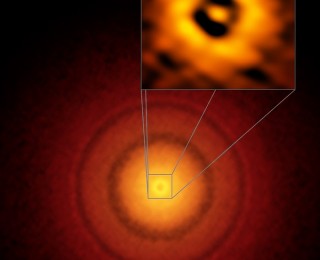
The image of the protoplanetary disk around HL Tau illustrating ring structures triggered a huge “WOW!”. Read on and get convinced by recent observations of TW Hya that ring structures seem to be rule rather than the exception.
Where the Wild (Planet)Things Are

Where the Wild (Planet)Things Are

by Mara Johnson-Groh | Jun 22, 2016 | Daily Paper Summaries

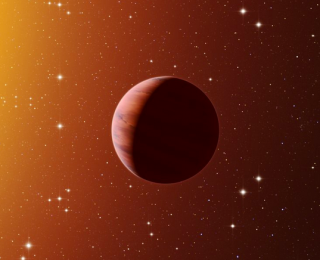
New research shows hot Jupiters find safety in numbers. According to radial velocity data, these giant exoplanets are more commonly found around stars in open clusters.
Is there anything out there? A search for the widest separation planets

Is there anything out there? A search for the widest separation planets

by Elisabeth Matthews | May 24, 2016 | Daily Paper Summaries

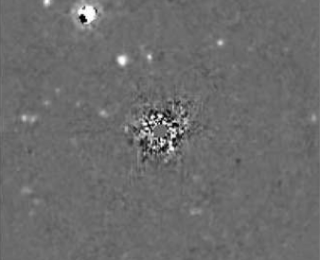
We know quite a lot about planets orbiting other stars – if they’re closer to their stars than Jupiter is to the Sun. For the region further out than Pluto, we know almost nothing. Is there anything out there?
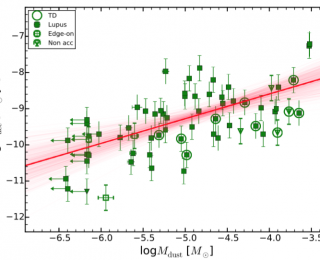
Massive circumstellar disks accrete faster than low-mass ones

Massive circumstellar disks accrete faster than low-mass ones

by Tim Lichtenberg | May 17, 2016 | Daily Paper Summaries

Do predictions from classical disk theory work with state-of-the-art measurements?
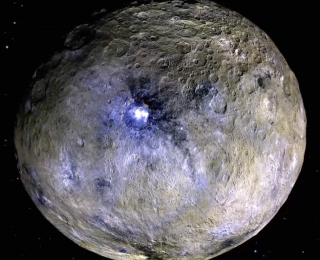
Diaries of a Dwarf Planet: What are Those Spots on Ceres?

Diaries of a Dwarf Planet: What are Those Spots on Ceres?

by Guest | May 3, 2016 | Daily Paper Summaries

The first asteroid ever discovered is serving up scientists a new set of firsts. The shiny patches that bespeckle its surface suggest there’s more to Ceres than meets the eye.

« Older Entries
Next Entries »

Loading

Follow our socials

  • Bluesky
  • Facebook
  • Instagram
  • RSS Feed

More Posts About

AAS AGN astronomy astrophysics binary stars black holes cosmology dark matter dwarf galaxies exoplanets galaxies galaxy evolution gravitational waves habitability JWST Kepler Milky Way observations planetary science planet formation protoplanetary disks radio astronomy simulations solar system spectroscopy star formation stars stellar evolution supernovae theory

Posts by Category

  • Accessibility
  • Applications
  • Beyond
  • Book Reviews
  • Career Navigation
  • Classics
  • Climate Change
  • Course Assignments
  • Crossposts
  • Current Events
  • Daily Paper Summaries
  • Game Reviews
  • Guides
  • Historical Astronomy
  • Instrumentation
  • Interviews
  • Outreach
  • Personal Experiences
  • PRJ
  • Quick Notes
  • Satellites
  • Teaching
  • Undergraduate Research

More Astronomy

  • AAS
  • AAS Nova
  • astro-ph
  • AstroBetter
  • APOD

Read Astrobites in Other Languages

  • Astrobitos (Spanish)
  • Astropontos (Portuguese)
  • staryab (Farsi)

Listen to Astrobites

  • astro[sound]bites

Discover More Incredible Science

  • ScienceBites Network
  • RSS

© 2026 Astrobites | All Rights Reserved | Supported by AAS | Designed by Elegant Themes | Powered by WordPress