by Tim Lichtenberg | Dec 3, 2014 | Daily Paper Summaries
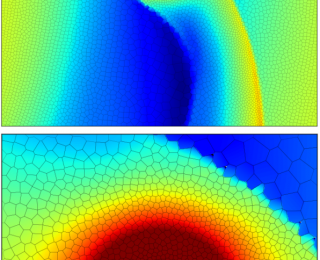
Only the combined effort of observational and theoretical methods can really bring us to a more thorough understanding of the Universe throughout all spatial scales. The authors of today’s paper use and adapt the moving-mesh fluid mechanics code AREPO to function with protoplanetary disks and test its imprint on the potential of planets to open up gaps in the surrounding gas.

by Michael Küffmeier | Nov 26, 2014 | Daily Paper Summaries
Chondrules are among the oldest components of the solar system and give insight in the solar system’s earliest phase. But how are they formed? In shocks? That seems to be at least difficult.
by Jaime Green | Nov 5, 2014 | Daily Paper Summaries
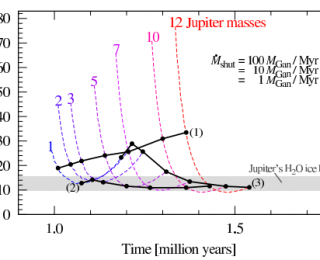
Those of us who love astrobiology get really worked up about the lack of Earth-sized exoplanets found at Earth-like distances from their stars. All we want, we who hope for lots of extraterrestrial life, is a bunch of Earth-like planets doing Earth-like things so we can feel better about the odds for lots of Earth-like life in the universe.
by Ben Montet | Oct 21, 2014 | Current Events
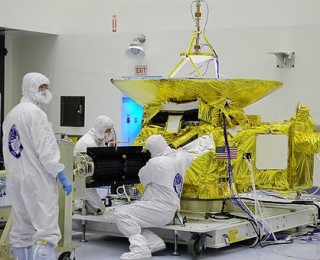
New Horizons is going to reach Pluto in July, 2015. What happens after that?
by Ben Montet | Sep 23, 2014 | Current Events
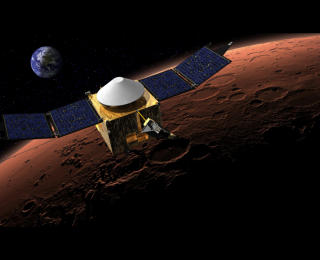
Meet Mars’ two newest moons, MAVEN and MOM.
by Joseph O'Rourke | Sep 9, 2014 | Current Events
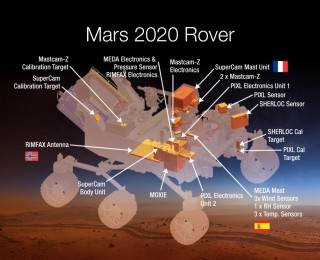
NASA recently revealed the scientific instruments for Mars 2020, the next Mars rover and the first step in an ambitious sample return campaign.
