by Michael Küffmeier | Mar 31, 2015 | Daily Paper Summaries
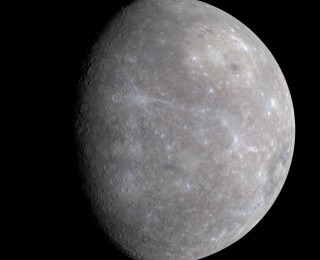
Mercury is the smallest planet in the Solar System, but some of its properties are a big challenge to explain. Today’s Astrobite presents a solution to one of these issues: The darkening of Mercury is induced by a high abundance of carbon delivered by meteorites.
by Tim Lichtenberg | Mar 6, 2015 | Daily Paper Summaries
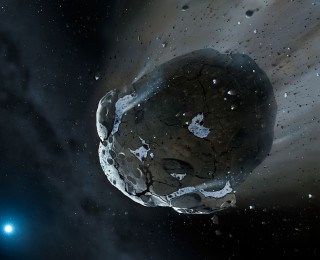
Earth’s oceans may have originated mainly from accreted impactors. But do planets in other systems experience the same water delivery mechanism? Or do they even get more water than our world? Find out why you would want to think about this and what the consequences might be.
by Michael Küffmeier | Feb 3, 2015 | Daily Paper Summaries
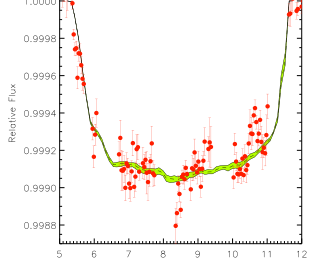
Most exoplanets are and have been detected by the transit method. Maybe, we can improve the method even further by drawing conclusions from the recent Venus transits in 2004 and 2012.
by Ben Cook | Jan 23, 2015 | Current Events
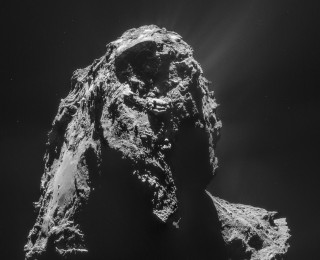
The years of 2014 and 2015 may well be known as the time when our exploration of the solar system truly took off, as we explored asteroids, comets, and minor planets. Here’s a look back at what we’ve accomplished in the last year, and what we’re about to achieve in the year to come.
by Tim Lichtenberg | Jan 2, 2015 | Daily Paper Summaries
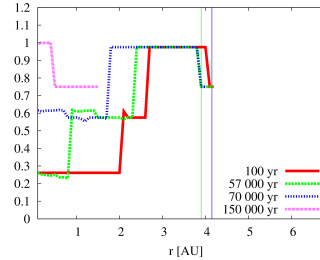
The recent discoveries of alien worlds seemingly rich in carbon reveal a lot of diverse information about the history and further evolutionary paths of exoplanets. However, a correct physical understanding of the investigated systems is crucial for getting the most out of incoming data and is an area of very active research. Therefore, the theoretical modeling of exoplanetary systems must be advanced to a state which includes the long-term evolution of the distribution of detectable molecular species in the planet forming environment.
by Jaime Green | Dec 5, 2014 | Daily Paper Summaries
Habitable zone estimations take the climate regulation of the carbon cycle into account. But are we drawing the edges of the habitable zone too wide?
