Snapshots of the Kepler Science Conference
The First Kepler Science Conference is occurring this week at NASA Ames. Check out this summary of the conference to learn about the exciting results from the Kepler mission.

The First Kepler Science Conference is occurring this week at NASA Ames. Check out this summary of the conference to learn about the exciting results from the Kepler mission.
Venus transits the Sun, from the frame of the Earth, about twice every century, separated by eight years. The last one happened in 2004, and another is happening in June 2012. Observing the transmission spectrum during the 2012 transit—and comparing it to measured transmission spectra of the Earth, taken during lunar eclipses—will tell us how hard it will be to distinguish two planets that look identical in mass and radius, but have extremely different atmospheric properties.
Yesterday, NASA confirmed another new exoplanet from the Kepler mission, Kepler-22b. From some of the headlines, you’d think it was time to pack your bags. The discovery of Kepler-22b is undeniably exciting, but there’s a lot we don’t know about this planet.
On Saturday November 26th NASA launched its newest rover toward Mars. Its key goal is to search for evidence that the planet may once have held microscopic life and to look at the possibility of once again holding life. Presented here are the details concerning the mission and the rover itself.
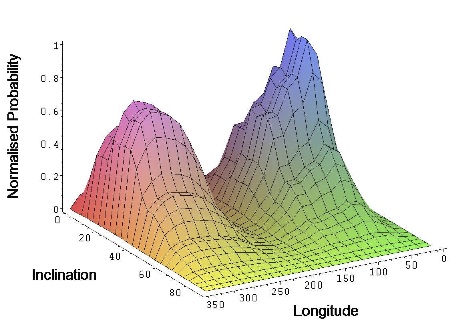
One of the many cool observations that have come from the WISE telescope survey this year has been the discovery of the first Trojan asteroid orbiting at the same semi-major axis as the Earth. The authors of this paper outline a way to optimize future surveys to find more of these Earth Trojans.
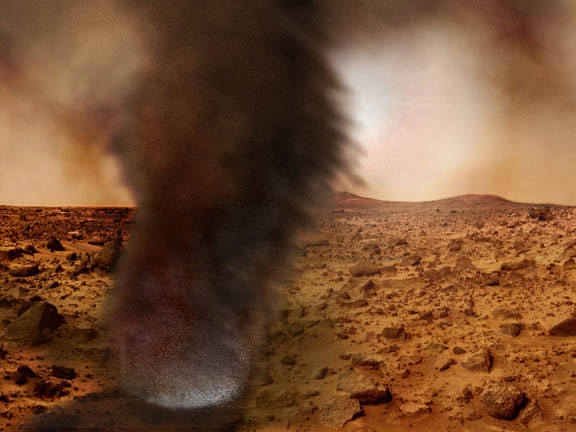
Do dust storms cause lightning on Mars? This paper uses the Allen Telescope Array to search for electrostatic discharge on the Red Planet.