by Courtney Dressing | Sep 15, 2011 | Daily Paper Summaries
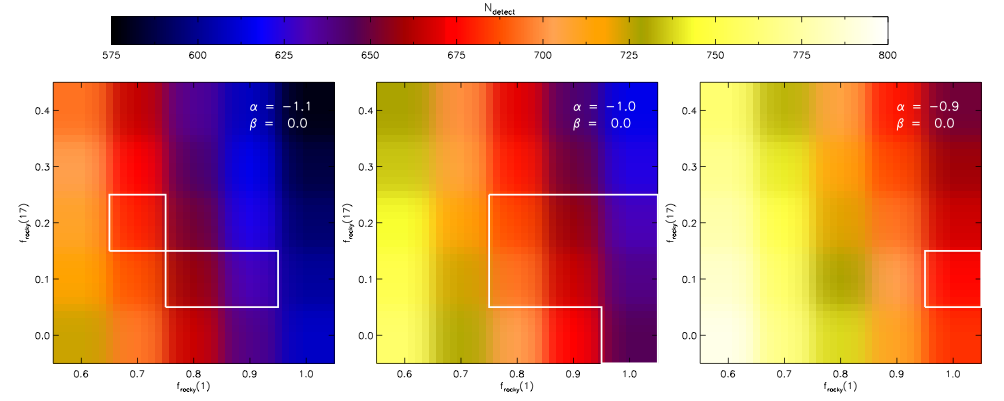
Wolfgang & Laughlin combine observations from the HARPS radial velocity survey and the Kepler transit survey to investigate the mass-radius-period distribution of exoplanets. They find that most small planets are rocky.
by Courtney Dressing | Sep 15, 2011 | Quick Notes
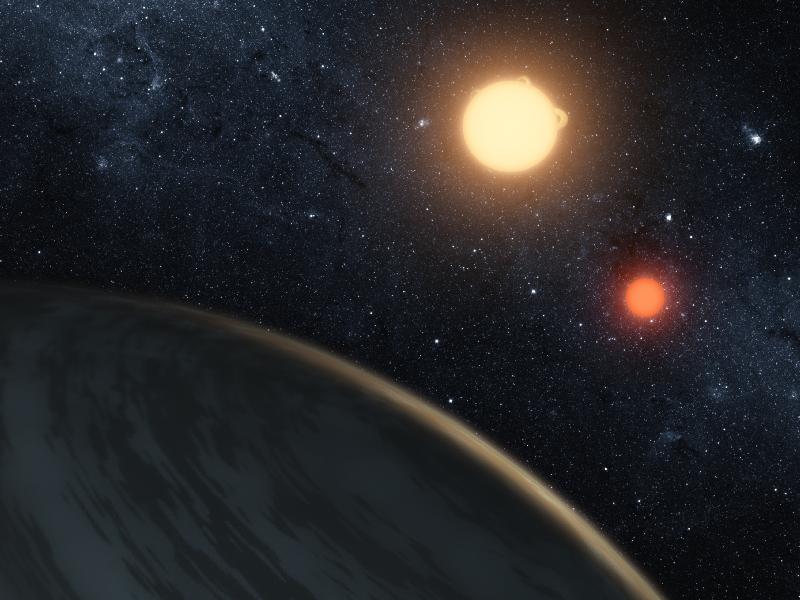
Kepler has discovered a real-life version of Tatooine! The newly minted planet, dubbed Kepler-16b, orbits both stars on a 229 day orbit and is roughly the same size as Saturn.
by Courtney Dressing | Sep 1, 2011 | Daily Paper Summaries
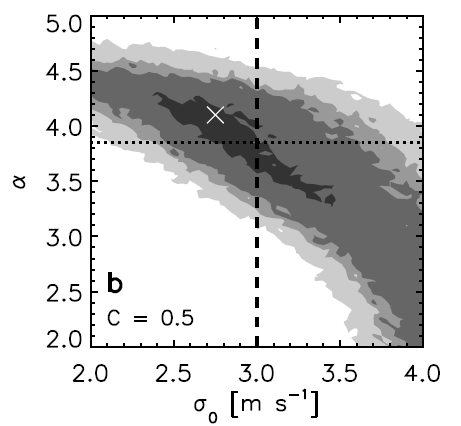
How do the planet candidates discovered by Kepler compare to the planets detected by radial velocity surveys? Can we combine the Kepler radii with the RV masses to determine whether small planets are rocky Super-Earths or gaseous mini-Neptunes?
by Dan Gifford | Aug 9, 2011 | Daily Paper Summaries
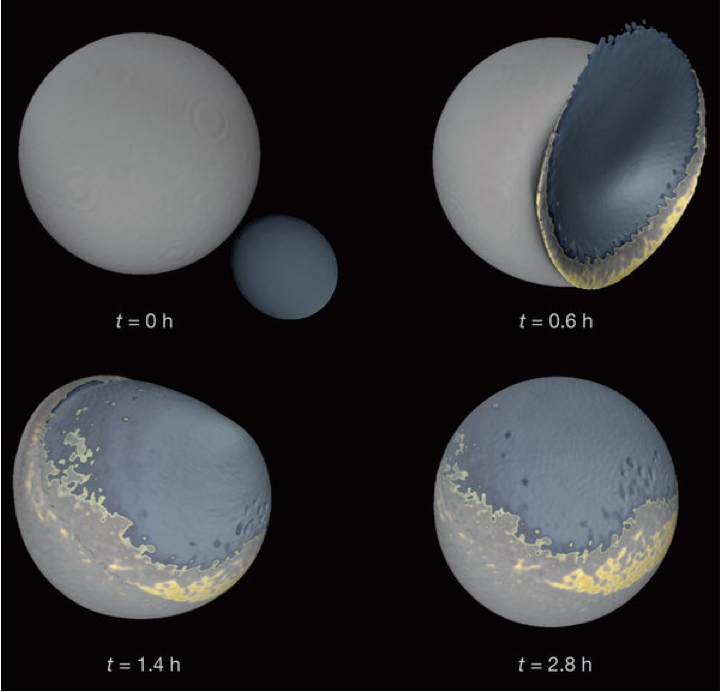
Astronomers think one impact may not have been enough to see the Moon as we do today. If two moons formed out of the massive collision first hypothesized, they could have merged which would explain the terrain dichotomy we see on the near and far sides of our Moon.
by Courtney Dressing | Aug 3, 2011 | Daily Paper Summaries
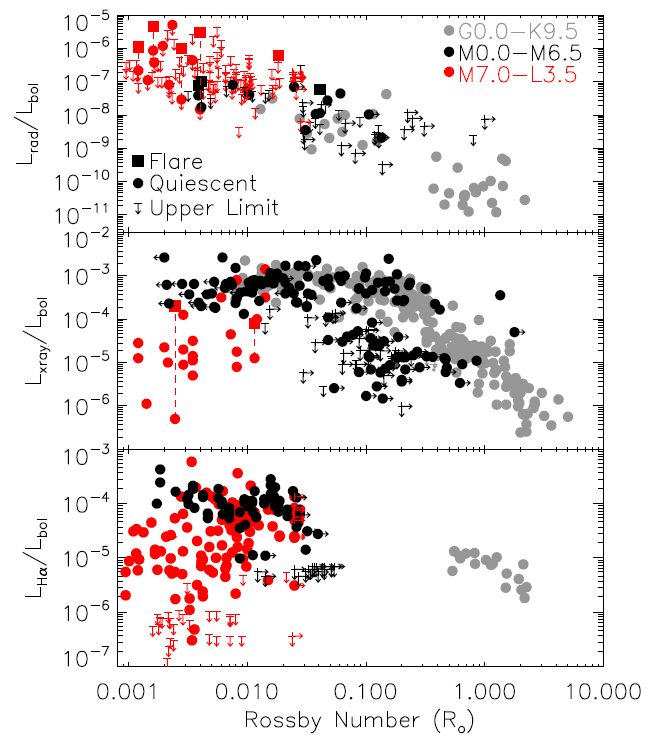
McLean et al. observe a new sample of late-M and L dwarfs with the Very large Array to search for a relation between rotation rate and radio activity for ultracool dwarfs.
by Caroline Morley | Aug 2, 2011 | Daily Paper Summaries
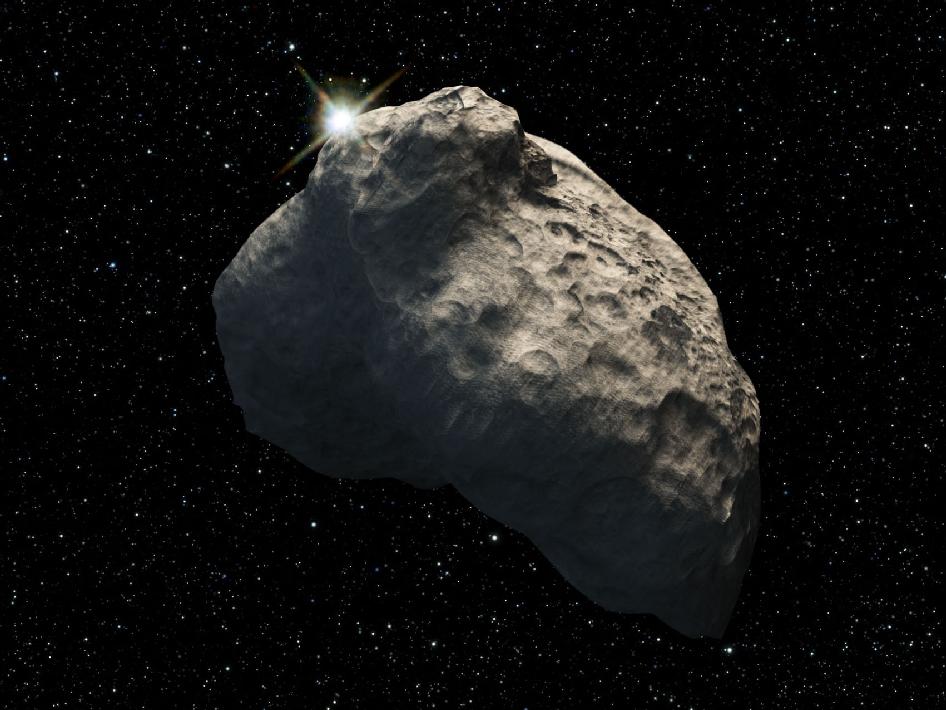
A paper published on the archive this week reveals fourteen newly discovered Kuiper Belt Objects (KBOs) found using ground-based imaging in the Southern part of the sky. Three of these could be big enough to be dwarf planets! By learning about the population, orbital structures, and compositions of the largest objects in the Kuiper Belt, we can learn about the solar system formation and evolution.
