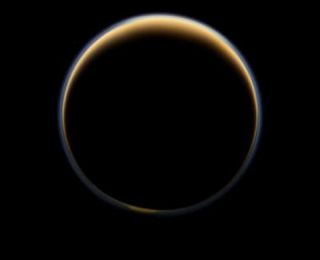
A new kind of animal in the exoplanet zoo
Cool, hazy exoplanets might look a lot like Saturn’s moon Titan. Today’s post explores the possible atmospheres of exo-Titans around a variety of host stars.

Cool, hazy exoplanets might look a lot like Saturn’s moon Titan. Today’s post explores the possible atmospheres of exo-Titans around a variety of host stars.

Mini-Neptunes are among the most common type of planet in the galaxy. Are they as easy to build as we might think?
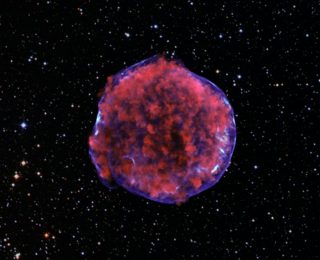
Supernova remnant magnetic fields may play a key role in accelerating electrons to relativistic velocities. West et al. investigate the magnetic field conditions inside young supernova remnants and discover that they may not be as well-behaved as they appear.
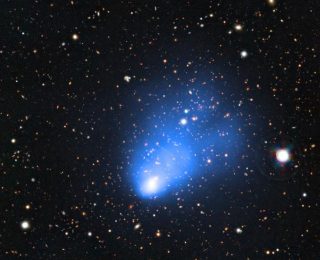
Trying to find the most massive galaxy cluster in the night sky can be hard. Comparing predictions of these masses to observed clusters? Even harder. An insight into the world of Halo Mass Functions and their tail-ends.
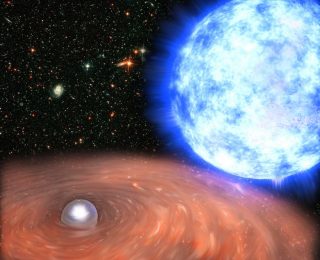
A peculiar X-ray binary may contain the first known white dwarf which is still in the process of contracting.
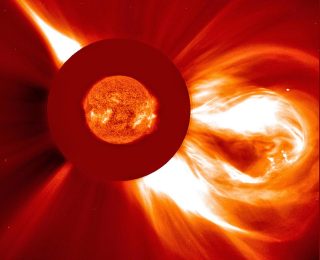
Coronal mass ejections strip away planetary atmospheres and cause raging geomagnetic storms on Earth. In today’s paper, the authors test a tool that could one day be used to predict the occurrence of coronal mass ejection impacts and the severity of geomagnetic storms.