
by Zephyr Penoyre | Oct 24, 2017 | Daily Paper Summaries
We understand cosmology by building models that we can trace back through time, but nothing about these models limits them to the past. As the universe expands, faster and faster pushed by dark energy, when does that acceleration outstrip gravity? And when do the last stars form?
by Kerrin Hensley | Jul 28, 2017 | Daily Paper Summaries
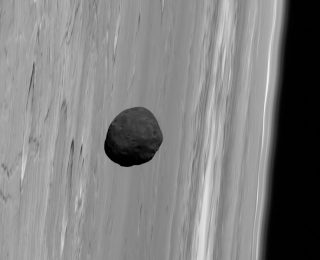
The tiny Martian moons Phobos and Deimos were initially thought to be captured asteroids. Now, it looks like they might be remnants of a collision 4.3 billion years ago. Can simulations help us figure out what they’re made of?
by Stacy Kim | Jul 14, 2017 | Daily Paper Summaries
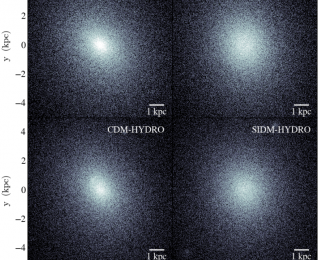
Hidden forces may leave their fingerprints in the smallest galaxies.
by Kerrin Hensley | Jun 19, 2017 | Daily Paper Summaries
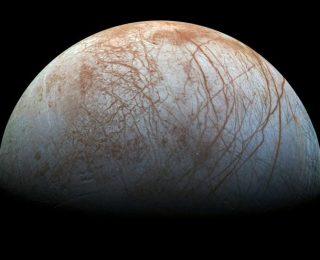
How much tidal stress does Jupiter put on Europa? Enough to break the ice. Panning et al. estimate the magnitude of the ambient seismic noise on Europa due to tidal cracking events and turbulence in its subsurface ocean.
by Zephyr Penoyre | May 25, 2017 | Classics, Daily Paper Summaries
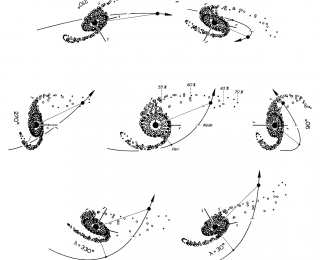
In 1972 astronomers witnessed the first full galaxy collision, not by looking up at the sky but by peering at a small screen in a very large box. The methods and implications are enshrined in modern astrophysics, but it is the results themselves that still truly amaze, stunning simple images of galaxies, playfully strewn and joyfully picked apart. A full exploration of a galaxy of a scale not matched before or since.
by Stacy Kim | Apr 17, 2017 | Daily Paper Summaries
The dwarfs that reionzied the universe may have shut their star-forming engines off in the process.
