by Kerrin Hensley | Apr 10, 2017 | Daily Paper Summaries
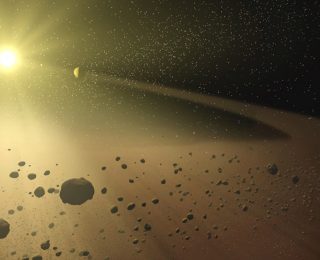
Interstellar space should be littered with debris ejected during the formation of planetary systems—but how much? Engelhardt et al. use solar system surveys and simulations to place an upper limit on the number density of asteroids and comets roaming the Milky Way without a parent star.
by Emily Sandford | Mar 30, 2017 | Daily Paper Summaries
Sometimes, computers are too slow to get the job done. These researchers found a faster way to predict whether planetary systems are stable.
by Jamila Pegues | Mar 6, 2017 | Daily Paper Summaries
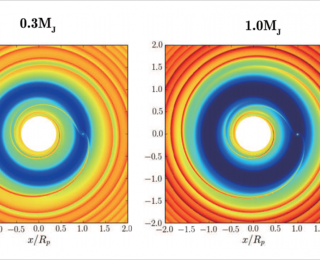
Characterizing planets through direct imaging is no easy task! But today’s authors offer a work-around formula, which estimates the crucial parameter of planetary mass from protoplanetary disk observations. In this astrobite, we discuss ‘The Theory’ and ‘The Practice’ of their cool equation.
by Thankful Cromartie | Feb 16, 2017 | Daily Paper Summaries
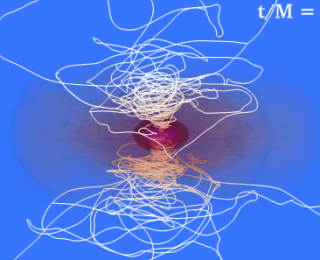
Short gamma ray bursts are one of the biggest cosmic mysteries of modern astronomy. Today’s post investigates one possible culprit for this phenomena – the merging of two neutron stars.
by Zephyr Penoyre | Feb 7, 2017 | Daily Paper Summaries
So much of our universe is stunningly beautiful. Let’s spend a little time on something that isn’t, and follow the journey from stunning spiral galaxies to plain old giant ellipticals.
by Joshua Kerrigan | Jan 18, 2017 | Daily Paper Summaries
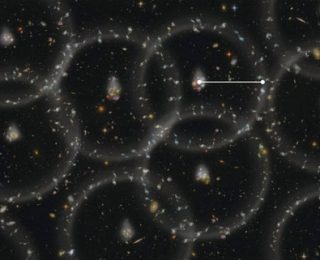
Can the next generation of radio telescopes measure the cosmic sound from the early universe? Radio astronomers use simulations to find out.
