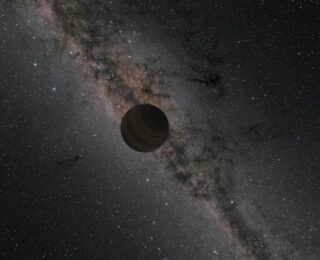
The Dark Side of Exoplanets
Today’s bite explores planets made of dark matter and how we might find them.

Today’s bite explores planets made of dark matter and how we might find them.

Today’s paper explores how ionization from different UVB models affects mock observations from simulations of the Circumgalactic Medium.

Some supernovae have bumpy light curves – could a baby neutron star repeatedly diving into the envelope of its inflated companion be the cause? Today’s authors simulate this to find out!
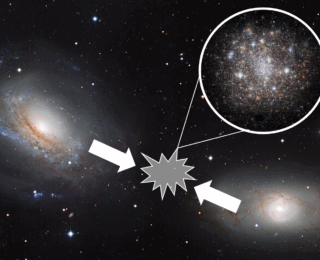
You know the saying: “when gas-rich galaxies collide, young massive star clusters will soon reside” … well maybe you’ll know the saying after reading this astrobite!
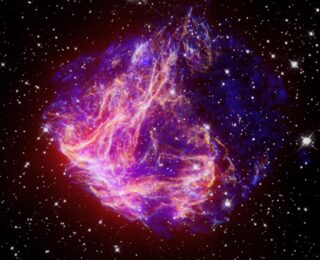
Today’s bite explores if we’ll be able to find a star that has formed from the gas enriched by only one stellar predecessor, an interesting way to probe what’s actually happening in stellar nucleosynthesis.
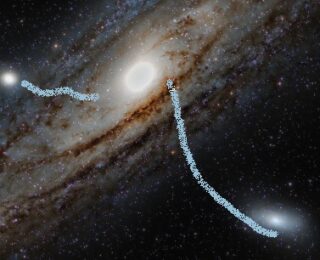
Today’s bite explores how a satellite galaxy can lose its fuel through ram pressure stripping when it falls into the orbit of a galaxy like the Milky Way.