by Erika Nesvold | Jan 4, 2013 | Daily Paper Summaries
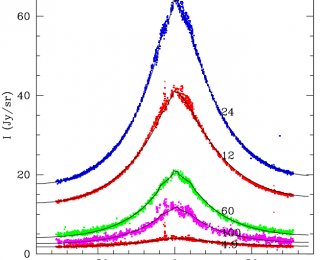
The Solar System’s interplanetary dust (called zodiacal dust) can be a source of noise in infrared and optical observations, but it also holds information about the recent history of the Solar System. This new and improved model of the zodiacal dust reveals the relative contributions to the dust by asteroids, comets, and interstellar dust.
by Elisabeth Newton | Dec 11, 2012 | Daily Paper Summaries
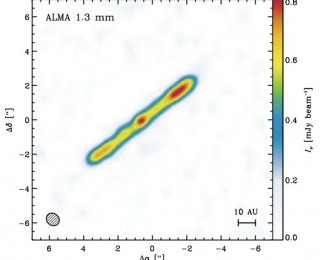
I’ve got pretty bad eyesight. If I take off my glasses and look at the flowers on my window sill, they look like a fuzzy yellow blob. But with glasses, the petals and the patterns cast on them come into focus. This is how I felt when looking at the new observations of the debris disk around AU Mic. Putting on our ALMA glasses, the fuzzy debris disk around AU Mic is sharpening into something surprisingly consistent with our own Solar System.
by Elisabeth Newton | Aug 30, 2012 | Classics, Daily Paper Summaries
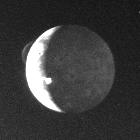
It’s March 2, 1979. Two years ago, the Voyager spacecraft were launched on trajectories that will allow them to carry out their primary missions: the study of the outer Solar System, in particular Jupiter and Saturn. It’s just three days before Voyager 1’s closest approach to Jupiter. The paper that was published on March 2nd, 1979 in Science is a prediction for what the Voyager spacecraft might see on Io based on the orbital motions of these three satellites.
by Elisabeth Newton | Jun 7, 2012 | Personal Experiences
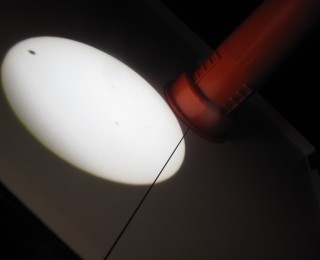
Tuesday was was the second of this century’s pair of transits of Venus; I didn’t catch the 2004 transit, but I was fortunate to have a prime view of Tuesday’s. Like many others, I turned my eyes (safely behind sun filters) towards the Sun and the little black dot traversing its surface. I asked the Astrobites authors to share their experiences with us.
by Caroline Morley | May 31, 2012 | Daily Paper Summaries
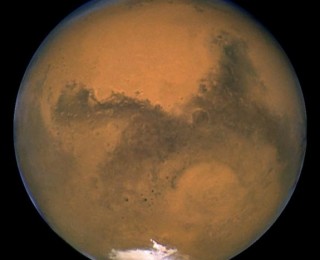
Mars is observed to have sedimentary rocks, which provide proof that liquid water once existed on the Martian surface. However, the surface of Mars would have been too cold to have permanent rivers and lakes; the authors of this paper suggest seasonal snowmelt could create enough liquid water to form these rocks.
by Kirit Karkare | May 21, 2012 | Daily Paper Summaries
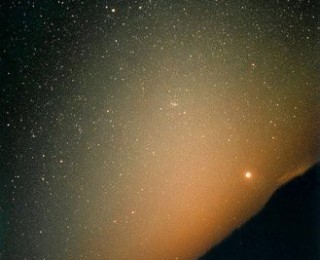
The zodiacal light may look beautiful, but it can get in the way of important observations. This paper suggests improvements to models of the dust cloud using observations from the Spitzer Space Telescope.
