
by Courtney Dressing | Feb 21, 2011 | Daily Paper Summaries
Assuming that we have acquired the spectrum of a distant terrestrial planet, what would it look like? Would we able to resolve surface features? More excitingly, would we be able to detect biomarkers in the atmospheres of alien Earths?
by Nathan Sanders | Feb 16, 2011 | Daily Paper Summaries
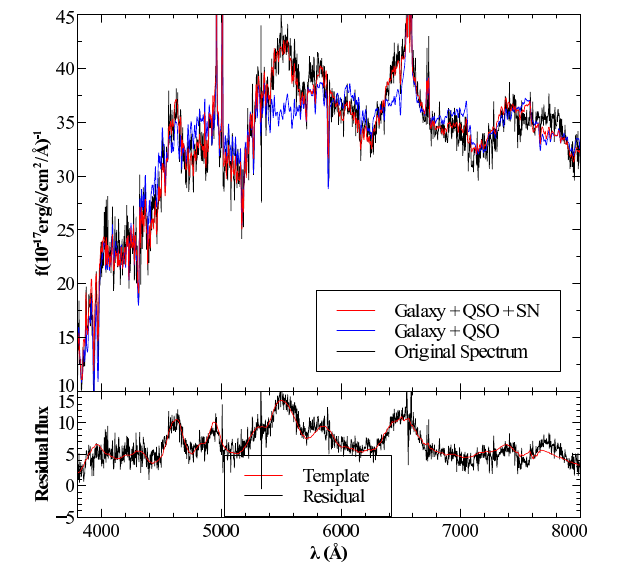
Each galaxy in the sky will probably produce just one or two supernovae in our lifetimes, so you have to be lucky to spot one. But if you happen to be observing hundreds of thousands of galaxies anyway, you’re bound to catch a few.
by Ian Czekala | Jan 17, 2011 | Personal Experiences
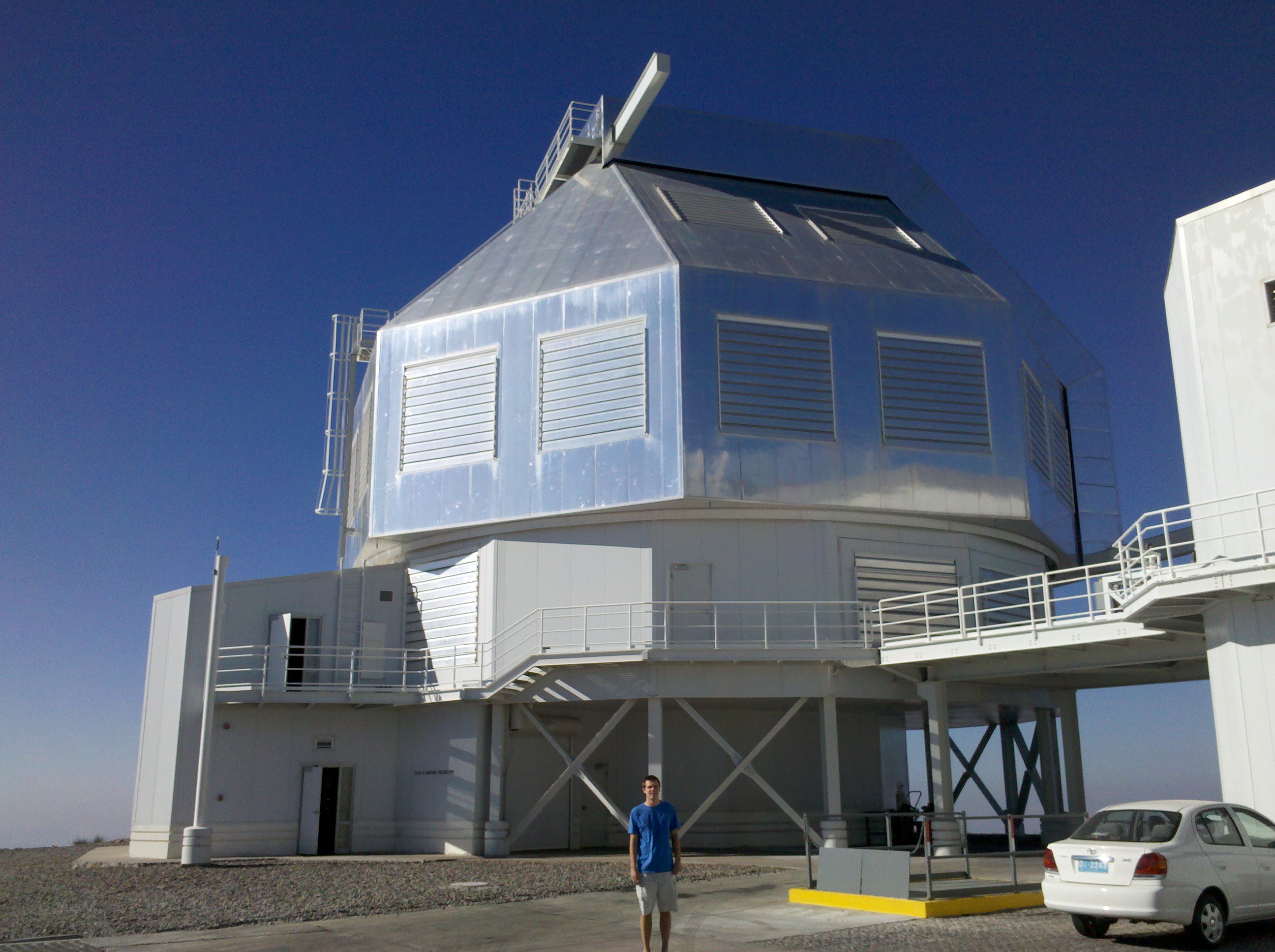
This past week, I traveled with Ryan Chornock, a post-doctoral scholar at Harvard University, to northern Chile to observe at the Landon Clay 6.5m telescope , one of the pair of the Magellan Telescopes at Las Campanas Observatory (Figure 1). For two nights, we observed supernovae candidates found by the Pan-STARRS survey and gamma ray burst (GRB) host galaxies.
