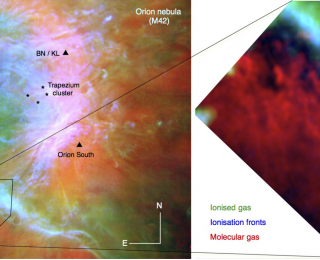
An H II Region Walks into A Bar
High resolution observations of the Orion Nebula show a complex collision between two extreme types of gas.

High resolution observations of the Orion Nebula show a complex collision between two extreme types of gas.
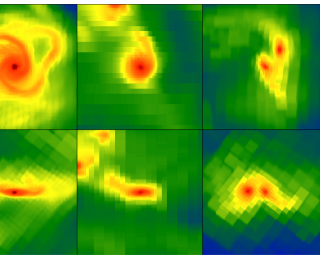
Simulations of the first groups of stars display a variety of shapes and sizes, and may provide clues as to where their ancestors are hiding today
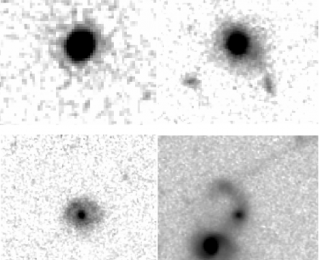
Major mergers (collisions between two galaxies of similar size) are some of the most dramatic cosmic events. But in the grand scheme of things, how important are they, really?
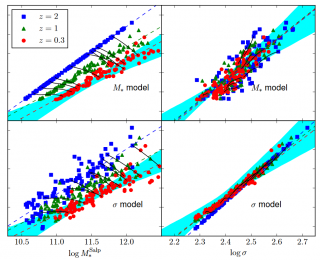
Giant galaxies are built out of a patchwork of many smaller galaxies, drawn together by gravity. But the stars in these precursor galaxies are disimilar. How does this process of galactic assembly affect what we can infer about star formation?
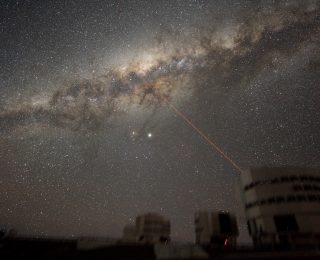
White dwarf stars are the final evolutionary state of most stars. They are everywhere in the Galaxy and are relatively easy to model. So can we learn about our Galaxy solely by studying them? The authors of today’s paper show us a way.
Image credits: ESO/Y. Beletsky.
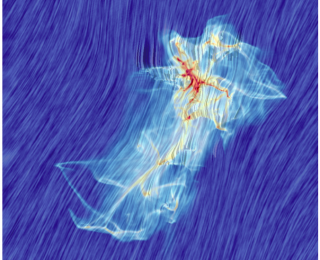
Colliding gas clouds are believed to be the nurseries of baby stars. Could we tell observationally whether a cloud has experienced collisions?