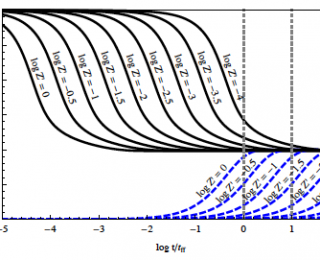
Molecular gas not required for star formation?
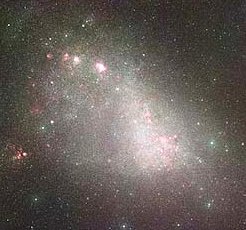
Stars forming in atomic gas?? Maybe so, if the metallicity is low!

Stars forming in atomic gas?? Maybe so, if the metallicity is low!
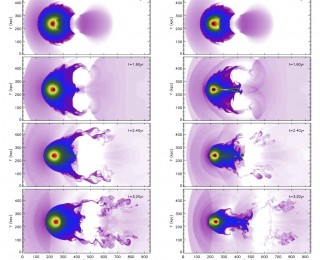
Most simulations to date have implied that satellite galaxies traveling through galaxy clusters are stripped of gas for future star formation in a process known as “strangulation”. In contrast, the authors of this paper suggest that satellite galaxies may not be as cut off as some might think: instead, their simulations show that the cooler, stripped gas from the corona will mix with the surrounding intra-cluster medium and remain near the original galaxy as a potential new source of star-forming fuel.
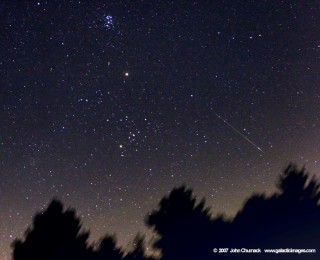
The well-known constellation Taurus is home to many young stars, and the details of star formation are explained by observing far-infrared radiation from several of these objects with the Herschel space observatory.
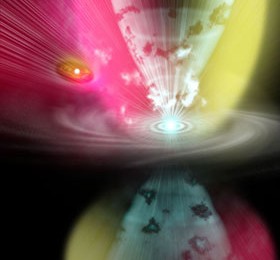
Molecular outflows are important components of the star formation process. These authors present observations of a butterfly-shaped outflow in Orion, and present several possible scenarios for this morphology.

Van Dokkum & Conroy examane the variation of the stellar initial mass function by observing the integrated light from early-type galaxies.
In this paper, the authors describe a new galaxy simulation that includes molecular hydrogen, the site of star formation, and discuss what happens with and without it.