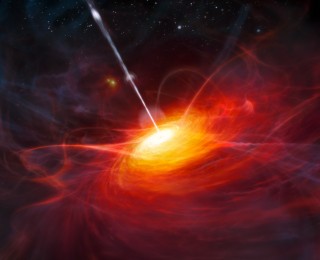
Dust-Rich Quasars at z~1.5
How does AGN activity influence star formation in active galaxies? Dai et al. combine multi-wavelength observations of 32 quasars to bring us closer to the answer.

How does AGN activity influence star formation in active galaxies? Dai et al. combine multi-wavelength observations of 32 quasars to bring us closer to the answer.
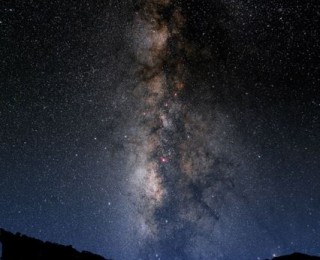
This paper suggests a new quantity to measure the brightness of gas emission throughout the Milky Way, and determines the regions where most stars are likely to be forming in our Galaxy.
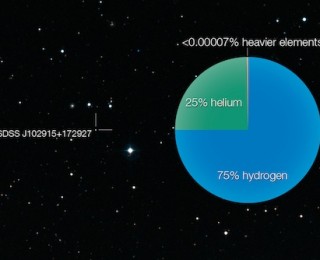
The low-mass primitive halo star, SDSS J102915+172927, puzzled astronomers because of it’s extremely low metal content. This article aims to answer under what physical conditions can a star like this form.
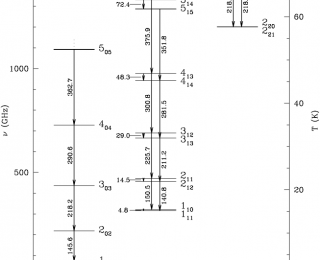
Finding molecular gas in distant galaxies can present a real challenge for astronomers, but Darling and Zeiger propose a new method to find sites of star formation: looking for absorption of the CMB by formaldehyde!
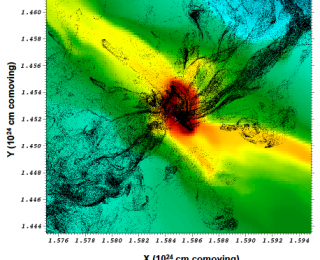
What if the first stars were only 1-50 times as massive as the Sun? Would they still be able to enrich the intergalactic medium and trigger the birth of the next generation of stars?
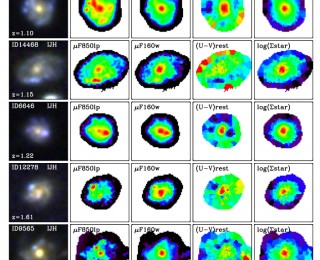
The lack of observed major mergers at high-redshift has prompted discussion of inside-out growth, that is, galaxies building up their stellar populations by cold gas accretion, starting in the inner regions and gradually moving outwards. This picture is far from settled, however, and so the authors of this paper set out to investigate whether or not the observations match the theory.