• RSS
  • Submit a Guest Post
  • Undergraduates: Submit your Research!
  • Suggest a Paper Topic!
astrobites
  • About
    • About Astrobites
    • Meet the Authors
    • Statement of Inclusivity
    • Copyright & Permissions
  • Latest Research
    • Daily Paper Summaries
    • Classics
    • Undergrad Research
    • Physical Review Coverage
  • Beyond astro-ph
    • Beyond astro-ph Library
    • Interviews
    • Career Navigation
    • Personal Experiences
    • Current Events
    • Teaching with Astrobites
  • Guides
    • EM Spectrum
    • Galaxies & AGNs
    • Spectroscopy and Spectral Lines
    • Adaptive Optics
    • Gravitational Waves
    • Transient Astronomy
    • Astrophysical Software
    • Graduate School
    • Writing a personal statement for grad apps
    • First Observing Run
    • …More Guides!
Select Page
How does chemical composition affect star formation?

How does chemical composition affect star formation?

by Nathan Sanders | Jan 18, 2011 | Daily Paper Summaries

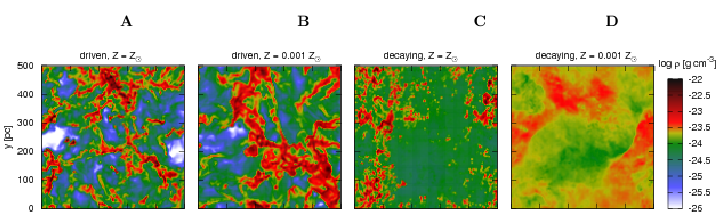
Incorporating all the effects relevant to star formation into accurate simulations of the interstellar medium is a major frontier in astrophysics. These authors start to tackle the effects of chemical composition.

Shocked water in the Cep E protostellar outflow

by Katherine Rosenfeld | Jan 13, 2011 | Daily Paper Summaries

Water plays an important role in the inter-stellar medium, but getting good spectra for star forming cores is difficult. A radio technique exploiting masers allows these authors to probe water in Cep E.

The Impact of Gas Stripping and Stellar Mass Loss on Satellite Galaxy Evolution

by Katherine Rosenfeld | Dec 22, 2010 | Daily Paper Summaries

Galaxies come in many different flavors, therefore models of galaxy formation and evolution must reconcile theory with what we observe. The issue addressed in this paper is that current semi-analytic models over predict the fraction of late-type satellite galaxies that are passive (not forming stars).

The Emission Line Properties of Gravitationally-lensed 1.5 < z < 5 Galaxies

by Elisabeth Newton | Dec 21, 2010 | Daily Paper Summaries

Studying galaxies at high redshift helps us to understand how galaxies formed and evolved; in particular, astronomers are interested in the rates of star formation in galaxies and how these rates change with time.

Next Entries »

Loading

Follow our socials

  • Bluesky
  • Facebook
  • Instagram
  • RSS Feed

More Posts About

AAS AGN astronomy astrophysics binary stars black holes cosmology dark matter dwarf galaxies exoplanets galaxies galaxy evolution gravitational waves habitability JWST Kepler Milky Way observations planetary science planet formation protoplanetary disks radio astronomy simulations solar system spectroscopy star formation stars stellar evolution supernovae theory

Posts by Category

  • Accessibility
  • Applications
  • Beyond
  • Book Reviews
  • Career Navigation
  • Classics
  • Climate Change
  • Course Assignments
  • Crossposts
  • Current Events
  • Daily Paper Summaries
  • Game Reviews
  • Guides
  • Historical Astronomy
  • Instrumentation
  • Interviews
  • Outreach
  • Personal Experiences
  • PRJ
  • Quick Notes
  • Satellites
  • Teaching
  • Undergraduate Research

More Astronomy

  • AAS
  • AAS Nova
  • astro-ph
  • AstroBetter
  • APOD

Read Astrobites in Other Languages

  • Astrobitos (Spanish)
  • Astropontos (Portuguese)
  • staryab (Farsi)

Listen to Astrobites

  • astro[sound]bites

Discover More Incredible Science

  • ScienceBites Network
  • RSS

© 2026 Astrobites | All Rights Reserved | Supported by AAS | Designed by Elegant Themes | Powered by WordPress