by Ian Czekala | Feb 23, 2011 | Daily Paper Summaries
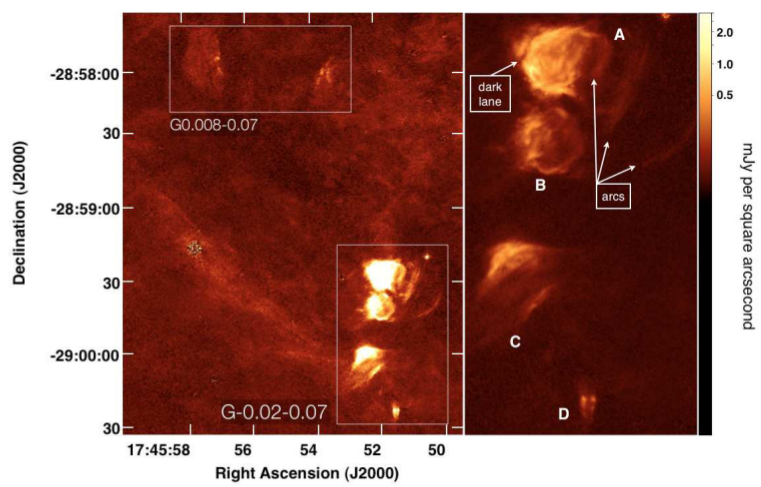
It turns out that there is a lot more to the universe than just stars, planets, and galaxies. Much of the “empty space” between these objects is actually host to interesting astrophysical processes, such as star-formation in molecular clouds. Hot, young stars can emit strong radiation that will ionize the surrounding hydrogen gas. Astronomers call these dense regions of ionized hydrogen HII regions.
by Elisabeth Newton | Feb 17, 2011 | Daily Paper Summaries
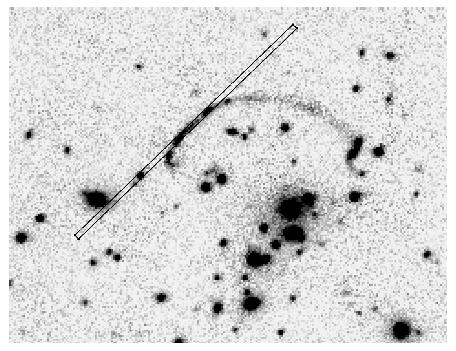
In this paper, the authors seek to explore the properties of star-forming galaxies by looking at a lensed galaxy. This galaxy has been distorted into a giant arc by the gravitational potential of a foreground galaxy cluster.
by Elisabeth Newton | Feb 13, 2011 | Daily Paper Summaries
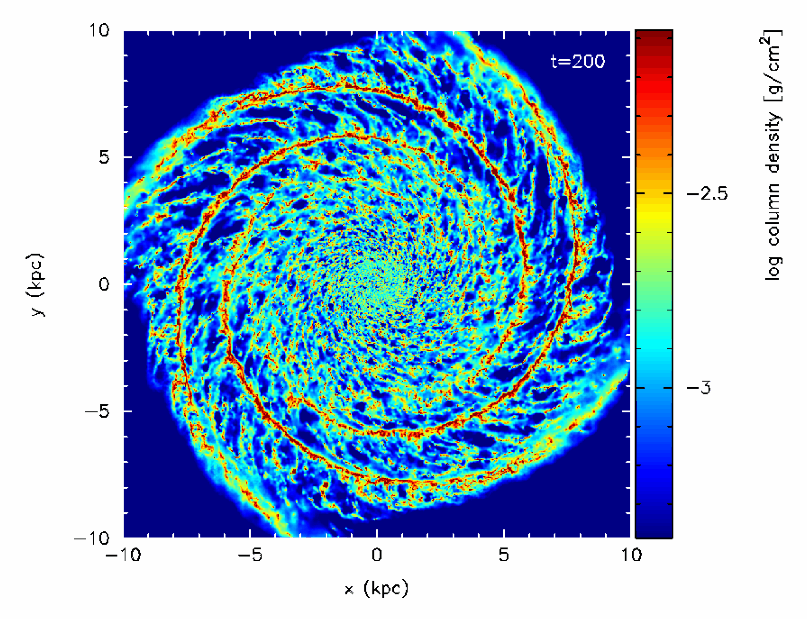
In this paper, Dobbs, Burkert & Pringle suggest that most molecular clouds are not gravitationally bound, as is often assumed. They present simulations in which stellar feedback and collisions between clouds play a prominent role.
by jsureshcfa | Feb 7, 2011 | Daily Paper Summaries
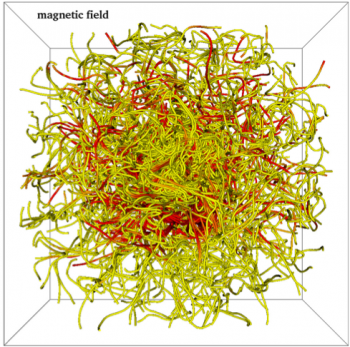
Magnetic fields can get hugely amplified when gas clouds gravitationally collapse. The authors of this paper explore gravitational collapse using MHD simulations and argue for a new resolution requirement in order to properly resolve magnetic dynamo action on small scales.
by Courtney Dressing | Jan 28, 2011 | Daily Paper Summaries
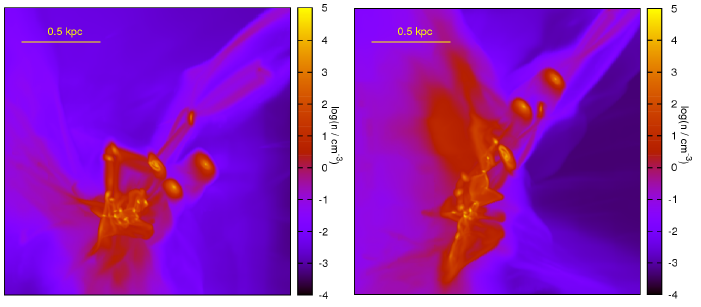
One of the big mysteries in astrophysics is the formation of the first stars. This simulation presents one possible formation mechanism for ancient stars.
by Elisabeth Newton | Jan 24, 2011 | Daily Paper Summaries
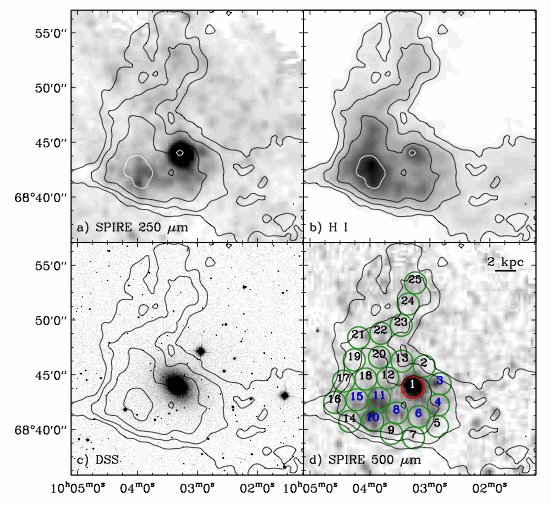
The interacting galaxies in the M 81 triplet are interconnected by tidal features. In this work, the authors study dust in the NGC 3077 tidal stream and discuss its implications.
